


What Is Branded Dropshipping? The Complete Guide to Building a Real eCommerce Brand That Lasts

The term branded dropshipping has become one of the most discussed ideas in modern e-commerce. While traditional dropshipping is often associated with low barriers to entry and high competition, branded dropshipping represents the next level — a model focused on building long-term customer trust and a scalable business identity.
But what exactly is branded dropshipping, and how does it differ from the regular version? To answer that, we need to understand both the business mechanics and the strategic intent behind it.
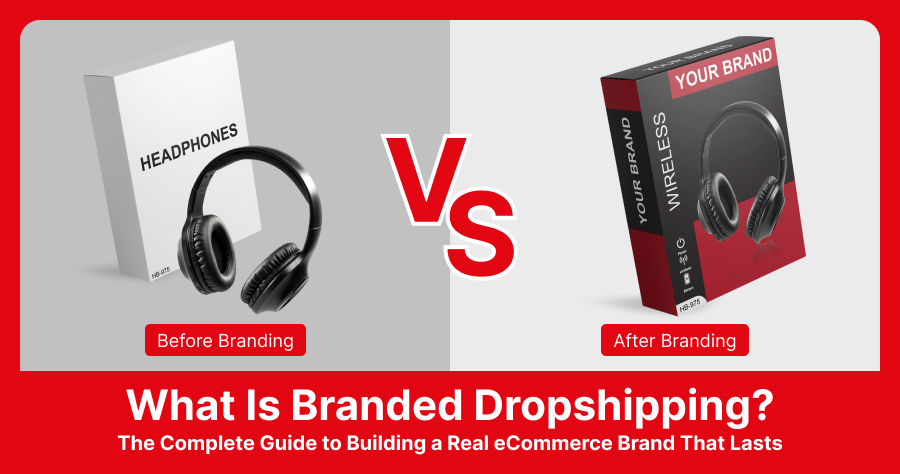
What Is Branded Dropshipping? How to Building a Scalable Private-Label Dropshipping Business
Definition and Key Differences
At its core, branded dropshipping is the process of selling products from third-party suppliers — but under your own brand name. Instead of reselling generic, unbranded goods from marketplaces like AliExpress, you work with suppliers who can offer private labeling, custom packaging, or even slight product modifications.
In standard dropshipping, the store functions as a reseller — customers buy from you, the supplier ships directly, and your store simply acts as a middle layer. The customer often has no emotional connection to your store, since the product can be found elsewhere for the same price.
Branded dropshipping shifts that dynamic. Here, the store isn’t just a reseller; it becomes a brand owner. You control the visual identity, packaging design, product photography, tone of communication, and post-purchase experience. Even though fulfillment still happens via a supplier, the customer perceives the transaction as a direct relationship with your brand.
Why Branding Matters for Dropshippers
The reason branding matters in dropshipping is simple: customer lifetime value (LTV).
In a traditional dropshipping setup, every sale is usually a one-time transaction. Margins are thin, advertising costs are high, and there’s little repeat business because customers don’t remember who they bought from. This leads to a constant need to find new customers — which becomes increasingly expensive as digital ad costs rise.
Branded dropshipping changes that equation. Once a store builds recognition, customers begin to associate the experience — from packaging to customer service — with a specific brand identity. This increases repeat purchase rates, word-of-mouth referrals, and the potential to expand into new product categories under the same name.
In simple financial terms: even if a branded dropshipper’s initial cost per acquisition (CPA) is higher, the lifetime value per customer grows much faster, leading to more stable profit margins and predictable cash flow.
The Core Elements of a Branded Dropshipping Business
Building a branded dropshipping business requires more than uploading products and running ads. Four key investments differentiate a brand-driven operation from a generic one:
- Product Differentiation — Choosing items that align with a niche identity or customer lifestyle. Even minor changes such as color exclusivity, packaging upgrades, or material improvements can create perceived value.
- Visual and Verbal Identity — A cohesive logo, font, and color system are only the beginning. The brand’s “voice” — how it speaks to its customers — defines trust and emotional connection.
- Customer Experience — The entire journey, from unboxing to customer support, must reinforce the brand promise. Small details like thank-you notes or post-purchase follow-up emails create retention loops.
- Supplier Partnership — A reliable supplier capable of customization, consistent lead times, and quality assurance is essential. They effectively act as your invisible production department.
When these four elements align, branded dropshipping becomes more than a transactional business — it turns into an asset that can be scaled or even sold.
Metrics That Define Success
While vanity metrics like social followers or website traffic may look appealing, real branded dropshipping growth depends on numbers that measure sustainability:
- Gross Margin: A well-branded store can sustain margins between 40% and 60%, thanks to perceived value.
- Customer Acquisition Cost (CAC): Branding can reduce CAC over time by increasing organic and repeat sales.
- Customer Lifetime Value (LTV): As repeat purchases increase, LTV can grow 2–3x compared to non-branded stores.
- Return Rate: Consistent quality control and packaging reduce refund requests and maintain profitability.
The relationship between CAC and LTV defines the health of any branded business. When LTV significantly exceeds CAC, the model becomes truly scalable.
The Long-Term Advantage: Building an Asset, Not a Trend
Traditional dropshipping often dies out when the product trend fades or ad costs spike. In contrast, a branded dropshipping store can outlast product cycles because its foundation lies in trust, recognition, and consistent experience.
Over time, such a store can evolve into a private-label brand with its own inventory and loyal fan base. This transition is the key to moving from a temporary cash-flow hustle to a sustainable e-commerce business that appreciates in value.
In fact, many successful DTC (Direct-to-Consumer) brands — from skincare startups to lifestyle accessories — started as small branded dropshipping stores. The model serves as an efficient testing ground for validating market demand before investing in full-scale manufacturing.
How to Brand a Dropshipping Store: Private Labeling, Design & Voice That Convert
Once you understand what is branded dropshipping, the next step is mastering the art of building a brand that customers actually remember. Branding isn’t just about having a pretty logo — it’s about shaping perception, building trust, and creating a consistent emotional experience at every touchpoint.
Many dropshipping stores struggle because they sell “products,” not “stories.” A strong brand transforms a product listing into a lifestyle narrative. It gives your audience something to believe in — not just something to buy.
So how exactly can you transform a generic store into a recognizable brand? Let’s break down the process from strategy to execution.
Positioning and Niche Selection: Who You Are and Who You Serve
Branding starts with clarity. Before choosing your color palette or packaging design, define what you stand for and who your ideal customer is.
In branded dropshipping, the niche determines your identity. Are you a minimalist lifestyle brand? A bold streetwear label? A wellness company targeting busy professionals? Each decision shapes how your audience perceives value and emotion.
A focused niche not only simplifies your marketing but also helps you communicate in a consistent tone. It allows your brand to feel like a person — with opinions, preferences, and a recognizable personality.
For example, a fitness dropshipping brand may emphasize motivation and discipline, while a sustainable skincare brand might focus on transparency and natural ingredients. Your brand story should express these core values clearly, even in a single product photo or Instagram caption.
Visual Identity: Design That Speaks Without Words
Once your positioning is clear, your visual identity becomes the silent ambassador of your brand.
A cohesive design system — colors, typography, logo, and photography — makes your brand instantly recognizable. The goal isn’t just to look good, but to look consistent.
For a branded dropshipping store, visual cues play a critical role in building trust. Customers often decide in seconds whether a store feels “legit.” A well-designed logo, professional product images, and unified packaging can make the difference between a quick bounce and a confident purchase.
Even subtle design decisions affect customer psychology. Softer color palettes suggest calmness and quality, while bold contrasts communicate energy and confidence. The key is coherence — every element, from website layout to social media visuals, should echo the same brand identity.
If your supplier allows custom packaging, even simple additions like logo stickers, tissue paper, or a thank-you card can turn an ordinary product into a branded experience.
Crafting the Product Story: Why Your Product Exists
Great brands don’t just sell features — they sell meaning. Every product you offer should have a story that connects to your audience’s aspirations.
For example, instead of describing a reusable water bottle as “eco-friendly,” frame it as a symbol of commitment to reducing waste. Instead of calling a phone case “durable,” describe how it protects what matters most to your customer — their digital life and memories.
This narrative doesn’t need to be complicated. It just needs to be authentic and emotionally resonant.
In the world of branded dropshipping, product storytelling often happens through micro-interactions — product page copy, Instagram posts, packaging notes, and even email subject lines. Together, they form a narrative that moves people from awareness to loyalty.
When customers feel aligned with your story, they don’t just buy — they join your brand’s movement.
Finding Your Brand Voice: The Human Side of Commerce
A brand voice is how your company would “sound” if it were a person. It’s not about grammar or slang — it’s about personality.
Inconsistent communication is one of the biggest mistakes new branded dropshippers make. One day, their website sounds formal; the next day, their emails sound overly casual. This confuses customers and weakens the brand’s credibility.
To develop a strong brand voice, start by defining three traits that represent your tone. Are you playful, bold, or authoritative? Are you elegant and minimal, or quirky and personal? Then, ensure this tone appears consistently in every message — from website banners to post-purchase thank-you notes.
If you’re building an environmentally conscious brand, your tone should feel warm, transparent, and responsible. If you’re selling gaming accessories, it can be humorous and energetic.
Consistency in tone builds recognition just like consistency in visuals. When customers read your content and think, “I know exactly who’s speaking,” you’ve achieved real brand voice clarity.
MVP Branding: Test Before You Scale
The best part about branded dropshipping is flexibility. You don’t have to invest thousands in professional design from day one. You can test your brand like a startup — with small, controlled experiments.
For instance, launch your store with a minimal logo and simple color scheme. Gather feedback from customers and monitor how they react to your visuals and language. A/B test your packaging inserts or email copy. Track engagement rates and retention.
By running these “minimum viable brand” (MVB) experiments, you collect real data on what resonates — before committing to a full rebrand or packaging overhaul.
Remember, branding is iterative. The most successful brands didn’t start polished; they evolved through feedback and market validation.
From Identity to Equity: The Compounding Effect of Branding
When your brand identity, voice, and design work together, the result isn’t just higher conversion rates — it’s brand equity. That means people start trusting your name enough to buy again, recommend you, or even pay a premium for your products.
Over time, this equity compounds. Each ad click, influencer mention, or repeat purchase strengthens the emotional moat around your business. You’re no longer competing on price — you’re competing on meaning.
This is why many entrepreneurs who first learn what is branded dropshipping soon realize it’s not merely a business model — it’s a philosophy of customer value. It’s about creating a consistent, memorable presence in a noisy marketplace.
Suppliers for Branded Dropshipping: How to Verify, Sample and Ensure Quality at Scale
When people ask what is branded dropshipping, they often focus on logos, ads, or social media presence. But behind every great brand lies something less glamorous — a dependable supplier network.
Your suppliers are, in many ways, your silent business partners. They produce the items customers touch, they determine how long shipping takes, and they directly affect how your brand is perceived. In branded dropshipping, where reputation is everything, the supplier isn’t just a vendor — they’re part of your brand DNA.
The Core Supplier Criteria for Branded Offers
A strong branded dropshipping business depends on finding suppliers who can go beyond basic fulfillment. You need partners who understand the difference between “sending a parcel” and “delivering an experience.”
When evaluating potential suppliers, focus on four fundamental capabilities:
- Customization and Private Labeling – Can the supplier print your logo, create custom packaging, or modify the product slightly (color, material, or label)? Even small personalization options make a massive difference in perceived brand value.
- Consistent Lead Time – A great-looking brand will fail if customers wait 30–40 days for delivery. Branded dropshippers typically work with suppliers who can deliver within 7–14 days globally, or even faster with local warehouses.
- Product Quality Control – The supplier should be able to demonstrate repeatable quality, ideally backed by certifications or internal QC procedures. Ask about material sources, defect rates, and return management processes.
- Communication and Reliability – Your supplier must respond quickly, provide order tracking updates, and handle issues professionally. Communication delays can erode brand reputation faster than poor packaging.
These criteria form the foundation of a scalable branded dropshipping operation.
How to Find and Verify Reliable Suppliers
The internet is full of supplier directories — from Alibaba to ScaleOrder Dropshipping, Syncee, and Spocket — but finding a supplier who can truly support a branded business requires a structured approach.
Start by filtering for suppliers offering private-label services. Most reputable platforms now have search filters for “custom logo,” “white-label,” or “OEM/ODM” options.
Once you shortlist a few candidates, move beyond their product listings and evaluate their credibility:
- Request Certifications: Ask for ISO or product safety documents (especially for cosmetics, electronics, or apparel).
- Check Factory Footage: Many serious suppliers can provide video tours or live call demonstrations of their facilities.
- Read Past Feedback: Go beyond product reviews — look at how they handle delays or defects in the comment sections.
- Ask Direct Questions: Test their communication. How they respond to inquiries will predict how they handle real issues later.
If possible, communicate directly with a factory representative rather than an intermediary. Transparency at this stage saves significant operational pain later.
Sampling: The Non-Negotiable Step
In branded dropshipping, sampling isn’t optional — it’s a strategic investment.
Before committing to bulk orders or long-term cooperation, always order samples from at least two or three suppliers for comparison. Evaluate not only the product itself but the entire unboxing experience:
- How is the item packaged?
- Are the materials consistent with the supplier’s description?
- Does the product feel “premium” enough for your brand image?
When you’re positioning your store as a brand, every tactile detail matters. If the packaging feels cheap or inconsistent, customers will subconsciously perceive your brand as unreliable — no matter how beautiful your website looks.
Document your sampling process carefully. Create a checklist that includes material quality, finish, logo accuracy, labeling clarity, and packaging protection. This checklist will later form the baseline for your supplier quality agreements.
Building a Quality Control System
Scaling branded dropshipping requires a repeatable quality control (QC) framework. Even if you don’t own the factory, you can enforce standards through clear documentation and regular audits.
Here’s how to approach it:
- Define QC Standards Early: Write down what “acceptable” means for your brand — from print alignment to packaging consistency.
- Use Visual Guides: Provide photos and diagrams showing how logos should appear, how boxes should be sealed, and how inserts should be placed.
- Third-Party Inspection: As you grow, consider hiring third-party quality inspectors in China, Vietnam, or your supplier’s region. Services like QIMA or AsiaInspection can check random samples before shipment.
- Feedback Loop: Track defect rates, customer complaints, and return reasons. Share this data with your supplier monthly to drive continuous improvement.
A reliable QC process turns your supplier from a risk factor into a growth partner.
Packaging and Logistics: The Branded Experience Beyond the Box
For many consumers, the first physical interaction with your brand is when they receive the package. In branded dropshipping, this unboxing moment is a critical part of customer experience.
Negotiate packaging options early — custom boxes, logo tape, thank-you cards, or eco-friendly materials can elevate your perceived value. Even simple touches like consistent labeling or scent inserts can create a luxury feel at a low cost.
Also, discuss logistics upfront. Will the supplier offer bulk shipping to regional warehouses? Can they integrate with your fulfillment system (Shopify, WooCommerce, etc.)? Clear alignment prevents fulfillment bottlenecks as your order volume grows.
Reliable shipping speed is especially important for maintaining trust. Customers forgive minor product delays, but inconsistent or untracked deliveries can permanently damage your brand credibility.
Returns, Refunds, and Supplier SLAs
Even the best supplier relationship faces occasional product issues. What differentiates a professional branded dropshipping business is how it handles them.
Establish clear Service Level Agreements (SLAs) with your supplier that define response times, refund conditions, and replacement responsibilities. If a batch defect occurs, determine who bears the cost.
Always prioritize customer satisfaction first — even if it means absorbing short-term losses. A dissatisfied customer can cause far more long-term brand damage than a refunded order ever will.
Use each incident as feedback to refine your QC and communication systems. Over time, this transparency strengthens supplier trust and operational resilience.
Marketing Branded Dropshipping: Ads, Content & Customer Experience That Build Repeat Sales
If you’ve already learned what is branded dropshipping, you know that success doesn’t come from finding a trending product — it comes from creating a brand people care about. Marketing for branded dropshipping is not about short-term traffic spikes; it’s about shaping trust, narrative, and emotional connection that generate repeat customers.
Anyone can run Facebook ads and make sales for a few weeks. But only a brand can make people remember the purchase months later — and come back for more.
So how do you market your branded dropshipping store in a way that feels both strategic and authentic? It starts with aligning your message, your content, and your customer experience.
From Ads to Identity: Positioning Your Brand in the Market
In a crowded e-commerce landscape, the goal of marketing isn’t just visibility — it’s differentiation. Your advertising needs to express not only what you sell, but why your brand exists.
When developing your marketing campaigns, start by defining your brand’s unique value proposition (UVP). What makes your version of the product different? Maybe it’s better materials, more thoughtful packaging, or an ethical sourcing story.
For example, a skincare dropshipping brand might emphasize “clean formulations and minimalist design,” while a tech accessories brand could focus on “performance engineered for creators.” Your ad creative should visually and verbally communicate that essence — not through flashy claims, but through clear, consistent identity.
Good branded ads don’t just sell; they educate. They reveal the lifestyle your brand represents and invite the audience to see themselves within it.
Creative Strategy: The Power of Authentic Visuals
The creative aspect of branded dropshipping marketing is what turns clicks into emotional connection. Customers are bombarded by ads every day — the ones that stand out are those that feel real.
Use authentic content wherever possible. Instead of generic stock photos, invest in product photography that reflects your brand aesthetic. Show your product in real-life context — how it fits into daily routines or how it solves specific problems.
User-generated content (UGC) is another key pillar. Encourage customers to share photos, reviews, and unboxing videos. These assets not only create social proof but also reduce your dependency on constant paid ads.
For branded dropshipping stores, consistent creative identity across ads, landing pages, and packaging builds subconscious familiarity. This psychological “brand fluency” makes conversion easier — customers trust what feels recognizable.
Content Marketing: Educate, Don’t Just Promote
While ads drive immediate sales, content builds lasting relationships. In branded dropshipping, a smart content strategy turns your store into an authority in its niche.
Blogs, social posts, and newsletters can all be used to teach, inspire, or entertain your audience. For example, if you sell ergonomic home office accessories, you could share productivity tips, workspace setups, or case studies of professionals optimizing their environment.
Educational content establishes credibility — it signals that your brand understands the customer’s lifestyle and problems. Over time, this creates a loop where your audience begins to trust your advice as much as your products.
SEO also plays a role here. By creating keyword-rich content related to your niche, you attract organic traffic and reduce reliance on paid advertising. Every article or video becomes an asset that compounds visibility over time.
In short: ads sell once; content sells forever.
Unboxing and Post-Purchase Experience: Where Loyalty Begins
In traditional dropshipping, marketing ends the moment a customer pays. In branded dropshipping, marketing continues long after checkout. The unboxing experience is your most powerful — and underrated — marketing moment.
When customers receive a well-packaged order with thoughtful design and a personalized thank-you note, it triggers emotional satisfaction that far exceeds the price they paid. This post-purchase moment converts one-time buyers into fans.
Follow up with a sequence of branded emails — a warm thank-you, product care tips, or a small discount for their next order. The goal isn’t just upselling; it’s nurturing trust.
A smooth fulfillment process, fast delivery, and proactive communication turn customers into advocates. People love sharing great experiences — not just great products. That’s how your brand marketing extends organically through word-of-mouth and social proof.
Influencer & Community Marketing: Building Trust Through Humans
In the era of social media saturation, human-to-human marketing is the most scalable trust builder. For branded dropshipping, micro-influencers — creators with small but loyal audiences — often outperform expensive macro campaigns.
Collaborate with influencers who genuinely fit your niche. Provide them with your branded packaging and let them tell their own story about the product. Authenticity beats perfection every time.
In parallel, nurture your own brand community. Create a private Facebook group, Discord server, or email list where customers can share experiences and ask questions. When people feel part of a shared identity, their loyalty deepens.
Community marketing doesn’t just drive repeat sales — it creates real-time product feedback loops, helping you refine your offering faster than any analytics tool.
Measuring Success: The Marketing KPIs That Matter
Good marketing decisions come from numbers, not intuition. For branded dropshipping, the key performance indicators (KPIs) should focus less on clicks and more on customer retention.
Track these metrics regularly:
- Customer Acquisition Cost (CAC): How much you spend per new customer.
- Customer Lifetime Value (LTV): The total revenue generated from a single customer over time.
- Repeat Purchase Rate: Indicates customer satisfaction and brand trust.
- Organic Traffic Share: A signal of your long-term brand authority.
The ratio between LTV and CAC defines whether your brand is sustainable. A healthy branded dropshipping store typically aims for an LTV:CAC ratio above 3:1 — meaning every dollar spent on marketing returns three in long-term value.
The Biggest Myths About Branded Dropshipping — And the Mistakes That Can Destroy Your Brand Before It Starts
Branded dropshipping has gained a reputation as the “luxury version” of regular dropshipping, but many newcomers misunderstand what it actually means. They see “branding” as simply adding a logo to a generic product, or creating an Instagram page with a clean color palette. In truth, branded dropshipping is far more complex. It’s a strategic model that merges marketing psychology, supplier partnerships, and brand storytelling into one cohesive system. Unfortunately, many entrepreneurs fall victim to myths that cost them credibility, customers, and ultimately—profit.
Myth #1: “You Just Need a Logo to Be a Brand”
One of the most damaging misconceptions is that a logo equals a brand. While a well-designed logo is important, it’s merely a symbol of your identity, not the identity itself. True branding lives in your messaging, tone, product experience, and emotional connection with your audience.
A branded dropshipping business without a core message is like a product without packaging—it lacks meaning. Consumers today can sense when something is shallowly “branded.” They’re looking for trust and consistency, not just visual polish.
If your brand doesn’t answer why it exists, even the best design can’t save it.
Myth #2: “You Can’t Build a Real Brand Without Holding Inventory”
Another popular belief is that you must own inventory to be taken seriously as a brand. That’s false. Many successful eCommerce businesses started as dropshippers and gradually transitioned to partial inventory models as their brand matured.
What matters isn’t whether you hold stock—it’s how you control the customer experience. Partnering with reliable suppliers who offer branding options (custom packaging, private labeling, or faster fulfillment) can create a branded experience without the need for warehouses.
The goal of branded dropshipping isn’t to hide that you’re dropshipping; it’s to make the customer experience indistinguishable from that of a fully established brand.
Myth #3: “Branding Doesn’t Matter Until You Scale”
Some sellers assume branding is an advanced step, to be done only after reaching a certain sales threshold. This approach is backwards. Branding is what enables scaling—it’s the reason customers remember your store, choose you over cheaper options, and share your products online.
Without branding, your store is just another commodity reseller fighting in a price war. With branding, you have differentiation, pricing power, and emotional retention. Investing in branding early can drastically reduce your long-term advertising costs and increase customer lifetime value (LTV).
Myth #4: “Customers Don’t Care Who You Are—They Just Want the Product”
This myth ignores modern consumer behavior. In 2025, buyers care more about values than products. People don’t just buy what you sell; they buy what you stand for. Whether it’s sustainability, self-expression, or performance, your brand’s values influence conversions more than specs or discounts.
A skincare brand that highlights ethical sourcing or a clothing brand that supports body positivity creates deeper resonance. These emotional triggers build loyalty far stronger than short-term discounts or trending items.
Myth #5: “Once You Find a Winning Product, the Brand Doesn’t Matter”
Many dropshippers chase “winning products” — viral gadgets, impulse buys, or seasonal trends. But in branded dropshipping, products don’t build long-term success; brands do. The real win is when customers buy from you not because of a specific product, but because they trust your entire lineup.
Look at how Casetify evolved. It began with simple custom phone cases, but through branding—social proof, influencer marketing, and a sense of creativity—it became a premium accessory brand. The product category didn’t change much; the perceived value did.
If your entire strategy depends on finding the next viral product, your brand is fragile. If your strategy depends on identity and experience, it’s sustainable.
Common Mistakes That Sabotage Branded Dropshipping
Beyond myths, many new branded dropshippers make critical execution errors. They try to scale too quickly without refining their message, copy competitors’ aesthetics without understanding their audience, or switch niches every few months. These mistakes dilute trust and confuse potential buyers.
Another common failure is neglecting the post-purchase experience. Even a great ad and product mean nothing if the unboxing feels generic or customer service feels robotic. In branded dropshipping, retention is the new growth. Focusing on customer satisfaction and loyalty can triple your ROI over time compared to chasing constant new traffic.
The Reality: Branding Is a Long-Term Asset
The truth about branded dropshipping is that it’s neither a shortcut nor a scam—it’s a business model that rewards patience, clarity, and consistency. It’s not about chasing trends, but about creating presence. The biggest winners are those who view branding as an investment, not an expense.
While myths promise instant profits, the reality delivers enduring value: recognition, loyalty, and longevity. A strong brand doesn’t just sell products—it builds relationships that outlast platforms, suppliers, and algorithms.


No Comments