


Top-Rated Plus-Size Clothing Dropshipping Suppliers: 10 Best Options for 2027

The plus-size clothing market offers opportunities for ecommerce entrepreneurs who can combine inclusive sizing, attractive designs, reliable fulfillment, and a clear brand identity. However, choosing the right supplier requires more than comparing wholesale prices. Retailers need to evaluate extended size ranges, garment measurements, fabric quality, product consistency, shipping speed, return policies, and the availability of styles that appeal to different customer segments.
The best top-rated plus-size clothing dropshipping suppliers are not necessarily the largest general-fashion platforms. Some specialize in curve-friendly dresses and occasionwear, while others offer broader catalogs, boutique-style apparel, or sourcing and private-label services. For merchants building a long-term brand, a supplier that supports customization and flexible fulfillment may be more valuable than one offering the lowest initial product cost.
This guide compares 10 suppliers and sourcing options for 2026, with particular attention to their plus-size product ranges, advantages, disadvantages, popular products, and shipping considerations. The rankings are editorial recommendations based on niche relevance and business fit, not a verified ranking of customer ratings.
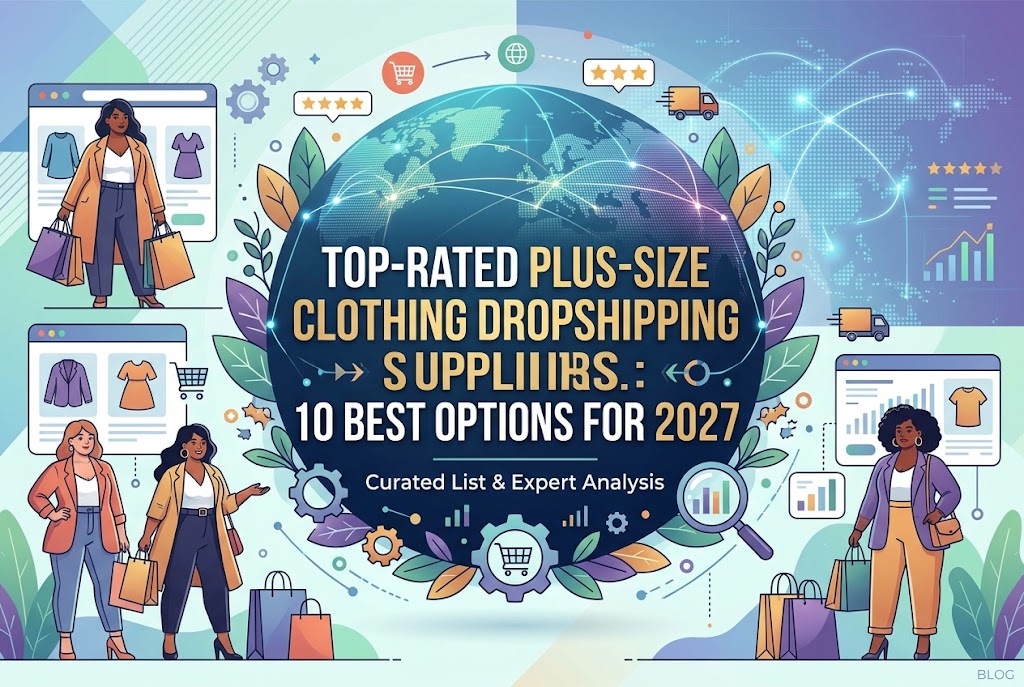
Quick Comparison of the Best Plus-Size Clothing Dropshipping Suppliers
| Rank | Supplier | Best for | Shipping considerations |
|---|---|---|---|
| 1 | ScaleOrder Dropshipping | Sourcing, customization, and brand development | Depends on sourcing and fulfillment arrangements |
| 2 | Trendsi | US-focused women’s fashion | US products: typically 2–5 business days |
| 3 | Kiyonna | Specialized plus-size women’s clothing | Most in-stock orders ship within 24–48 hours |
| 4 | Dear-Lover | Trend-driven plus-size fashion | Confirm current product-specific delivery estimates |
| 5 | FondMart | Broad apparel sourcing and private labeling | Depends on warehouse and shipping method |
| 6 | EPROLO | Budget-conscious fashion and branding | Confirm destination-specific estimates |
| 7 | FashionGo | Boutique and wholesale fashion | Varies by vendor and fulfillment arrangement |
| 8 | Tasha Apparel | Boutique women’s apparel | Confirm dropshipping terms and stock availability |
| 9 | SheStar | Manufacturer-linked plus-size apparel | International delivery can take longer |
| 10 | Bloom Dropship | Curated boutique-style fashion | Verify current product availability and dispatch times |
Shipping estimates above are indicative, not guarantees. Trendsi’s official shipping documentation distinguishes US and overseas inventory, while Kiyonna publishes its own processing and delivery information.
1. ScaleOrder Dropshipping: Best for Custom Sourcing and Brand Development
ScaleOrder Dropshipping is a strong option for entrepreneurs who want to build a differentiated plus-size clothing store rather than simply resell products from a fixed catalog. Its value proposition centers on sourcing, dropshipping, fulfillment, product customization, and supply-chain support. For sellers targeting customers in the United States or Europe, this model can be useful when standard wholesale catalogs do not offer the desired combination of size range, fabric, design, and pricing.
Supplier overview
In the plus-size niche, ScaleOrder is best evaluated as a sourcing and fulfillment partner rather than a dedicated plus-size fashion label. Merchants can explore suitable manufacturers and products, compare sourcing options, and investigate whether specific designs can be customized for their target audience. This is particularly relevant for stores specializing in extended-size casualwear, coordinated outfits, relaxed-fit clothing, or distinctive boutique collections.
The opportunity is to develop a more coherent product assortment. Instead of relying entirely on mass-market trends, a retailer may be able to source complementary garments, investigate alternative fabrics, or work toward customized labels and packaging. The actual availability of each service depends on the product, supplier, and agreed order requirements.
Pros and cons
Pros: Flexible sourcing can help merchants explore products beyond a standard catalog. Customization and fulfillment support may also help established stores develop a recognizable brand. This approach is useful when product differentiation matters more than immediate access to thousands of ready-listed items.
Cons: ScaleOrder is not a specialist plus-size fashion brand with a publicly established, fixed range of inclusive sizes. Product discovery, sample testing, and supplier verification may require more work than importing ready-to-sell products from a fashion-focused app. Customization can also introduce minimum quantities, additional costs, or longer preparation times.
Popular products and shipping speed
Potential product categories to investigate include plus-size dresses, wide-leg trousers, oversized shirts, matching sets, casual tops, and lightweight outerwear. These are sourcing targets, not a guarantee that every style is currently available.
Shipping speed depends on the selected manufacturer, inventory location, order processing, and destination. Before listing an item, obtain a sample, verify actual garment measurements, and confirm the complete delivery estimate. ScaleOrder is most appropriate for merchants who value flexible sourcing, product development, and long-term brand building over a completely standardized plug-and-play catalog.
2. Trendsi: Best for US-Focused Plus-Size Fashion Stores
Trendsi is a fashion-focused dropshipping platform designed for online boutiques. It is particularly relevant to retailers selling women’s apparel to US customers because its catalog includes trend-oriented clothing and its platform supports ecommerce integrations. The supplier’s established fashion workflow makes it an appealing starting point for entrepreneurs who want to test new styles without purchasing large quantities of inventory.
Supplier overview
For a plus-size boutique, Trendsi can help build a collection around everyday fashion, seasonal outfits, and visually appealing pieces. Depending on current listings, merchants can investigate extended-size dresses, tops, jumpsuits, leggings, and other women’s apparel. The important consideration is that a general women’s fashion catalog is not the same as a comprehensive plus-size collection. Retailers should check which products offer genuine extended sizes rather than assuming every style does.
Its product information, imagery, inventory synchronization, and order workflow can reduce the amount of manual work involved in managing a growing catalog. This is particularly helpful when testing multiple silhouettes or refreshing collections frequently.
Pros and cons
Pros: Trendsi offers a fashion-oriented catalog, ecommerce integrations, inventory synchronization, and access to product photography. It also supports sample ordering, allowing retailers to evaluate garments before committing to a product listing. These features make it suitable for stores that prioritize convenience and frequent product testing.
Cons: Popular styles can become unavailable, and competition may be high for broadly marketed fashion products. Product costs and shipping fees must be included in margin calculations. Plus-size depth also varies by individual style, so size availability should be checked product by product.
Popular products and shipping speed
Potential bestsellers include curve-friendly tops, casual dresses, jumpsuits, seasonal outfits, and coordinated sets, subject to current catalog availability.
According to Trendsi’s shipping documentation, standard US dropship orders for US products typically take 2–5 business days, while overseas products typically take 5–10 business days. Other destinations have different estimates, and shipping rates vary by weight and destination.
Trendsi is best suited to merchants seeking a relatively accessible route into fashion dropshipping, particularly when the primary market is the United States. Before choosing a product, check its size chart, material composition, fulfillment origin, and return eligibility.
3. Kiyonna: Best for Specialized Plus-Size Women’s Clothing
Kiyonna stands out because its core identity is closely associated with plus-size women’s fashion rather than general apparel. This specialization makes it relevant to retailers targeting shoppers who want clothing designed around fuller figures, including professional outfits, event dresses, and occasionwear. It can be especially useful for stores positioning themselves around fit, elegance, and confidence instead of competing exclusively on low prices.
Supplier overview
Kiyonna’s product positioning lends itself to a more focused store assortment. Rather than selling every type of clothing, a retailer could build collections around wedding-guest dresses, workwear, evening occasions, and versatile pieces for special events. This approach may appeal to customers who value a clear style identity and want alternatives to generic fast-fashion designs.
The main distinction is product specialization. A dedicated plus-size label can be a stronger source of niche-relevant merchandise than a general marketplace, although retailers should still inspect the available size range and product-level measurements.
Pros and cons
Pros: A clear plus-size positioning helps retailers select products for a defined audience. Its focus on dresses and occasionwear can support higher-value collections, while an established brand identity may make product selection easier than searching through a large, mixed-category catalog.
Cons: The assortment is more specialized than a broad sourcing platform, which can limit opportunities to offer unrelated apparel categories. Retailers should also confirm wholesale or dropshipping eligibility, commercial pricing, resale requirements, and integration options before treating Kiyonna as a conventional automated supplier.
Popular products and shipping speed
Relevant product categories include cocktail dresses, wrap dresses, eveningwear, formal outfits, and other curve-focused women’s clothing, depending on the current collection.
Kiyonna’s official policy states that most in-stock orders ship within 24–48 hours. Its published standard delivery estimates for continental US orders are generally 3–5 business days for the standard shipping option or 5–8 business days for qualifying orders of $75 or more. These are consumer shipping policies, not a guaranteed dropshipping service level.
Kiyonna is worth investigating for stores focused on premium-looking occasionwear. However, merchants should confirm the commercial arrangement directly before listing products for automated fulfillment.
4. Dear-Lover: Best for Trend-Driven Plus-Size Fashion
Dear-Lover is a wholesale fashion supplier with a broad selection of women’s clothing and trend-led styles. For plus-size dropshipping merchants, its appeal lies in the ability to explore multiple fashion directions without restricting the store to a single garment category. It may be suitable for entrepreneurs who want to test seasonal collections and identify styles that generate customer interest before narrowing their assortment.
Supplier overview
A store using Dear-Lover could organize its catalog around casual fashion, statement tops, dresses, matching sets, and seasonal outfits. The key is to build a consistent collection rather than importing every visually appealing product. A smaller, curated range can make product pages easier to navigate and help shoppers understand the store’s aesthetic.
Plus-size sellers should pay particular attention to the exact sizing offered for each garment. A product labeled XL is not necessarily equivalent to a plus-size 1X or 2X, and sizing conventions vary between suppliers and markets. Measurements in inches or centimeters are more useful than size labels alone.
Pros and cons
Pros: A broad assortment allows retailers to test different styles and respond to changing fashion preferences. It can also be useful for stores that want to sell dresses, tops, bottoms, and seasonal apparel through one sourcing relationship.
Cons: Trend-led catalogs can be less consistent in fabric quality, sizing, and availability across product lines. International shipping and returns may create additional friction for customers. Merchants must also calculate landed product costs rather than judging profitability from the displayed wholesale price.
Popular products and shipping speed
Potential categories include printed dresses, relaxed-fit blouses, matching sets, casual trousers, and seasonal plus-size outfits. The availability of extended sizes must be verified for every selected listing.
Delivery time depends on the warehouse, processing schedule, shipping method, and destination. Do not advertise a fixed delivery promise without confirming the current estimate for the exact product and country.
Dear-Lover is best suited to retailers who are comfortable testing products and managing a changing assortment. Ordering samples of several garment types before launching a large collection is a sensible way to evaluate whether the catalog meets the store’s quality standards.
5. FondMart: Best for Broad Apparel Sourcing and Private Labeling
FondMart is worth considering for merchants who want access to a broad fashion assortment and opportunities to develop a more differentiated clothing business. For plus-size sellers, the main attraction is the ability to investigate multiple product categories and explore whether sourcing or branding options can support a consistent store identity.
Supplier overview
Rather than treating FondMart as a ready-made plus-size brand, retailers should approach it as a sourcing option. The objective is to find suitable garments, compare suppliers or product options, and assess whether the available merchandise meets the needs of a defined customer group. This approach can be useful for a store specializing in minimalist basics, casual fashion, coordinated sets, or seasonal styles.
Merchants should establish a clear product selection process. First, define the intended customer and size range. Next, shortlist garments that fit the store’s style and price positioning. Finally, order samples and evaluate fit, fabric, stitching, and consistency before publishing listings.
Pros and cons
Pros: A broad assortment can give retailers flexibility when testing different fashion categories. Depending on current service availability, sourcing and branding options may also help merchants move beyond generic product listings.
Cons: A large catalog does not guarantee that extended sizes are consistently available. Product discovery may require more effort than using a narrowly specialized supplier. Custom branding, if offered for a particular product, may involve additional costs or minimum requirements.
Popular products and shipping speed
Potential products to investigate include plus-size tops, dresses, casual bottoms, matching sets, and fashion basics. Actual size ranges and customization options must be confirmed individually.
Shipping estimates depend on inventory location, handling time, and the destination market. Ask for a full quotation that separates product cost, shipping, customization, and any other applicable fees. Test at least one order to the intended customer region before setting delivery expectations.
FondMart is a reasonable candidate for entrepreneurs seeking sourcing flexibility. Its suitability depends on whether the actual catalog can provide consistent extended sizing and sufficient margins after all fulfillment costs are included.
6. EPROLO: Best for Budget-Conscious Fashion Dropshipping
EPROLO offers a general dropshipping platform with apparel products and branding-related services. Its relevance to the plus-size niche comes from its broad clothing selection and the possibility of combining product sourcing with fulfillment support. For a new store, this can provide a way to test demand without building a large inventory before the business has established consistent sales.
Supplier overview
A plus-size retailer could investigate EPROLO for casual dresses, T-shirts, leggings, hoodies, and other everyday clothing. These products can support a practical store positioning built around comfort, affordability, and wardrobe essentials. However, a merchant should not assume that every product is available in sizes 1X through 6X simply because the platform carries plus-size apparel.
The more effective approach is to shortlist products based on measurable requirements. Check the garment’s maximum measurements, fabric stretch, fit description, and product photos. For categories such as leggings and fitted tops, these details can materially affect customer satisfaction and return rates.
Pros and cons
Pros: A broad product catalog can support experimentation across several clothing categories. Dropshipping and branding-related features may also reduce the operational burden of managing individual suppliers. The platform may be useful for stores that want to test products before developing a more distinctive collection.
Cons: Product quality, sizing consistency, and shipping performance may differ between listings. A low product price does not automatically translate into a profitable sale after shipping, payment fees, advertising, and refunds are considered. Retailers also need to verify which branding services are available for specific products.
Popular products and shipping speed
Potential products include oversized T-shirts, casual dresses, leggings, hoodies, and selected printed apparel. Confirm size availability and customization terms for each item.
Shipping speed depends on inventory origin, processing, carrier, and destination. Before launch, order samples and verify delivery times to the United States or Europe. Avoid publishing universal shipping claims when different products may follow different routes.
EPROLO is most appropriate for merchants who prioritize flexibility and low-commitment product testing. It becomes more attractive when the selected products meet the store’s fit and quality standards, not simply because they have competitive wholesale prices.
7. FashionGo: Best for Boutique and Wholesale Fashion Discovery
FashionGo is a wholesale fashion marketplace that connects retailers with apparel vendors. It is relevant to plus-size boutique owners because it offers access to multiple fashion suppliers, allowing merchants to compare different brands and styles rather than depending on a single catalog.
Supplier overview
FashionGo is best understood as a marketplace rather than one unified clothing manufacturer. This distinction matters for dropshipping because shipping policies, minimum orders, return rules, product quality, and inventory systems can vary by vendor. Retailers need to evaluate the specific seller and product instead of assuming that every listing follows the same operating model.
For plus-size stores, the marketplace can be used to explore boutique dresses, casual tops, outerwear, matching sets, and seasonal fashion. The challenge is to identify vendors with meaningful extended-size coverage and products that fit the store’s target price range.
A well-curated assortment is generally more useful than a large collection of unrelated styles. Merchants can compare fabric, cut, sizing, and overall design before choosing a smaller number of products for sample testing.
Pros and cons
Pros: Access to multiple vendors can increase product variety and make it easier to compare boutique styles. Retailers may find products with a more distinctive visual identity than generic mass-market clothing.
Cons: Not every vendor supports direct-to-customer dropshipping. Minimum quantities, vendor eligibility, and fulfillment procedures must be checked individually. Managing several vendors can also complicate shipping consistency and customer service.
Popular products and shipping speed
Relevant categories to explore include boutique dresses, blouses, casual separates, seasonal outfits, and selected extended-size collections.
Delivery time depends on the specific vendor, dispatch location, processing time, and shipping method. Confirm whether an order can be shipped directly to your customer and whether packaging or invoices identify the original wholesaler.
FashionGo is a good fit for boutique owners who want to discover products from multiple apparel businesses. It is less suitable for merchants expecting every product to share one standardized, automated dropshipping workflow.
8. Tasha Apparel: Best for Boutique Women’s Apparel
Tasha Apparel is a US-based boutique clothing supplier known for women’s fashion and wholesale apparel. It can be relevant to plus-size merchants who want to investigate affordable boutique styles and build a collection around seasonal trends. However, its suitability depends on the size availability of individual products and the commercial terms offered to online resellers.
Supplier overview
For a plus-size store, Tasha Apparel may be worth exploring for casual tops, dresses, coordinated outfits, and other women’s fashion. Retailers should focus on products that match their customers’ expectations for fit, comfort, and price instead of selecting items solely because they are currently fashionable.
One consideration is how wholesale inventory is packaged and sold. Some boutique suppliers sell products in prepacked size assortments, while others may offer individual pieces or different fulfillment arrangements. This can affect how easily a retailer can maintain a consistent online catalog.
Before choosing Tasha Apparel, confirm whether the desired items are available for direct-to-customer fulfillment, whether inventory can be synchronized with the store, and whether individual sizes can be ordered without purchasing a complete assortment.
Pros and cons
Pros: A US-based boutique supplier can be useful for finding trend-oriented merchandise and may offer a more familiar assortment for North American customers. A focused selection of visually coordinated pieces can also support a boutique-style brand.
Cons: Not all products necessarily have extended sizes. Wholesale purchasing formats can be inconvenient for single-item dropshipping, and product availability can change rapidly. Merchants must verify the current fulfillment model rather than assume every item is eligible for dropshipping.
Popular products and shipping speed
Potential categories include boutique tops, dresses, lightweight outerwear, and seasonal women’s apparel, subject to actual size availability.
Shipping speed depends on stock, fulfillment eligibility, and destination. Confirm processing times and direct-shipping options before promising customers a delivery window.
Tasha Apparel is best considered a candidate for merchants seeking boutique fashion. It should be shortlisted only after the retailer has confirmed that the selected products genuinely meet plus-size requirements and can be fulfilled under an acceptable commercial arrangement.
9. SheStar: Best for Manufacturer-Linked Plus-Size Apparel
SheStar is associated with garment manufacturing and wholesale supply, making it a potential option for merchants who want to explore plus-size clothing with manufacturer-linked sourcing. Compared with a retail-oriented fashion catalog, this type of supplier can be relevant when the merchant’s priorities include sourcing costs, product variety, and possible branding customization.
Supplier overview
A retailer could investigate SheStar for plus-size T-shirts, casual dresses, skirts, shorts, and other everyday garments. Its manufacturing connections may also make it worth discussing product specifications or customized branding for suitable orders.
The important distinction is between customization capability and an established, fully automated dropshipping workflow. Merchants should verify whether individual orders can be dispatched directly to customers, whether the supplier supports store integrations, and what minimum quantities apply to different services.
For a plus-size brand, the first priority should be accurate fit. A garment that looks generous in a product photo may still have insufficient hip, bust, arm, or thigh measurements. Request a detailed size chart and, when possible, samples from the exact production batch.
Pros and cons
Pros: Manufacturer-linked sourcing can offer opportunities to discuss pricing, product specifications, and branding. This may be valuable for retailers who eventually want to develop a more consistent clothing line rather than resell unrelated products.
Cons: International shipping, manual order handling, and minimum quantities may complicate small-scale dropshipping. Product-level quality and sizing need to be verified, and shipping expenses can reduce the apparent cost advantage.
Popular products and shipping speed
Potential products include relaxed-fit tops, dresses, skirts, shorts, and basic plus-size apparel. Confirm the available size range and whether specific designs can be produced or customized.
The supplier overview describes international delivery in the range of approximately 15–30 business days, depending on the arrangements discussed there. This should be treated as an indicative estimate rather than a current service guarantee.
SheStar is most relevant to merchants willing to communicate directly with suppliers and verify fulfillment arrangements. It may be a better fit for sourcing-led businesses than for sellers who need immediate one-click catalog integration.
10. Bloom Dropship: Best for Curated Boutique-Style Fashion
Bloom Dropship is another option to investigate when building a boutique-style women’s fashion store. Its inclusion reflects the demand for curated merchandise rather than a recommendation based on a verified independent rating. Merchants should confirm the current catalog, operating model, and product availability before relying on it as a core supplier.
Supplier overview
The main appeal of a curated fashion supplier is that it may help retailers focus on a particular visual style. For a plus-size store, this could mean emphasizing feminine dresses, casual outfits, statement tops, or versatile pieces suitable for everyday wear.
However, curation alone does not guarantee inclusive sizing. Retailers should verify the maximum size offered by each product, compare garment measurements, and check whether product photos represent the actual item. If the supplier offers a limited range of plus-size styles, it may be more suitable as a secondary source than as the foundation of the entire store.
A disciplined selection process is especially important in fashion dropshipping because customers cannot try on garments before ordering. Clear measurements, reliable product descriptions, and transparent return terms can help reduce uncertainty.
Pros and cons
Pros: A boutique-oriented assortment can help a store develop a consistent aesthetic. Curated merchandise may also reduce the time required to sift through a very large general-fashion catalog.
Cons: The range of extended sizes, automation features, and direct-fulfillment options must be confirmed. A narrower assortment may limit collection depth, while unclear returns or inconsistent inventory can create problems as order volume grows.
Popular products and shipping speed
Potential categories to investigate include dresses, casual tops, coordinated outfits, and boutique-style women’s clothing. These are areas to research, not confirmed current inventory.
No fixed delivery estimate should be assumed without checking the supplier’s current shipping policy and the destination for the specific product. Ask about order processing, tracking, packaging, and return handling before publishing delivery commitments.
Bloom Dropship may be worth evaluating for a curated boutique concept, but retailers should validate its current operating details before assigning it a central role in their supply chain.
How to Choose the Right Plus-Size Clothing Dropshipping Supplier
Choosing a supplier should start with the customers you want to serve, not the number of products available in a catalog. A store specializing in professional clothing has different requirements from one selling affordable casualwear or premium occasion dresses.
Prioritize actual measurements over size labels
Plus-size clothing is not a uniform category. A retailer should verify bust, waist, hip, inseam, shoulder, and garment-length measurements where applicable. The difference between a comfortable fit and a costly return often comes down to whether the product description communicates these details accurately.
It is also worth ordering samples in multiple sizes. One garment may fit well in 1X but become disproportionately short or narrow in 4X. Testing a range of sizes can reveal grading problems that are not obvious from product photos.
Evaluate shipping and returns together
A supplier with quick dispatch can still produce a poor customer experience if international transit is unpredictable or returns are expensive. Calculate the full cost of a returned order, including reverse shipping, refunds, and potential inventory loss.
For US-focused stores, domestic inventory can be attractive because it may shorten delivery times. For European stores, confirm the shipping origin, expected transit, customs treatment, and applicable consumer-return obligations before launching.
Calculate profitability using landed costs
Product cost alone is not enough to judge whether a supplier is competitive. Your calculation should include product price, shipping, payment processing, advertising, refunds, and other operating expenses.
For example, a dress selling for $49 with a total product and shipping cost of $22 has $27 remaining before advertising, payment fees, returns, and overhead. If acquisition costs rise or return rates are high, the margin can quickly narrow.
Decide whether you need a catalog or a sourcing partner
Ready-listed platforms such as Trendsi can be useful when you want to test fashion products quickly. Specialist brands such as Kiyonna are more relevant when a focused clothing identity matters. A sourcing partner such as ScaleOrder may be more appropriate when you want to investigate customization, build a coordinated collection, or develop a distinctive brand over time.
Before committing, compare samples, written service terms, product consistency, and actual delivery performance. A supplier’s marketing claims should be treated as a starting point for verification rather than proof of operational quality.
Star-Rating Comparison of the 10 Suppliers
The following ratings are editorial assessments for this particular niche, based on apparent suitability for plus-size retail, sourcing flexibility, and potential operational convenience. They are not official supplier ratings, verified customer-review averages, or a guarantee of product quality. Scores should be revisited after sample orders and fulfillment tests.
| Supplier | Plus-size relevance | Sourcing flexibility | Ease of starting | Overall editorial rating |
|---|---|---|---|---|
| ScaleOrder Dropshipping | ★★★☆☆ | ★★★★★ | ★★★☆☆ | ★★★★☆ |
| Trendsi | ★★★★☆ | ★★★☆☆ | ★★★★★ | ★★★★☆ |
| Kiyonna | ★★★★★ | ★★☆☆☆ | ★★★☆☆ | ★★★★☆ |
| Dear-Lover | ★★★★☆ | ★★★☆☆ | ★★★★☆ | ★★★★☆ |
| FondMart | ★★★☆☆ | ★★★★☆ | ★★★☆☆ | ★★★★☆ |
| EPROLO | ★★★☆☆ | ★★★★☆ | ★★★★☆ | ★★★★☆ |
| FashionGo | ★★★☆☆ | ★★★★☆ | ★★★☆☆ | ★★★★☆ |
| Tasha Apparel | ★★★☆☆ | ★★☆☆☆ | ★★★☆☆ | ★★★☆☆ |
| SheStar | ★★★★☆ | ★★★★★ | ★★☆☆☆ | ★★★★☆ |
| Bloom Dropship | ★★★☆☆ | ★★★☆☆ | ★★★☆☆ | ★★★☆☆ |
The ratings are comparative judgments, not measurements of guaranteed service quality. In particular, ScaleOrder’s sourcing flexibility should not be confused with a dedicated plus-size catalog, and Kiyonna’s niche specialization does not by itself establish that it offers a fully automated dropshipping arrangement.
The best top-rated plus-size clothing dropshipping suppliers depend on whether a retailer prioritizes inclusive fashion specialization, rapid domestic fulfillment, affordable product testing, or long-term brand development. Trendsi is a practical candidate for US-focused fashion stores, while Kiyonna is worth investigating for specialist plus-size occasionwear. Dear-Lover and EPROLO offer broader product-discovery opportunities, whereas FashionGo can help boutique owners compare different vendors.
For entrepreneurs who want greater control over product selection and differentiation, ScaleOrder provides a sourcing-led alternative worth exploring. Its suitability depends on the specific products, customization requirements, and fulfillment arrangements available for the intended market.
Regardless of the supplier, successful plus-size dropshipping depends on accurate measurements, consistent garment quality, realistic shipping promises, transparent return policies, and margins that remain healthy after advertising and operating expenses. Start with a small group of products, order samples, and measure actual performance before expanding the catalog.


No Comments