


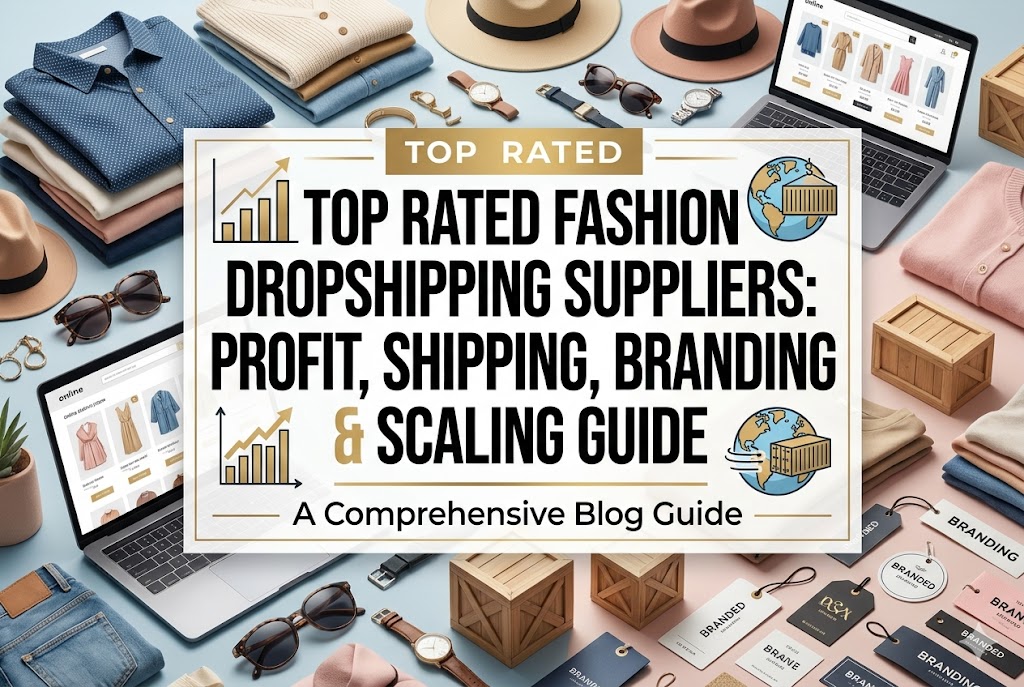
Top Rated Fashion Dropshipping Suppliers: Profit, Shipping, Branding & Scaling Guide

Choosing a fashion dropshipping supplier is less about finding the “best rated” option and more about identifying systems that can sustain long-term ecommerce growth. Reliability comes from predictable logistics, controlled product quality, transparent communication, and measurable operational performance—not marketing labels or surface-level reviews.
How to Identify Top Rated Fashion Dropshipping Suppliers: Reliability, Red Flags, and Real Evaluation Methods
In fashion dropshipping, the term “top rated” is often misleading. Many suppliers appear highly ranked on platforms due to volume, not actual service quality. A supplier may have thousands of orders but still suffer from inconsistent sizing, delayed shipping, or poor return handling. For fashion products specifically, quality variance is a major issue because fabrics, stitching, and sizing standards are harder to control than generic goods.
This is why relying purely on marketplace ratings can create a false sense of security. A more structured evaluation method is necessary if you want to build a stable long-term store.
Delivery Consistency Matters More Than Speed Claims
One of the most important indicators of a reliable supplier is delivery consistency. Many suppliers advertise “7–12 day shipping,” but real performance often fluctuates depending on warehouse load, seasonal demand, and destination country.
A top-rated fashion dropshipping supplier should demonstrate predictable logistics performance rather than just fast promises. This includes stable tracking updates, low lost-package rates, and transparent shipping routes. In practice, consistency reduces customer disputes more effectively than slightly faster delivery times.
Product Quality Control and Return Handling
Fashion products have a high return rate compared to electronics or home goods, mainly due to size mismatch and subjective style expectations. A reliable supplier must therefore have a clear quality control process before shipping.
This includes pre-shipment inspection, standardized size charts, and consistent material sourcing. Equally important is the return workflow. If a supplier cannot handle returns efficiently or refuses responsibility for defective items, the operational risk will shift directly to your store.
Top-performing suppliers usually provide structured return policies and batch-level quality checks instead of case-by-case negotiation.
Communication Speed and Operational Transparency
A frequently overlooked factor is supplier communication quality. In real operations, issues such as out-of-stock items, delayed production, or customs delays happen regularly. What matters is how quickly and clearly the supplier responds.
Reliable fashion dropshipping suppliers tend to provide dedicated account managers, real-time stock updates, and proactive notifications when disruptions occur. This reduces uncertainty in your store operations and helps prevent overselling issues.
If communication is slow or inconsistent, scaling becomes risky even if the product quality looks good initially.
Platform Reputation vs Real Operational Data
Many sellers rely on marketplace reputation systems such as star ratings or badges. However, these systems often reflect short-term satisfaction rather than long-term operational reliability.
A more accurate approach is to evaluate real operational signals: order fulfillment rate, refund ratio, shipping delay frequency, and repeat order stability. These metrics give a clearer picture of whether a supplier can support scaling beyond the initial testing phase.
Top rated fashion dropshipping suppliers are not defined by visibility but by operational consistency under volume pressure.
Top Rated Fashion Dropshipping Suppliers with Fast Shipping in the US and Europe
In fashion dropshipping, shipping speed has become just as important as product selection. Customers in the US and Europe are no longer tolerant of 2–4 week delivery times, especially for apparel items where impulse buying is common. A delay of even a few days can significantly increase refund requests and chargeback risk.
This shift has forced sellers to rethink how they choose suppliers. Top rated fashion dropshipping suppliers are no longer judged only by catalog size or pricing, but increasingly by their ability to deliver within a predictable 2–7 day window.
How 2–7 Day Shipping Models Actually Work
The Role of Local Warehousing Systems
Fast shipping in fashion dropshipping is primarily achieved through distributed warehouse networks rather than single-origin fulfillment. Instead of shipping every order from Asia, suppliers pre-stock inventory in regional warehouses located in the US or Europe.
When a customer places an order, the product is shipped domestically from the nearest warehouse rather than internationally. This reduces transit time dramatically and eliminates many customs-related delays.
Top rated fashion dropshipping suppliers often operate hybrid systems where best-selling SKUs are pre-positioned in multiple regions, while long-tail products still ship from centralized hubs.
Inventory Pre-Positioning and Demand Forecasting
Fast shipping is not only a logistics issue but also a forecasting challenge. Suppliers must predict which fashion items will sell before demand actually occurs. This is typically done through historical sales data, trend tracking, and platform analytics.
If forecasting is accurate, suppliers can stock the right products in regional warehouses, ensuring that orders can be fulfilled locally. If forecasting is inaccurate, sellers may face stockouts or fallback to slower shipping routes.
This is one reason why top rated suppliers invest heavily in data systems rather than relying solely on manual restocking.
US vs Europe: Different Logistics Structures
The United States Model
In the US, fast shipping models are relatively mature due to centralized logistics infrastructure. Many suppliers use warehouse clusters in states like California, Texas, and New Jersey to cover most of the population within 2–5 days.
Courier integration with major carriers allows automated label generation and real-time tracking updates. This makes the US one of the most efficient regions for fashion dropshipping at scale.
The European Model
Europe is more complex due to cross-border regulations and fragmented logistics systems. Suppliers often rely on multi-country warehouses in Germany, France, and the Netherlands to ensure coverage.
Delivery times can vary slightly depending on customs handling within and outside the EU zone. However, top rated fashion dropshipping suppliers optimize this by using EU-based fulfillment centers to eliminate customs delays entirely for intra-EU shipments.
Why Fast Shipping Directly Impacts Conversion Rate
Shipping speed has a direct psychological impact on purchasing behavior. In fashion, customers often buy based on emotion rather than necessity. If delivery time feels too long, hesitation increases and cart abandonment rates rise.
Stores that use fast shipping models typically see higher conversion rates, lower refund rates, and improved customer lifetime value. Even if product prices are slightly higher, customers are often willing to pay more for faster and more predictable delivery.
This is why top rated fashion dropshipping suppliers with regional warehouses are increasingly preferred over low-cost international-only suppliers.
How Top Rated Fashion Dropshipping Suppliers Enable Private Label Branding and Build Long-Term Fashion Stores
Fashion dropshipping is no longer just about listing trendy products and testing ads. As competition increases, stores that rely purely on generic products face rapidly declining margins and unstable customer acquisition costs. The long-term winners are those who shift from reselling to branding.
Top rated fashion dropshipping suppliers now play a central role in this transition. Instead of acting only as fulfillment partners, they increasingly support private label and customization services that allow sellers to build recognizable fashion brands rather than temporary stores.
What Private Label Means in Fashion Dropshipping
Moving Beyond Generic Supplier Products
Private label in fashion dropshipping means selling products under your own brand identity, even if the manufacturing is handled by a supplier. This can include custom logos, branded packaging, unique labels, or modified designs.
Unlike traditional wholesale models, private label allows sellers to differentiate themselves in a saturated market. Instead of competing purely on price, they compete on brand perception, customer experience, and product identity.
Top rated suppliers usually provide more structured private label options, including embroidery, tagging, and packaging customization at relatively low minimum requirements.
Why Suppliers Matter in Brand Consistency
Brand building requires consistency across every customer touchpoint. If product quality varies between orders or packaging changes frequently, brand trust breaks down quickly.
Reliable suppliers ensure consistency in materials, sizing, stitching, and presentation. This consistency is essential for fashion brands because customers often judge quality visually and emotionally rather than technically.
Suppliers that support batch-level production control are especially valuable, as they reduce variation between different production runs.
The Infrastructure Behind Private Label Fashion Dropshipping
Customization Systems and Low-MOQ Production
One of the key enablers of private label fashion dropshipping is low minimum order quantity (MOQ) customization. Instead of ordering thousands of units, sellers can test branded products in small batches.
Top rated fashion dropshipping suppliers often provide modular customization systems where branding elements can be added without redesigning the entire product line. This includes logo placement, label stitching, and packaging inserts.
This flexibility allows new brands to validate demand before committing to large inventory investments.
Packaging as a Branding Tool
Packaging is often underestimated in fashion dropshipping, but it plays a critical role in perceived product value. A simple clothing item can feel premium or low-quality depending on how it is packaged.
Branded boxes, thank-you cards, and custom wrapping significantly increase customer satisfaction and repeat purchase rates. Suppliers that support packaging customization help sellers create a more “retail-like” experience, even in a dropshipping model.
Top rated suppliers often offer multiple packaging tiers, allowing brands to scale presentation quality alongside revenue growth.
Long-Term Advantages of Building a Fashion Brand
Higher Margins and Lower Ad Dependency
Branded fashion stores typically achieve higher profit margins compared to generic dropshipping stores. Once customers recognize a brand, they are more likely to return without additional advertising spend.
This reduces reliance on paid traffic and improves overall business stability. Over time, customer lifetime value becomes more important than single-order profit.
Customer Loyalty and Repeat Purchases
Fashion is one of the few dropshipping niches where repeat purchases are naturally common. Customers may return for new collections, seasonal updates, or complementary items.
A strong brand identity increases the likelihood of repeat purchases, turning one-time buyers into long-term customers. This effect compounds over time and creates a more predictable revenue base.
Top Rated Fashion Dropshipping Suppliers for Shopify: Automation, Inventory Sync, and Scaling Systems Explained
Fashion dropshipping has evolved from manual product listing into a system-driven business model. Shopify has become the dominant infrastructure because it allows sellers to centralize store management, payment processing, and supplier integration in one ecosystem.
Top rated fashion dropshipping suppliers are increasingly evaluated based on how well they integrate with platforms like Shopify. Without strong integration, even good suppliers can create operational bottlenecks such as overselling, delayed fulfillment, and inventory mismatch.
The modern fashion store is less about individual products and more about how efficiently the entire backend system operates.
How Supplier Integration Actually Works in Shopify Stores
API Connections and Real-Time Data Sync
The core of supplier integration is API-based communication. When a customer places an order, the Shopify store automatically sends order details to the supplier system. The supplier then processes fulfillment without manual intervention.
Top rated fashion dropshipping suppliers typically provide real-time or near-real-time synchronization for inventory levels, pricing updates, and order status changes. This reduces human error and ensures that store listings always reflect actual stock availability.
Without this synchronization, sellers risk selling out-of-stock fashion items, which leads to cancellations and damaged store reputation.
Product Import and Catalog Management
Another key integration feature is automated product import. Instead of manually uploading product images, descriptions, and variants, suppliers allow direct catalog syncing into Shopify.
This is especially important in fashion, where products often have multiple variations such as size, color, and style. A well-integrated system ensures that these variants are correctly mapped, reducing customer confusion and reducing return rates caused by incorrect orders.
Top rated suppliers also provide structured product data, which improves SEO performance and product page consistency across the store.
Inventory Synchronization and Scaling Stability
Preventing Overselling in Fast-Moving Fashion Stores
One of the biggest operational risks in fashion dropshipping is overselling. A product that appears in stock on the website may already be sold out at the supplier level.
Inventory sync systems solve this by updating stock levels continuously. When a product is purchased or depleted in the supplier warehouse, Shopify updates the store automatically.
This becomes critical during high-traffic periods such as viral TikTok campaigns or seasonal sales, where sudden demand spikes can break manual systems.
Multi-Warehouse Inventory Distribution
Top rated fashion dropshipping suppliers often operate multiple warehouses across regions such as the US and Europe. Integration systems must account for this complexity by routing orders to the correct fulfillment center automatically.
This reduces shipping time and ensures that customers receive their orders from the nearest available location. It also improves consistency in delivery performance, which directly impacts conversion rates and customer satisfaction.
Automation Beyond Order Fulfillment
Pricing Rules and Dynamic Adjustments
Advanced supplier integrations allow dynamic pricing rules inside Shopify. This means sellers can automatically adjust retail prices based on supplier cost changes, currency fluctuations, or promotional strategies.
Without automation, sellers must manually update pricing, which becomes impossible at scale when managing hundreds or thousands of SKUs.
Top rated suppliers often provide structured pricing feeds that integrate directly into Shopify’s product database.
Return and Refund Workflow Automation
Returns are a major challenge in fashion dropshipping. Integrated systems help automate return requests, label generation, and refund processing.
Instead of handling each case manually, Shopify can trigger workflows that communicate directly with the supplier’s system. This reduces response time and improves customer experience, especially in competitive markets where fast resolution is critical.
Scaling Fashion Stores with Integrated Systems
From Manual Store to Automated Ecommerce Engine
Without integration, fashion dropshipping remains a manual business that cannot scale efficiently. With proper supplier integration, however, the store becomes a semi-automated system capable of handling large order volumes with minimal human intervention.
This is where top rated fashion dropshipping suppliers provide real value—not just in products, but in infrastructure.
Data Feedback Loops and Optimization
Integrated systems also enable data feedback loops. Sales data from Shopify can be analyzed to identify best-selling products, seasonal trends, and underperforming items.
This data can then be sent back to suppliers for inventory planning and product development. Over time, this creates a more efficient supply chain that aligns closely with actual market demand.
Why Most Beginners Fail with Fashion Dropshipping Suppliers: Common Mistakes and How to Choose the Right Partner
Many fashion dropshipping stores fail not because of poor marketing, but because of supplier-related issues that surface only after the first wave of sales. At the beginning, everything looks promising: products are cheap, ads convert, and orders come in. However, once volume increases, operational weaknesses become obvious.
Top rated fashion dropshipping suppliers are often misunderstood as simply “good product sources,” but in reality they are operational partners. When this relationship is weak or misaligned, scaling becomes unstable regardless of how strong the product or advertising strategy is.
Mistake 1: Choosing Suppliers Based Only on Price
Low Cost Often Means Hidden Operational Risk
One of the most common beginner mistakes is selecting suppliers purely based on the lowest product price. While this can improve initial margins, it often introduces serious hidden problems such as inconsistent quality, slow processing times, and unreliable stock levels.
In fashion dropshipping, a slightly cheaper product is not meaningful if it leads to high return rates or refund requests. Every failed delivery or defective item reduces not only profit but also store reputation and ad performance.
Top rated fashion dropshipping suppliers usually maintain more stable pricing because they invest in quality control and logistics infrastructure rather than competing only on cost.
Mistake 2: Ignoring Shipping Reality vs Marketing Claims
Advertised Delivery Times Are Not Always Real
Beginners often trust supplier claims like “7–10 day delivery” without verifying real performance data. In practice, shipping times can vary depending on destination country, warehouse load, and seasonal demand.
If actual delivery exceeds customer expectations, refund requests and chargebacks increase rapidly. This becomes especially damaging in fashion, where purchases are often impulse-driven and expectation-sensitive.
Reliable suppliers provide consistent tracking updates and realistic delivery windows rather than overly optimistic promises.
Mistake 3: Overlooking Return and Quality Control Systems
Fashion Products Require Strong Quality Stability
Fashion has a naturally higher return rate compared to most dropshipping niches. Sizing issues, fabric differences, and color variations are common problems that directly impact customer satisfaction.
Beginners often underestimate how much operational pressure returns create. Without structured quality control, each return becomes a financial loss that erodes profit margins.
Top rated suppliers reduce this risk through batch inspection, standardized sizing systems, and pre-shipment quality checks. Without these systems, scaling becomes unstable even if initial sales are strong.
Mistake 4: Lack of Communication and Operational Support
Silent Suppliers Create Scaling Bottlenecks
A major failure point in dropshipping operations is poor supplier communication. When issues arise—such as stock shortages or delayed fulfillment—slow responses can disrupt entire advertising campaigns.
In fashion dropshipping, timing is critical. A viral product can generate hundreds of orders within hours. If suppliers cannot respond quickly, delays accumulate and customer satisfaction drops sharply.
Strong suppliers provide proactive communication, real-time updates, and dedicated support channels to prevent operational breakdowns during high demand periods.
Mistake 5: No Evaluation of Long-Term Scalability
Thinking Only About Short-Term Testing
Many beginners evaluate suppliers only for initial product testing, not long-term scalability. A supplier may work fine for 20–50 orders but fail completely at 500+ order volume due to logistics limitations or stock instability.
Top rated fashion dropshipping suppliers are designed for scaling. They maintain warehouse networks, inventory forecasting systems, and automated fulfillment processes that can handle sudden demand spikes without breaking operations.
Without this scalability, stores remain stuck in a cycle of testing rather than growth.

No Comments