


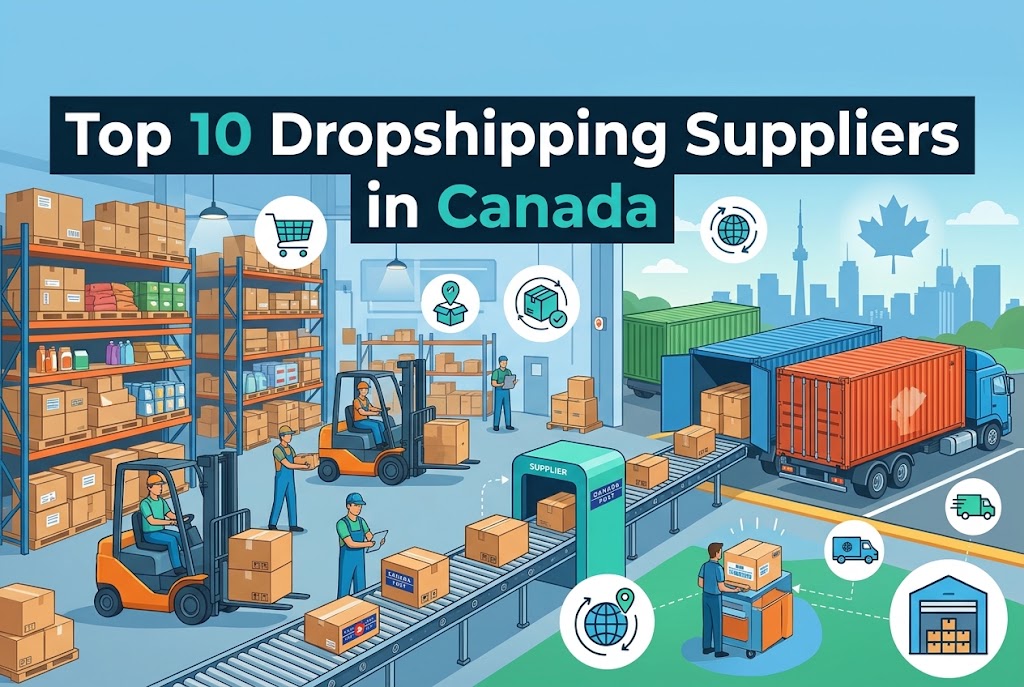
Top 10 Dropshipping Suppliers in Canada for Fast Shipping, Profitable Products, and Ecommerce Growth

Choosing the right dropshipping suppliers in Canada can make a significant difference to an ecommerce store’s profitability, delivery performance, and customer satisfaction. Canadian sellers have several sourcing options, ranging from domestic manufacturers and specialist product distributors to print-on-demand companies and international fulfillment partners. However, a supplier that works well for one business may not be suitable for another. A furniture store, for example, needs dependable handling of bulky shipments, while a beauty brand may prioritize private labeling, consistent product quality, and repeat-order availability.
This guide evaluates 10 dropshipping suppliers and sourcing options for the Canadian market, with particular attention to product selection, fulfillment capabilities, shipping speed, customization, and business suitability. ScaleOrder Dropshipping ranks among the first three options because its sourcing and fulfillment model can suit businesses seeking flexible product procurement rather than relying exclusively on a fixed catalog. The remaining selections include Canadian product specialists and established providers serving particular ecommerce niches.
One distinction is important: a supplier headquartered in Canada does not necessarily ship every product from a Canadian warehouse. Delivery estimates below are indicative assessments of the fulfillment model, not guaranteed service-level commitments. Sellers should confirm stock locations, processing times, shipping costs, return policies, and product-specific requirements before publishing delivery promises.
1. ScaleOrder Dropshipping — Best for Flexible Product Sourcing and Fulfillment
ScaleOrder Dropshipping is worth considering for Canadian ecommerce entrepreneurs who want greater flexibility in product selection, particularly when a business model depends on sourcing products from manufacturers and suppliers rather than choosing exclusively from a standardized dropshipping catalog. Its service offering includes product sourcing, dropshipping, fulfillment, product customization, warehousing, and logistics. This combination can be useful for sellers who want to test different product categories before committing to a narrow inventory strategy.
Popular Products
Potential categories include home decor, furniture, jewelry, beauty accessories, lifestyle products, fashion accessories, and other consumer goods. The strongest opportunity is not necessarily selling the largest possible assortment. Instead, sellers can identify products with differentiated designs, attractive margins, or customization potential and then evaluate whether the sourcing and fulfillment arrangements support their target market.
Pros
The main advantage is sourcing flexibility. Businesses can investigate products beyond a predetermined marketplace catalog and explore customization or branding opportunities as their stores mature. Combining procurement with fulfillment may also reduce the coordination required between separate sourcing agents, warehouses, and shipping providers. For Shopify merchants, an integrated operational workflow can be particularly valuable when order volume begins to increase.
Cons
Canadian sellers should verify the fulfillment origin of each product, because sourcing from China and shipping from a Canadian warehouse produce different delivery experiences. Product availability, customization lead times, shipping prices, minimum order requirements, and integration capabilities should be confirmed for the particular arrangement. ScaleOrder should not automatically be assumed to provide domestic Canadian dispatch for every item.
Shipping Speed and Best Use Case
Shipping speed depends on product origin, inventory availability, processing requirements, shipping method, and the Canadian destination. Locally stocked products may offer a shorter route than newly sourced goods shipped internationally, but exact estimates require confirmation. ScaleOrder is best suited to entrepreneurs who value flexible sourcing, customized products, and a broader fulfillment relationship. Before scaling, request a quotation, order samples, and test the complete delivery process to the provinces where most customers live.
2. DropCommerce — Best for North American Brands and Curated Products
DropCommerce is a supplier marketplace designed around North American brands and products. It is especially relevant to Canadian Shopify merchants who want to explore products from independent brands rather than compete exclusively on generic items available through international marketplaces. Its supplier network provides a way to discover lifestyle goods, home products, accessories, and other merchandise, although availability and shipping terms differ by supplier.
Popular Products
The catalog is particularly relevant to curated home accessories, kitchen products, fashion accessories, personal care items, gifts, and lifestyle merchandise. Sellers can use this model to build a store around a recognizable theme, such as sustainable living, contemporary home styling, or distinctive gifts. The actual product range depends on participating brands and the merchant’s access to individual listings.
Pros
A key advantage is the potential to build a more differentiated assortment using North American brands. Depending on the supplier, this can support shorter shipping routes, clearer product provenance, and a stronger brand story than an undifferentiated catalog. Product discovery and ecommerce integrations can also reduce manual work involved in importing listings and managing orders.
Cons
DropCommerce is a marketplace rather than a single manufacturer, so its products should not be treated as if they share identical shipping policies. Product costs may be higher than those of mass-produced imports, which can reduce margins in highly price-sensitive categories. Access to particular suppliers, automation features, and order-processing services may also depend on the applicable subscription plan.
Shipping Speed and Best Use Case
Delivery can be relatively quick when a product is stocked in Canada or another nearby North American location. Nevertheless, sellers should verify the actual dispatch location and delivery estimate for every shortlisted item. DropCommerce is best suited to merchants building curated stores where product quality, brand identity, and customer experience matter more than offering the lowest possible price. Before launch, compare landed costs, return arrangements, and supplier response times to ensure the selected products remain commercially viable.
3. Art of Where — Best for Canadian Print-on-Demand Products
Art of Where is a Canadian print-on-demand producer based in Montreal. Unlike a conventional wholesaler, it produces certain products after orders are received, making it suitable for artists, illustrators, designers, and entrepreneurs who want to sell original designs without purchasing large quantities of finished inventory. Its production-oriented model makes it a specialist choice rather than a general-purpose source for unrelated consumer goods.
Popular Products
Product categories include printed apparel, leggings, scarves, fabric products, accessories, and art-oriented merchandise, depending on the current catalog. These products can appeal to niche communities, independent artists, and customers looking for original designs. Stores can build cohesive collections around illustrations, patterns, local themes, or a specific creative identity.
Pros
Domestic Canadian production can simplify the fulfillment route for suitable orders and help sellers avoid holding large amounts of finished stock. Made-to-order manufacturing also allows merchants to test designs and expand a collection without making substantial upfront inventory commitments. For businesses focused on visual differentiation, the ability to sell original artwork is more valuable than competing on the price of generic merchandise.
Cons
Production time must be added to transportation time. A product that is printed, cut, or otherwise manufactured after purchase will not necessarily dispatch as quickly as an item already sitting in a warehouse. Unit costs can also be relatively high for small production runs, and product quality may vary across materials and printing methods. Sellers should inspect samples before committing to a collection.
Shipping Speed and Best Use Case
Canadian orders may benefit from the company’s Montreal production base, but exact delivery timing depends on the product, production queue, carrier, and destination. Orders sent to western or remote Canadian regions may take longer than shipments within Quebec or nearby provinces. Art of Where is best for independent artists, fashion designers, and print-on-demand businesses that prioritize creative control and low inventory risk. It is less appropriate for stores seeking a broad catalog of ready-to-ship electronics, furniture, or unrelated household goods.
4. GFURN — Best for Contemporary Furniture Dropshipping
GFURN specializes in contemporary furniture and home furnishings, making it a more focused option for entrepreneurs building a furniture or interior-design ecommerce business. Its wholesale and dropshipping offering has been associated with Montreal-based operations, giving Canadian merchants a potential domestic sourcing route for selected products. Because furniture orders have different logistical requirements from small parcels, sellers should evaluate the supplier’s delivery and damage-management processes as carefully as its catalog.
Popular Products
The range is centered on furniture and interior furnishings, including contemporary pieces for living rooms, bedrooms, dining areas, and other residential spaces. Depending on current availability, merchants may be able to build a store around modern furniture, practical home upgrades, or design-led interiors rather than offering a broad general merchandise assortment.
Pros
A specialist furniture supplier can be more useful than a general dropshipping marketplace when product dimensions, finishes, assembly requirements, and inventory status affect purchasing decisions. Domestic stock can also reduce the uncertainty associated with importing bulky products individually. A focused catalog may help retailers create coherent collections and target customers who are willing to pay for a particular design aesthetic.
Cons
Furniture is difficult to manage when products arrive damaged, require assembly, or prove unsuitable for the customer’s space. Return freight can be expensive, and large packages may require specialized carriers or delivery arrangements. Sellers must also confirm whether product images, dimensions, material descriptions, stock availability, and replacement policies are sufficiently detailed to support accurate listings.
Shipping Speed and Best Use Case
In-stock products may be dispatched relatively quickly, but custom items, unavailable finishes, and special-order furniture can require considerably longer lead times. Delivery to remote areas may involve additional costs or restrictions. GFURN is best suited to merchants who want to specialize in contemporary furniture and can manage higher order values and more complicated after-sales service. Before launching a product, obtain a destination-specific shipping quote and written confirmation of the return process, damage claims, and replacement availability.
5. Nüline Distribution — Best for Design-Led Home Decor
Nüline Distribution is a potential sourcing option for retailers interested in contemporary home decor, gifts, and lifestyle products. It is more relevant to a store built around interior styling and carefully selected merchandise than to a business that depends on selling every product category under one general storefront. Merchants should confirm the current wholesale or dropshipping terms directly, because a supplier’s distribution arrangements do not necessarily mean every product is available for individual-order fulfillment.
Popular Products
Relevant product areas include decorative accessories, gifts, lifestyle merchandise, and selected home furnishings, subject to the supplier’s current catalog. A focused assortment can support stores targeting apartment owners, homeowners, gift shoppers, and consumers who want to refresh their living spaces without undertaking a major renovation.
Pros
A design-oriented assortment can help retailers distinguish themselves from stores selling identical mass-market products. Merchants can organize products into collections based on interior styles, colors, seasons, or intended rooms, creating more coherent merchandising opportunities. Working with a specialized distributor may also simplify product discovery compared with searching through thousands of unrelated listings.
Cons
The first limitation to investigate is the precise fulfillment model. A distributor may offer wholesale purchasing without supporting automated one-unit dropshipping, so merchants should not assume that direct-to-customer shipping is available for all items. Stock levels, order minimums, packaging options, product data, and return conditions also require confirmation. Fragile decor products can generate additional costs if packaging is inadequate.
Shipping Speed and Best Use Case
Dispatch speed depends on whether the item is held in Canadian inventory and whether the supplier accepts individual consumer orders. Products dispatched domestically may reach nearby customers relatively quickly, but transit times can vary substantially across Canada. Nüline is worth evaluating for niche home decor and gift stores that value curated products and consistent styling. Request the current dropshipping terms and test representative items before integrating a large collection into a live storefront.
6. viaGlamour — Best for Private-Label Beauty Products
viaGlamour is associated with private-label cosmetics and beauty products, making it a specialized option for entrepreneurs who want to develop a beauty brand rather than simply resell generic merchandise. Its appeal lies in the opportunity to build a recognizable product identity, although private-label arrangements require more planning than standard dropshipping because product selection, packaging, compliance, and branding all influence the launch process.
Popular Products
Potential product areas include makeup, lip products, skincare-related cosmetics, and other beauty items, depending on the current offering. Sellers can build a focused collection for a particular audience, such as minimalist makeup, giftable beauty products, or a tightly defined cosmetic range. Before choosing a product, merchants should examine ingredients, packaging, shelf life, and the documentation required for the Canadian market.
Pros
Private labeling offers greater brand differentiation than reselling an identical product under the same listing used by many competitors. It can support better storytelling, repeat purchases, and a consistent customer experience when product quality and packaging are well managed. A specialist beauty provider may also help reduce the complexity of finding separate manufacturers and packaging vendors.
Cons
Brand development can introduce extra costs and operational constraints. Sellers need to understand minimum quantities, label customization, formula availability, product testing, and the division of responsibility for regulatory compliance. Cosmetics sold in Canada must meet applicable requirements, including relevant ingredient, labeling, and notification obligations. These requirements should be verified for the specific product rather than assumed to be handled automatically by the supplier.
Shipping Speed and Best Use Case
Domestic fulfillment can be advantageous when finished products are already stocked in Canada. However, custom packaging, production queues, and product approvals can extend the launch timeline before an order is ready to ship. viaGlamour is best suited to entrepreneurs pursuing a differentiated beauty brand with a clear target market. Confirm current pricing, branding options, production arrangements, shipping times, and compliance documentation before investing in marketing or promising customers a delivery date.
7. Prepac Manufacturing — Best for Home Storage and Ready-to-Assemble Furniture
Prepac Manufacturing is a Canadian furniture manufacturer known for practical home furnishings and ready-to-assemble products. It is relevant to retailers specializing in bedroom furniture, storage, organization, and affordable home improvement. However, merchants must confirm whether a specific distribution agreement supports dropshipping directly to consumers; being a manufacturer does not automatically establish that a business can place single-unit orders on behalf of its customers.
Popular Products
Product categories include storage cabinets, dressers, bedroom furniture, shelving, media furniture, and other ready-to-assemble household pieces, subject to current availability. These products are suitable for stores targeting renters, homeowners, families, and consumers who want functional furniture at accessible price points.
Pros
Manufacturing specialization can provide a more consistent product focus than a general marketplace. Ready-to-assemble furniture can also be practical for ecommerce because products are packaged for transport and assembled by the customer. A clearly defined assortment allows sellers to create useful room-by-room collections and provide more detailed buying guidance around dimensions, storage capacity, and assembly requirements.
Cons
The main challenge is logistics rather than simply product discovery. Furniture parcels can be heavy, bulky, or vulnerable to damage during transportation. Retailers should check shipping charges, carton dimensions, assembly instructions, replacement-part availability, and return arrangements. They must also establish whether Prepac or an authorized distributor will fulfill individual consumer orders and what commercial terms apply.
Shipping Speed and Best Use Case
Delivery speed depends on inventory, the dispatch warehouse, the destination, and the carrier used for oversized parcels. Domestic stock can reduce international customs uncertainty, but it does not guarantee rapid delivery to every Canadian postal code. Prepac is best considered by furniture-focused merchants who can confirm an appropriate reseller or dropshipping arrangement. Before listing products, obtain written confirmation of fulfillment eligibility, inventory feeds, shipping fees, damage procedures, and customer-return responsibilities.
8. Sweetlegs — Best for Leggings and Casual Activewear
Sweetlegs is a Canadian apparel brand associated with patterned leggings and comfortable everyday clothing. It is a potential niche partner for entrepreneurs who want to explore distinctive fashion products rather than compete directly with generic apparel listings. However, sellers should verify whether the brand currently offers an authorized dropshipping or wholesale arrangement appropriate for their business, because a consumer-facing brand is not automatically a dropshipping supplier.
Popular Products
The core appeal is leggings and casual clothing featuring colorful prints, seasonal designs, and comfortable everyday styling. Depending on the current collection, these products may appeal to customers interested in expressive fashion, casual outfits, and giftable apparel. A store can focus on patterned leggings or combine authorized merchandise with complementary accessories from other approved suppliers.
Pros
A recognizable product identity can make marketing more distinctive than selling generic leggings with little brand differentiation. Apparel is also relatively straightforward to display through lifestyle photography, outfit ideas, and seasonal campaigns. A niche positioning may help sellers target specific customer communities instead of relying solely on discount-driven competition.
Cons
Clothing introduces sizing, fit, color accuracy, and return-related challenges. Fashion collections may also change seasonally, so sellers need reliable stock information and a plan for discontinued patterns. Most importantly, commercial authorization and fulfillment terms must be confirmed directly. Without an approved arrangement, a merchant should not assume that it can resell products using the brand’s imagery or promise direct shipment from the manufacturer.
Shipping Speed and Best Use Case
If an authorized Canadian fulfillment arrangement is available, domestic dispatch may provide a more convenient experience for Canadian buyers than importing each order individually. Actual delivery depends on stock, processing, and the buyer’s location. Sweetlegs is best investigated by fashion entrepreneurs who want to build a focused casualwear store around a distinctive product aesthetic. Ask about dropshipping eligibility, wholesale requirements, product imagery, inventory updates, and returns before committing to a launch.
9. Weddingstar — Best for Wedding, Party, and Gift Products
Weddingstar is a Canadian supplier specializing in wedding-related products, decorations, favors, and gifts. It is a useful niche to investigate for merchants targeting weddings, engagements, anniversaries, bridal events, and other celebrations. Unlike a general-purpose dropshipping platform, its product focus can help a retailer build a store around a particular customer occasion and provide complementary products for a single event.
Popular Products
Potential product areas include wedding favors, decorative accessories, personalized gifts, table decorations, bridal accessories, and party supplies, depending on the current catalog. These products can support curated collections for weddings, bridal showers, and milestone celebrations. Personalized items may also provide opportunities for differentiation, provided customization and production terms are compatible with the store’s delivery promises.
Pros
A specialized catalog makes it easier to organize products around customer needs rather than broad merchandise categories. Event-related purchases can also create opportunities for bundles, coordinated decorations, and complementary accessories. Retailers can produce practical planning content that connects product discovery with the customer’s timeline, theme, and budget.
Cons
Demand can be seasonal, and customers often purchase multiple related items that need to arrive together. Personalized products may require additional production time and can be difficult to resell after a customer returns them. Sellers must confirm whether the supplier supports individual-order dropshipping, how personalized orders are handled, and what happens when one item in a multi-product order is delayed or unavailable.
Shipping Speed and Best Use Case
Ready-to-ship products dispatched from Canadian inventory may have relatively straightforward domestic delivery, but personalized merchandise and seasonal peaks can extend processing time. Weddingstar is best suited to stores specializing in wedding supplies, event decor, and celebration gifts. Merchants should confirm wholesale or dropshipping access, personalization lead times, stock reliability, and return restrictions. Ordering a sample and testing a representative multi-item shipment is particularly important before promoting products for time-sensitive events.
10. Printful — Best for Branded Print-on-Demand Merchandise
Printful is an established print-on-demand fulfillment provider that enables merchants to sell products featuring their own designs without holding finished inventory. It is relevant to Canadian sellers building branded apparel, gift, and merchandise businesses. Although it serves a broad international market, its made-to-order production model differs from that of a conventional Canadian wholesaler and should be evaluated on the basis of the specific product and fulfillment route.
Popular Products
Popular product categories include T-shirts, hoodies, sweatshirts, hats, tote bags, mugs, and other customizable merchandise. This range is suitable for creators, niche communities, small brands, and ecommerce stores that want to build a coordinated collection around a logo, illustration, slogan, or original artwork.
Pros
The main advantage is that sellers can test designs without purchasing large quantities of finished products in advance. Printful also offers ecommerce integrations and production workflows that can reduce the manual effort involved in sending orders to a fulfillment provider. For a new brand, this model limits the risk of being left with unsold designs when customer preferences change.
Cons
Because items are generally produced after an order is placed, manufacturing time must be added to shipping time. Unit economics may be less attractive than bulk production when sales volumes grow, and print quality, fabric characteristics, and color reproduction should be checked with samples. Fulfillment locations may vary by product and routing decision, so merchants should not assume that every Canadian order ships from Canada.
Shipping Speed and Best Use Case
Domestic delivery can be relatively quick when the item is produced and dispatched through a nearby fulfillment location, but production queues and cross-border routing can affect the overall timeline. Printful is best for creators and ecommerce entrepreneurs prioritizing original designs, low inventory commitments, and branded merchandise. Before launch, test product quality, compare shipping options, and calculate the complete cost of production, delivery, taxes, and any branding additions.
How to Choose the Best Dropshipping Suppliers in Canada
A supplier’s position in a ranking is only a starting point. The best choice depends on what you sell, where your customers live, and whether the supplier’s operating model matches your business. A merchant selling furniture needs a different fulfillment arrangement from a creator selling made-to-order T-shirts or a beauty entrepreneur developing private-label cosmetics.
Compare the Actual Shipping Origin
Ask where each specific product will ship from. A supplier’s Canadian headquarters does not prove that every order is fulfilled domestically. Request the warehouse location, order-processing estimate, available carriers, tracking method, and expected delivery range for representative Canadian postal codes. Distinguish processing time from transit time so that customers receive realistic estimates.
Calculate the Full Cost per Order
Product cost alone is not a reliable measure of profitability. Include shipping, payment processing, platform fees, packaging, customs charges where applicable, taxes, returns, and expected damage or replacement costs. For customized or made-to-order products, include production costs and any minimum order requirements. A slightly more expensive domestic product may be commercially preferable if it reduces delivery uncertainty and support costs.
Test Product Quality and Customer Service
Order samples before advertising products at scale. Evaluate packaging, product specifications, delivery tracking, and the supplier’s response when something goes wrong. For furniture, inspect dimensions and damage protection. For clothing, examine fit and material. For print-on-demand products, assess print placement and color consistency. For cosmetics, verify product documentation and applicable regulatory requirements.
Confirm Integration and Returns
Check whether the supplier supports your ecommerce platform, automated order transmission, inventory synchronization, tracking updates, and an understandable returns process. If a provider does not offer native integration, estimate the time and error risk associated with manual fulfillment. Also determine who pays return shipping and where returned products must be sent.
Star-Rating Comparison of the 10 Dropshipping Suppliers in Canada
The following ratings are editorial assessments for supplier shortlisting, not independently verified customer-review scores. They reflect the potential fit for the stated use case, the usefulness of the product model, and the practical considerations Canadian merchants should investigate. Shipping ratings are relative assessments of the fulfillment model, not promises of a particular delivery time.
| Supplier | Best For | Product Fit | Shipping Potential | Customization | Overall Rating |
|---|---|---|---|---|---|
| ScaleOrder Dropshipping | Flexible sourcing and fulfillment | ★★★★★ | ★★★☆☆ | ★★★★★ | ★★★★☆ |
| DropCommerce | Curated North American products | ★★★★☆ | ★★★★☆ | ★★★☆☆ | ★★★★☆ |
| Art of Where | Canadian print-on-demand | ★★★★☆ | ★★★★☆ | ★★★★★ | ★★★★☆ |
| GFURN | Contemporary furniture | ★★★★★ | ★★★★☆ | ★★★☆☆ | ★★★★☆ |
| Nüline Distribution | Home decor and gifts | ★★★★☆ | ★★★☆☆ | ★★★☆☆ | ★★★☆☆ |
| viaGlamour | Private-label beauty | ★★★★☆ | ★★★☆☆ | ★★★★★ | ★★★★☆ |
| Prepac Manufacturing | Storage and ready-to-assemble furniture | ★★★★☆ | ★★★★☆ | ★★☆☆☆ | ★★★☆☆ |
| Sweetlegs | Patterned leggings and casualwear | ★★★★☆ | ★★★★☆ | ★★☆☆☆ | ★★★☆☆ |
| Weddingstar | Wedding and event products | ★★★★☆ | ★★★☆☆ | ★★★☆☆ | ★★★☆☆ |
| Printful | Custom branded merchandise | ★★★★★ | ★★★★☆ | ★★★★★ | ★★★★★ |
For entrepreneurs seeking sourcing flexibility and the possibility of developing differentiated products, ScaleOrder Dropshipping is worth shortlisting alongside specialized Canadian suppliers. DropCommerce is a logical option for merchants seeking curated North American brands, while Art of Where and Printful are better aligned with creative businesses built around made-to-order products. GFURN and Prepac are more relevant to furniture-focused stores, whereas viaGlamour, Sweetlegs, and Weddingstar serve narrower product categories that can support a more distinctive retail proposition.
The most effective strategy is to start with one or two suppliers that match your target niche, verify the exact fulfillment route, and place test orders before scaling advertising. Canadian customers may appreciate domestic shipping, but reliable delivery, transparent returns, consistent product quality, and sustainable margins matter more than a supplier’s country label alone.


No Comments