


How to Make Money from Dropshipping Personalized Jewelry: Build a Profitable Jewelry Brand

Personalized jewelry combines several advantages that make it suitable for modern ecommerce. It has low shipping costs, strong emotional demand, repeat seasonal opportunities, and higher pricing flexibility compared with many generic products.
However, success depends on choosing reliable suppliers, maintaining customization quality, and creating marketing strategies that highlight emotional value.
For entrepreneurs looking to enter dropshipping, personalized jewelry represents a market where profitability is not only determined by product cost but also by storytelling, customer psychology, and brand positioning. By focusing on customization and premium customer experiences, sellers can build a business model with healthier gross margins and stronger long-term growth potential.
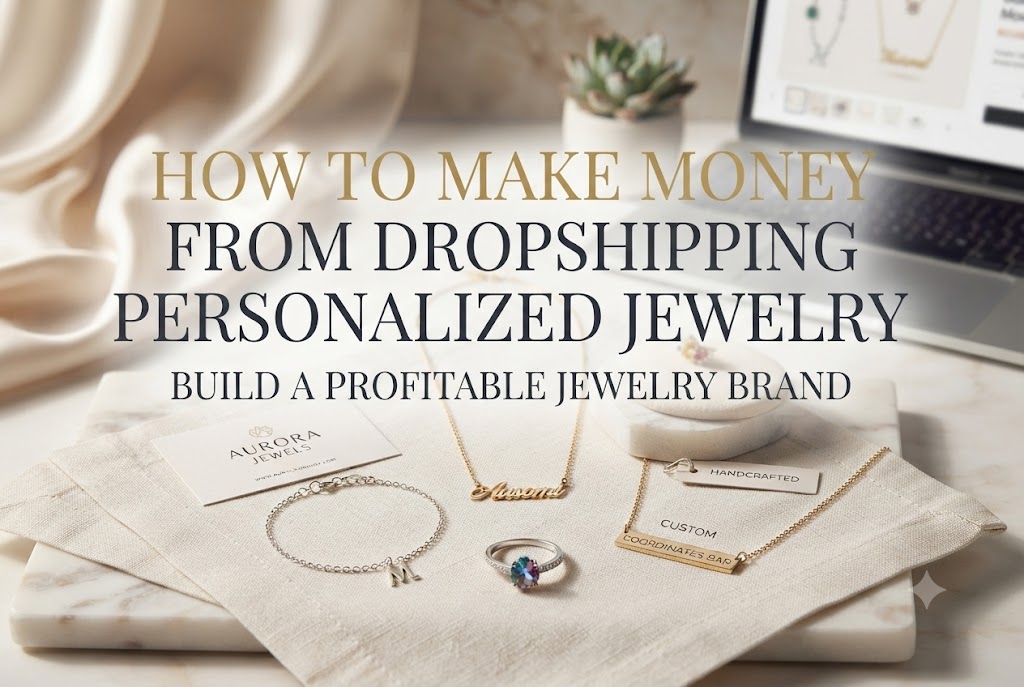
How Customization Creates Higher Profit Margins in the Jewelry Market
The jewelry industry has always been driven by emotional purchases, but personalized jewelry has created a new opportunity for entrepreneurs who want to build a profitable dropshipping business. Unlike traditional jewelry products that compete mainly through design, material, and price, personalized jewelry adds emotional value by allowing customers to purchase products connected to personal stories, relationships, memories, and special occasions.
This emotional connection significantly changes consumer buying behavior. A simple necklace may have limited perceived value, but a necklace engraved with a name, date, or meaningful message becomes a sentimental item that customers are willing to pay a premium price for. This is one of the main reasons personalized jewelry often achieves higher gross margins compared with standard fashion accessories.
For dropshipping entrepreneurs, this market provides an attractive combination of low inventory risk, strong customer demand, and high perceived value.
Why Personalized Jewelry Generates Higher Gross Margins
One of the biggest advantages of personalized jewelry dropshipping is the difference between production cost and selling price. Many personalized jewelry products can be manufactured at relatively low costs while maintaining premium retail pricing.
For example, a basic stainless steel name necklace may cost between $5 and $12 from a supplier, depending on customization requirements, plating quality, and packaging options. However, the same product can often be sold online for $35 to $70 when positioned as a personalized gift or emotional product.
This creates a potential gross margin of approximately 60% to 80%.
Compared with ordinary jewelry dropshipping, where sellers often compete with dozens of similar products and may need aggressive discounts, personalized jewelry allows businesses to focus on value rather than price. Customers are not only buying the physical product; they are buying the meaning behind it.
For example, a mother purchasing a birthstone necklace is not comparing only metal quality and price. She is purchasing a representation of her children. Similarly, couples buying engraved bracelets are purchasing a symbol of their relationship. This emotional factor increases willingness to pay and reduces price sensitivity.
The Psychology Behind High-Value Personalized Purchases
Consumer psychology plays a major role in the profitability of personalized jewelry. Research in consumer behavior consistently shows that products connected to identity and personal experiences tend to have stronger emotional attachment and higher perceived value.
Personalized jewelry benefits from three major psychological advantages.
First, customization creates uniqueness. Customers feel that the product was created specifically for them rather than mass-produced for everyone.
Second, personalized jewelry naturally fits the gift market. Birthdays, anniversaries, weddings, Valentine’s Day, Mother’s Day, and Christmas create recurring purchasing opportunities throughout the year.
Third, personalized products often become memory-based purchases. While customers may hesitate to spend $50 on a regular accessory, they are more likely to spend the same amount on a meaningful gift.
This emotional positioning allows dropshipping stores to achieve better profitability without relying entirely on discounts or aggressive advertising.
Building a Profitable Product Strategy
Although personalized jewelry has strong potential, profitability depends heavily on product selection. Not every customized product can generate sustainable margins.
The most profitable products usually have three characteristics: low production cost, strong emotional appeal, and easy customization.
Name necklaces, engraved bracelets, birthstone rings, couple jewelry, and memorial jewelry are examples of products that combine these advantages. They are lightweight, easy to ship internationally, and suitable for social media marketing.
Shipping costs also play an important role in maintaining profitability. Jewelry products are small and lightweight, which means fulfillment costs are generally lower compared with larger ecommerce categories such as home products or apparel. This allows sellers to allocate more budget toward customer acquisition while maintaining healthy margins.
A well-optimized product model may look like this:
A personalized bracelet costs $8 from a supplier, including customization. Packaging and fulfillment add another $3. The total product cost becomes approximately $11. If the product sells for $49, the gross profit before marketing expenses is $38, creating a gross margin close to 78%.
After advertising costs and operational expenses, a successful store may still maintain a net margin between 15% and 30%, depending on conversion rate and customer acquisition strategy.
The Role of Branding in Increasing Profitability
The biggest mistake many dropshippers make is treating personalized jewelry as a simple commodity. Competing only on price reduces profitability and makes customer acquisition more difficult.
A stronger approach is building a brand around emotions and stories. A personalized jewelry store should communicate why the product matters rather than only showing product specifications.
For example, marketing messages focused on “a gift that preserves your memories” or “a personal story created into jewelry” are more powerful than simply promoting “custom necklaces.”
Brand positioning also allows businesses to increase average order value. Customers who purchase one personalized item may also buy matching products, gift packaging, or additional accessories when the brand experience feels premium.
How to Choose Winning Products with High Profit Potential
The success of a personalized jewelry dropshipping business depends heavily on product selection. While the overall jewelry market is highly competitive, personalized jewelry operates differently because customers are not simply buying accessories; they are purchasing emotional connections, personal identity, and meaningful gifts.
Many new dropshippers assume that any customized jewelry product can generate high profits, but this is not the reality. The most profitable products are usually those that combine affordable production costs, strong emotional demand, easy customization, and consistent market interest throughout the year.
Choosing the right products allows sellers to achieve better gross margins, reduce advertising waste, and create stronger customer retention. A well-selected personalized jewelry product can often achieve retail prices several times higher than its manufacturing cost, creating a more sustainable business model.
Identifying Personalized Jewelry Products with Strong Profit Margins
The first step in selecting winning products is understanding the relationship between production cost and perceived value.
Unlike ordinary fashion accessories, personalized jewelry benefits from a higher perceived value because customization creates exclusivity. A standard bracelet may sell for $15 to $25, but an engraved bracelet featuring a name, date, or personal message can often be positioned between $35 and $65.
For example, a customized stainless steel bracelet may cost around $6 to $10 from a supplier. After adding engraving, packaging, and fulfillment expenses, the total cost may reach approximately $12. If sold for $49, the gross margin before marketing costs can exceed 70%.
This margin structure gives dropshipping businesses more flexibility to invest in advertising and customer acquisition.
However, high-margin products are not automatically successful. Products must also match consumer demand and purchasing motivations.
Best Product Categories for Personalized Jewelry Dropshipping
Name-based jewelry remains one of the strongest categories because it appeals to a broad audience. Name necklaces, initial pendants, and personalized bracelets are popular because customers enjoy owning products that represent their identity. These products also work well across different demographics, including teenagers, young professionals, couples, and parents.
Birthstone jewelry is another attractive category because it combines personalization with emotional storytelling. Customers often associate birthstones with family members, birthdays, and special memories. This makes products suitable for both self-purchase and gift occasions.
Couple jewelry continues to perform strongly because relationships naturally create demand for sentimental products. Matching necklaces, engraved rings, and couple bracelets are frequently purchased around anniversaries, Valentine’s Day, and wedding-related events.
Memorial jewelry represents another niche with strong emotional demand. Products designed to remember loved ones or pets often have higher perceived value because customers are purchasing comfort and remembrance rather than a simple accessory.
Photo projection necklaces and custom photo jewelry have also gained attention because they transform personal images into wearable keepsakes. These products are especially effective for social media marketing because the customization process creates visually engaging content.
Evaluating Products Through Market Demand and Seasonality
A profitable product should not only have good margins but also maintain consistent demand.
Personalized jewelry benefits from multiple seasonal opportunities throughout the year. Valentine’s Day creates demand for romantic products, Mother’s Day drives purchases related to family connections, and Christmas creates opportunities for personalized gifting.
However, relying only on seasonal demand can create unstable revenue. Successful dropshipping stores usually combine evergreen products with seasonal collections.
For example, a store may maintain core products such as name necklaces and engraved bracelets while launching limited collections for weddings, holidays, or special events.
This approach creates more predictable sales while allowing businesses to take advantage of seasonal spikes.
Avoiding Low-Profit Personalized Jewelry Products
Not every customized product is suitable for dropshipping. Some products may appear attractive but create operational challenges.
Jewelry requiring complex customization, expensive materials, or long production times can negatively affect customer satisfaction and profit margins. For example, products involving complicated designs or multiple customization steps may increase error rates and lead to refunds.
Quality control is another important factor. Personalized jewelry has a lower tolerance for mistakes because customers often purchase these products for meaningful occasions. A misspelled name or incorrect engraving can damage customer trust and increase return costs.
Therefore, product selection should consider not only profit margins but also supplier reliability and fulfillment accuracy.
Creating a Product Portfolio Instead of Selling Single Items
A common mistake among dropshippers is building a store around only one product. While a single winning product can generate sales, a broader product portfolio creates more opportunities for growth.
A profitable personalized jewelry store can combine different price levels. Entry-level products such as initial necklaces may attract new customers at around $29 to $39. Mid-range products such as engraved bracelets or birthstone necklaces can be priced between $45 and $70. Premium gift sets with customized packaging can reach $80 or more.
This pricing structure increases average order value and allows businesses to serve different customer segments.
For example, a customer looking for a small personal accessory may purchase a $35 necklace, while another customer buying an anniversary gift may choose a $75 personalized jewelry set.
Building a Product Selection Strategy
The most successful personalized jewelry dropshipping businesses do not select products based only on personal preference. They analyze customer behavior, competitor positioning, advertising performance, and conversion data.
Important indicators include click-through rates from advertisements, customer engagement on social media, conversion rates, and customer feedback.
A product with moderate demand but extremely high customer satisfaction may become more profitable than a trending product with heavy competition.
The goal is not simply finding a popular product but identifying products where emotional demand, profitability, and marketing potential overlap.
Build a Premium Brand and Increase Profit Margins Beyond Price Competition
Many entrepreneurs enter the jewelry dropshipping market with the assumption that success depends mainly on finding cheap suppliers and selling products at competitive prices. However, personalized jewelry works differently from many traditional ecommerce categories. Customers are not only purchasing a physical item; they are purchasing emotions, memories, identity, and personal meaning.
This creates an opportunity for dropshippers to move away from low-price competition and build premium brands with stronger profit margins.
A generic necklace may be compared based on material, design, and price, but a personalized necklace with a customer’s name, anniversary date, or family connection becomes a unique product. Because of this emotional value, customers are often willing to pay significantly more when the brand successfully communicates the story behind the product.
For entrepreneurs asking how to make money from dropshipping personalized jewelry, the key is understanding that profitability comes not only from product sourcing but also from creating a brand experience that increases perceived value.
The Difference Between Commodity Jewelry and Brand-Driven Jewelry
The biggest challenge in traditional dropshipping is product similarity. When multiple stores sell identical products from the same suppliers, customers usually choose the lowest price. This creates declining margins because sellers continuously reduce prices to compete.
Personalized jewelry provides a way to escape this situation.
A supplier might produce a customized bracelet for $8 to $12, and many sellers could potentially sell the same item. A store without branding may price it at $25 to $35, leaving limited room after advertising expenses.
However, a brand-focused store can position the same product as a meaningful gift and sell it for $49 to $79 by emphasizing emotional benefits, premium packaging, and customer experience.
For example, a personalized mother necklace is not simply a piece of metal with a chain. It represents family connection. A couple bracelet is not just an accessory; it represents a relationship milestone.
This emotional positioning allows businesses to achieve higher gross margins.
A typical branded personalized jewelry model may look like this:
Product manufacturing cost: $10
Custom packaging and fulfillment: $4
Total product cost: $14
Retail price: $59
The gross margin before advertising expenses can reach approximately 75%.
Compared with traditional fashion jewelry, this provides much more flexibility for customer acquisition and scaling.
Creating a Strong Brand Story Around Personalization
Personalized jewelry brands succeed because they create emotional narratives. The product itself is only part of the purchasing decision; the story behind the product often determines conversion.
Successful brands usually focus on specific emotional themes instead of selling jewelry to everyone.
A brand targeting mothers may focus on family memories, children, and meaningful moments. A brand targeting couples may focus on love, anniversaries, and lifelong connections. A brand targeting pet owners may focus on companionship and remembrance.
This type of positioning helps customers immediately understand why the product matters.
For dropshipping businesses, this also improves advertising performance. Emotional advertisements often generate stronger engagement because they connect with personal experiences rather than simply displaying product features.
Instead of promoting “custom engraved necklace,” a brand can communicate “a personal gift that keeps your most important memories close.”
The second message creates stronger emotional motivation and higher purchase intent.
Using Premium Packaging to Increase Perceived Value
Packaging is another important factor in transforming a dropshipping product into a premium brand.
Because personalized jewelry is frequently purchased as a gift, presentation directly affects customer satisfaction. A product arriving in basic packaging may feel like a cheap marketplace item, while elegant packaging creates a luxury experience.
Many successful jewelry businesses invest in:
Custom jewelry boxes
Branded thank-you cards
Gift-ready packaging
Care instructions
Personalized messages
These additions usually cost only a few dollars but can significantly increase perceived value.
For example, upgrading packaging from a standard supplier package costing $1 to a branded gift package costing $3 may allow a store to increase the selling price by $10 to $20.
This creates a positive return because the increase in perceived value is much larger than the additional cost.
Increasing Average Order Value Through Brand Extensions
A premium brand also creates more opportunities to increase revenue per customer.
Instead of selling only individual products, personalized jewelry stores can introduce product bundles.
For example:
A customer purchasing a personalized necklace could also purchase matching earrings, gift packaging, or a second necklace for another family member.
A couple purchasing an anniversary bracelet may be interested in matching sets.
This approach increases average order value (AOV), which directly improves profitability because customer acquisition costs remain similar while revenue per order increases.
If a store spends $15 to acquire a customer, selling a $35 product may leave limited profit after expenses. However, increasing the average order value to $65 through bundles creates a much healthier business model.
Building Long-Term Customer Value Through Emotional Products
One advantage of personalized jewelry is its connection to important life events. Customers may return for different occasions, including birthdays, anniversaries, weddings, new family members, and holidays.
A brand that successfully builds customer trust can generate repeat purchases without relying entirely on paid advertising.
Email marketing, loyalty programs, and seasonal campaigns can help maintain relationships with previous buyers.
For example, a customer who purchased a personalized necklace for Mother’s Day may later purchase a birthday gift or Christmas jewelry from the same brand.
This increases customer lifetime value (LTV), making the business more sustainable.
The future of personalized jewelry dropshipping is not about finding the cheapest supplier or copying trending products. The strongest opportunities come from building brands that connect products with emotions and personal stories.
How to Use TikTok, Instagram, and Influencer Marketing to Sell Personalized Jewelry Online
The success of a personalized jewelry dropshipping business depends not only on product quality and supplier relationships but also on the ability to attract customers efficiently. Unlike many ecommerce products that require customers to compare specifications before purchasing, personalized jewelry is highly visual and emotional, making it especially suitable for social media-driven marketing.
Platforms such as TikTok, Instagram, and influencer networks have created new opportunities for jewelry sellers because they allow brands to demonstrate the emotional meaning behind products rather than simply displaying product images.
A customer may not immediately feel motivated by a photo of a necklace. However, a short video showing a customer opening a personalized gift box, discovering an engraved message, or reacting emotionally to a customized piece can create a much stronger purchasing desire.
This emotional storytelling advantage gives personalized jewelry dropshipping businesses the opportunity to achieve higher conversion rates and better advertising efficiency.
Using TikTok to Create Viral Product Demand
TikTok has become one of the most effective platforms for discovering new products because its algorithm prioritizes engaging content rather than only established brands. This creates opportunities for smaller personalized jewelry businesses to reach large audiences without requiring significant brand recognition.
The strongest TikTok content for personalized jewelry usually focuses on the customization process and emotional reactions.
For example, videos showing how a blank piece of jewelry becomes a personalized necklace can create curiosity. Content featuring gift reactions, relationship stories, and customer testimonials can also increase trust because viewers see the emotional impact of the product.
A personalized jewelry product that costs $8 to manufacture may sell for $49 or more, but the key challenge is convincing customers that the product is worth the premium price. TikTok content helps solve this problem by showing the emotional value behind the product.
Compared with traditional product advertisements that focus on features, emotional videos often create stronger engagement because viewers can imagine themselves purchasing the item.
Instagram as a Platform for Premium Jewelry Branding
While TikTok is effective for reaching new audiences, Instagram remains valuable for building brand identity and customer trust.
Personalized jewelry naturally fits Instagram because the platform is built around visual storytelling. High-quality product photography, lifestyle images, customer reviews, and influencer collaborations can help establish a premium brand image.
A successful Instagram strategy should focus on creating a consistent visual identity. Instead of uploading random product images, brands should develop a recognizable style through photography, colors, packaging presentation, and storytelling.
For example, a personalized jewelry brand targeting couples may use romantic lifestyle photography and relationship-focused messaging. A brand targeting mothers may highlight family moments and emotional connections.
This positioning allows businesses to move away from competing with low-cost sellers and attract customers who value meaning and quality.
Influencer Marketing and the Power of Trust-Based Selling
Influencer marketing is another effective strategy for personalized jewelry because customers often trust recommendations from creators more than traditional advertisements.
However, working with influencers requires careful planning. Large influencers may have millions of followers but often charge high fees, making them difficult for small dropshipping businesses to scale profitably.
Micro-influencers with audiences between 10,000 and 100,000 followers can often provide better results because their communities tend to have stronger engagement and trust.
For example, a lifestyle influencer promoting a personalized necklace to a highly engaged audience may generate more sales than a celebrity promotion with millions of passive viewers.
A typical influencer campaign may involve sending free products, paying a fixed collaboration fee, or offering commission-based partnerships. The goal is not only immediate sales but also creating reusable user-generated content that can support future advertising campaigns.
Improving Advertising Profitability Through User-Generated Content
One of the biggest advantages of personalized jewelry marketing is that customer-generated content can become a valuable advertising asset.
Traditional product advertisements often require expensive professional production. However, personalized jewelry can naturally generate authentic content because customers enjoy sharing meaningful purchases.
A customer posting a video about receiving a customized gift creates social proof and helps potential buyers trust the product.
This content can later be used for paid advertising on platforms such as TikTok Ads, Meta Ads, and Instagram campaigns.
For example, a brand may test several videos and discover that emotional gift-reaction content produces a lower customer acquisition cost compared with standard product images.
If the average order value is $55 and the gross margin before advertising is around 75%, the business may have approximately $41 available to cover advertising and operating costs. Maintaining a customer acquisition cost below this level creates a scalable growth opportunity.
Combining Organic Content and Paid Advertising
A profitable personalized jewelry marketing strategy usually combines organic social media growth with paid advertising.
Organic content helps brands discover which messages resonate with customers. Once a particular video format generates strong engagement, businesses can invest advertising budgets into scaling the best-performing content.
This approach reduces advertising risk because businesses are not simply guessing which creative will work.
For example, a store may test different angles:
A gift-focused message
A couple story
A family memory concept
A customization process video
The best-performing concept can then become the foundation for larger advertising campaigns.
Retargeting and Increasing Customer Lifetime Value
Personalized jewelry also benefits from effective retargeting strategies. Many customers do not purchase immediately because they need time to consider the product or wait for a special occasion.
Retargeting ads can remind potential customers about products they previously viewed, while email marketing can promote seasonal collections and gift opportunities.
Because personalized jewelry has many purchase occasions, maintaining customer relationships can significantly increase lifetime value.
A customer who buys a personalized necklace today may return months later for another meaningful event, creating additional revenue without the same acquisition cost.
How to Find Reliable Suppliers and Automate Personalized Jewelry Dropshipping Fulfillment
When entrepreneurs research how to make money from dropshipping personalized jewelry, product demand and marketing strategies are often the first things they consider. However, the supply chain is one of the most important factors that determines whether a personalized jewelry business can achieve sustainable profitability.
Unlike standard jewelry products, personalized jewelry involves additional production steps, including engraving, customization, quality inspection, and order accuracy verification. A supplier that performs well for ordinary accessories may not be suitable for customized products.
A single mistake, such as incorrect spelling, wrong design, delayed production, or poor finishing quality, can result in customer complaints and refunds. Since personalized jewelry is often purchased for important occasions such as birthdays, weddings, anniversaries, and holidays, customers expect accuracy and reliability.
Therefore, building a profitable dropshipping operation requires choosing suppliers that can provide consistent quality, fast customization, and reliable fulfillment processes.
the Cost Structure of Personalized Jewelry Fulfillment
The profitability of personalized jewelry depends heavily on controlling fulfillment costs while maintaining product quality.
Compared with many ecommerce categories, jewelry has an advantage because products are small, lightweight, and inexpensive to ship internationally. However, customization adds complexity to the supply chain.
A typical personalized jewelry cost structure may include:
A customized necklace production cost: $7-$12
Quality inspection and packaging: $2-$4
International fulfillment cost: $3-$6
The total landed cost may range from approximately $12 to $20.
If the product is positioned as a premium personalized gift and sold for $49-$69, the gross margin before advertising expenses can often reach 60%-75%.
This margin creates room for marketing investment, but only if suppliers maintain stable production costs and low error rates.
A supplier offering slightly cheaper prices may actually reduce profitability if poor quality leads to refunds, negative reviews, or customer service issues.
Key Supplier Requirements for Personalized Jewelry Businesses
The first important factor is customization capability. A professional supplier should support different personalization methods, including engraving, name customization, photo projection, birthstone selection, and custom designs.
Flexibility is important because customer preferences change quickly. A supplier that can only produce limited designs may restrict a brand’s growth opportunities.
The second factor is production speed. Personalized products usually require additional processing time compared with standard items. Long production times can negatively affect customer satisfaction, especially when products are purchased as gifts.
A reliable supplier should provide clear production timelines and maintain consistent delivery performance.
The third factor is quality control. Jewelry customers are sensitive to small defects, including scratches, incorrect engraving, color differences, and damaged packaging.
Professional fulfillment partners usually implement inspection processes before products are shipped, reducing return rates and protecting brand reputation.
Choosing Between Marketplace Suppliers and Professional Fulfillment Partners
Many beginners start with marketplace suppliers because they offer low entry barriers and thousands of product options. While this approach can work during the testing stage, scaling a personalized jewelry business usually requires more professional supplier relationships.
Marketplace suppliers may provide acceptable products for initial testing, but they often lack:
Dedicated quality control
Custom packaging options
Stable inventory management
Fast communication
Brand customization support
As sales volume increases, working directly with specialized suppliers or fulfillment companies can improve efficiency.
For example, a store processing 20 orders per month may tolerate manual communication with suppliers. However, when sales increase to hundreds of orders monthly, automation becomes necessary to avoid operational problems.
The Importance of Custom Packaging and Branding Support
Personalized jewelry is naturally connected to gifting, which makes packaging a major part of the customer experience.
A supplier that supports custom packaging allows businesses to create stronger brand differentiation.
Simple upgrades such as:
Branded jewelry boxes
Custom thank-you cards
Gift messages
Premium packaging materials
can significantly improve perceived value.
The additional cost may only be $1-$3 per order, but it can support higher selling prices and increase customer satisfaction.
For example, a personalized necklace packaged in a branded gift box can justify a $59 selling price more easily than the same necklace delivered in generic packaging.
This creates a better relationship between cost increase and revenue growth.
Automating Order Processing for Scalable Growth
Automation becomes increasingly important as personalized jewelry stores grow.
Manual order processing creates several risks, including incorrect customization details, delayed communication, and fulfillment mistakes.
A scalable dropshipping operation should integrate ecommerce platforms with fulfillment systems to automatically transfer customer orders, customization information, tracking numbers, and inventory updates.
Automation reduces human errors and allows business owners to focus on marketing, customer acquisition, and brand development.
For example, a store processing 500 orders per month cannot efficiently manage every engraving detail manually. Automated systems ensure that customer information moves accurately from the online store to the supplier.
Managing Returns and Customer Satisfaction
Returns are one of the biggest challenges in personalized jewelry because customized products are often difficult to resell.
A strong supplier relationship helps reduce this risk through better production accuracy and quality inspection.
Businesses should also establish clear policies explaining customization requirements, production timelines, and return conditions.
Customer communication is especially important because many complaints are caused by misunderstanding rather than product defects.
Providing order confirmation messages and customization previews can reduce mistakes before production begins.
Building a Long-Term Supply Chain Advantage
Successful personalized jewelry dropshipping businesses do not rely only on finding the lowest-cost supplier. They build supply chains that support consistent quality, faster fulfillment, and brand growth.
A strong supplier partnership creates several advantages:
Lower defect rates
Better customer reviews
Higher repeat purchase rates
More customization options
Improved profit margins
These advantages become increasingly important as competition grows.
A business selling identical products from the same supplier will eventually compete on price. However, a business with reliable customization, premium packaging, and efficient fulfillment can build a stronger market position.
How to Scale a Personalized Jewelry Dropshipping Store Into a Six-Figure E-commerce Business
Many entrepreneurs enter the personalized jewelry market because the business model appears attractive: products are lightweight, customization creates higher perceived value, and customers are willing to pay premium prices for meaningful items. However, achieving the first few sales is only the beginning. The real challenge is transforming a small dropshipping store into a scalable ecommerce business with consistent revenue.
For sellers researching how to make money from dropshipping personalized jewelry, the long-term opportunity is not simply selling individual customized products. The goal is to build a repeatable system that combines profitable products, efficient fulfillment, strong customer retention, and scalable marketing.
A personalized jewelry business has several advantages for growth. The products are suitable for emotional marketing, have relatively low shipping costs, and can target multiple customer occasions throughout the year. With the right strategy, a small store can develop into a six-figure ecommerce brand.
Creating a Scalable Revenue Model Through Average Order Value Growth
One of the most important factors in scaling a personalized jewelry business is increasing average order value (AOV).
Many beginners focus only on increasing traffic, but higher revenue does not always require more visitors. Increasing the amount each customer spends can significantly improve profitability.
For example, a store selling a personalized necklace for $39 may generate sales, but advertising costs can limit profit potential. If the same business increases AOV to $65 through bundles, premium packaging, and complementary products, the economics become much stronger.
A simple growth model:
Monthly orders: 1,000
Average order value: $55
Monthly revenue: $55,000
If product and fulfillment costs represent 25% of revenue, approximately $41,250 remains before marketing and operational expenses.
Increasing AOV allows businesses to absorb higher customer acquisition costs while maintaining healthy margins.
Effective strategies include:
Offering matching jewelry sets
Adding premium gift packaging
Creating family bundle collections
Introducing seasonal limited editions
These strategies increase revenue without requiring proportional increases in advertising spending.
Expanding Product Collections Instead of Depending on One Winner
A common limitation of small dropshipping stores is relying on a single successful product. While one winning product can generate initial sales, long-term growth requires a broader product ecosystem.
Personalized jewelry naturally supports product expansion because customers purchase items for different emotional occasions.
A mature product catalog may include:
Personalized name jewelry for daily wear
Couple jewelry for relationships
Birthstone jewelry for family gifts
Memorial jewelry for emotional occasions
Wedding jewelry for special events
Pet-inspired jewelry for animal lovers
This approach allows brands to attract different customer groups while maintaining the same supply chain advantages.
It also creates opportunities for cross-selling. A customer who purchases a personalized necklace may later purchase matching earrings or another customized gift.
Using Customer Data to Improve Marketing Efficiency
Scaling a personalized jewelry store requires moving from guess-based marketing to data-driven decision making.
At the beginning stage, businesses often test different audiences and advertisements to discover what works. However, once enough customer data is collected, companies should analyze important performance indicators.
Key metrics include:
Conversion rate
Customer acquisition cost (CAC)
Average order value
Repeat purchase rate
Return on advertising spend (ROAS)
For example, if a product sells for $59 and has a gross margin of approximately 70%, the business has around $41 available before advertising and operating costs.
If the customer acquisition cost is $20, the product remains profitable. However, if advertising costs increase to $45, the business model becomes difficult to scale.
Understanding these numbers helps businesses decide which products and marketing channels deserve more investment.
Building Customer Retention Through Email Marketing and Community
One advantage of personalized jewelry is that purchasing occasions repeat throughout a customer’s life.
A customer who buys a customized necklace for Mother’s Day may later purchase anniversary jewelry, birthday gifts, or Christmas presents.
Therefore, customer retention is an important growth opportunity.
Email marketing can help brands maintain relationships through:
Birthday reminders
Holiday gift recommendations
New collection announcements
Exclusive offers for previous customers
Because the customer has already trusted the brand once, repeat purchases usually require lower marketing costs compared with acquiring new customers.
Increasing customer lifetime value (LTV) improves overall business profitability and reduces dependence on paid advertising.
Scaling Through Influencer Partnerships and User-Generated Content
As a personalized jewelry brand grows, content production becomes one of the biggest competitive advantages.
Customers naturally create emotional content when receiving personalized products. These videos and images can become valuable marketing assets.
A scalable brand can develop systems for collecting and reusing customer-generated content across:
TikTok advertisements
Instagram campaigns
Product pages
Email marketing
Social media posts
Influencer partnerships can also help brands reach new audiences. Instead of relying only on large influencers, many successful ecommerce brands collaborate with multiple niche creators who have strong audience trust.
For example, a parenting influencer may effectively promote family-themed personalized jewelry, while a relationship influencer may perform better for couple products.
Matching the right creator with the right product category improves marketing efficiency.
Improving Operations Before Rapid Expansion
Growth creates operational challenges, especially in personalized jewelry because every order may contain unique customization information.
Before scaling aggressively, businesses need reliable systems for:
Order processing
Customization verification
Inventory management
Customer support
Quality inspection
A store handling 50 orders per month may manage operations manually, but a store processing thousands of orders requires automation.
Integrating ecommerce platforms with fulfillment systems reduces errors and allows businesses to focus on growth activities rather than daily operational tasks.
Building a Long-Term Brand Instead of a Short-Term Store
The biggest difference between small dropshipping stores and successful ecommerce companies is brand development.
A temporary store focuses on selling products. A long-term brand focuses on creating customer relationships.
Personalized jewelry is especially suitable for branding because every product has a story. Businesses can build stronger connections by focusing on themes such as love, family, memories, and meaningful moments.
A recognizable brand can achieve higher customer trust, stronger repeat purchases, and better advertising performance compared with anonymous product sellers.


No Comments