


Easiest Dropshipping Platform Compared: Best Options for Beginners, Automation, and Scaling Ecommerce Businesses

Choosing the easiest dropshipping platform is ultimately about reducing unnecessary complexity and helping entrepreneurs move from planning to execution. Beginners should focus on platforms that simplify store creation, product management, order processing, and daily operations.
While advanced features can be attractive, simplicity often creates better results during the early stages of a dropshipping business. A platform that allows sellers to launch quickly, test ideas efficiently, and improve over time provides a stronger foundation for long-term success.
For new entrepreneurs entering ecommerce, the best choice is not always the platform with the most tools. It is the one that makes running a dropshipping business easier, faster, and more manageable.
How to Choose a Simple and Powerful Solution to Start Your Online Business
Starting a dropshipping business has become one of the most accessible ways for entrepreneurs to enter the ecommerce industry. However, while the business model itself appears simple, choosing the right platform can significantly impact how quickly and efficiently a beginner can launch an online store. Many new sellers focus on advanced features, large app ecosystems, or complex customization options, but for those with limited technical experience, ease of use is often the most important factor.
The easiest dropshipping platform is not necessarily the one with the most features. Instead, it is the platform that allows beginners to build, manage, and optimize their stores without unnecessary complexity. A simple platform can help entrepreneurs focus on what truly matters: finding winning products, understanding customers, and developing effective marketing strategies.
Why Beginners Should Prioritize Simplicity When Choosing a Dropshipping Platform
For many first-time sellers, the biggest challenge is not product sourcing or advertising. It is dealing with technical tasks such as website setup, payment integration, product management, and order processing. A platform with a complicated interface can create a steep learning curve and delay the launch process.
An easy-to-use dropshipping platform reduces these barriers by providing intuitive dashboards, simple store-building tools, and automated processes. Beginners can spend less time solving technical problems and more time testing products and improving their sales strategies.
The early stage of a dropshipping business requires constant experimentation. Entrepreneurs often need to test different products, adjust pricing, modify product pages, and analyze customer behavior. A platform that makes these tasks simple allows sellers to make faster decisions and adapt to market changes more efficiently.
Key Features That Make a Dropshipping Platform Beginner-Friendly
When evaluating the easiest dropshipping platforms, beginners should look beyond marketing claims and focus on practical usability.
The first important factor is store setup. A beginner-friendly platform should allow users to create a professional ecommerce store without requiring coding knowledge. Drag-and-drop editors, ready-made templates, and guided setup processes can significantly reduce the time needed to launch.
Product management is another critical factor. Dropshipping involves frequently adding products, updating descriptions, adjusting prices, and managing inventory information. Platforms that simplify these processes help sellers avoid repetitive manual work.
Order management is equally important. As sales increase, handling customer orders manually becomes inefficient. The best platforms provide integrations with suppliers and fulfillment services, allowing orders to be processed automatically and reducing operational pressure.
Payment and shipping configuration should also be straightforward. Complicated payment settings or unclear shipping options can create problems that affect customer experience and conversion rates.
Comparing Popular Dropshipping Platforms Based on Ease of Use
Several ecommerce platforms are commonly used by dropshipping entrepreneurs, but each has different advantages depending on the user’s experience level.
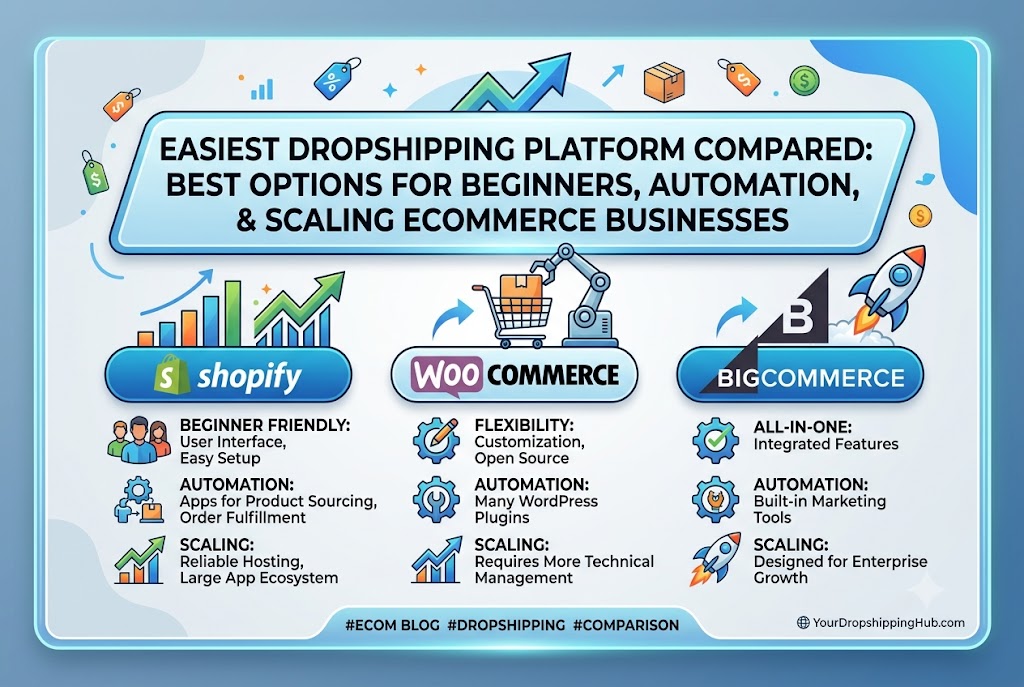
Shopify is widely considered one of the easiest platforms for beginners because it combines website building, ecommerce management, and third-party integrations in one system. Its user-friendly interface allows new sellers to create stores quickly, while its large app ecosystem provides additional tools for marketing, automation, and fulfillment.
WooCommerce offers greater flexibility because it is built on WordPress, but it usually requires more technical knowledge. Beginners may need to manage hosting, plugins, security updates, and website maintenance, which can increase complexity.
Wix provides a simple website-building experience and is suitable for users who prioritize design and ease of setup. However, sellers looking for advanced dropshipping operations may find its ecommerce capabilities more limited compared with dedicated platforms.
Other specialized dropshipping platforms focus on simplifying supplier connections and fulfillment automation. These solutions can be useful for beginners who want to reduce manual tasks and improve operational efficiency.
Why More Features Do Not Always Mean Better Results
A common mistake among new entrepreneurs is choosing a platform based on the number of available features. While advanced tools can be valuable, too many complicated options may create unnecessary challenges.
For example, a beginner does not necessarily need dozens of marketing integrations or highly customized backend functions during the testing stage. What matters more is whether the platform helps them quickly launch products, receive orders, and understand customer behavior.
As the business grows, sellers can gradually adopt more advanced tools. Starting with a simple platform allows entrepreneurs to build fundamental ecommerce skills before managing more complex systems.
Finding the Right Balance Between Simplicity and Growth Potential
Although beginners should prioritize ease of use, they should also consider future scalability. Switching platforms after building a successful store can be time-consuming and may affect business operations.
The ideal dropshipping platform should offer a simple starting experience while providing enough flexibility for future growth. Important factors include integration options, international selling capabilities, automation features, and compatibility with fulfillment partners.
A platform that supports both beginners and growing businesses provides long-term value because entrepreneurs do not need to rebuild their entire operation when their sales increase.
Shopify vs Other Easiest Dropshipping Platforms
Choosing the right dropshipping platform is one of the first important decisions for anyone starting an ecommerce business. While the dropshipping model allows entrepreneurs to sell products without holding inventory, the platform they choose can directly affect store setup speed, daily operations, automation capabilities, and long-term growth potential.
Among all ecommerce solutions, Shopify has become one of the most recognized platforms for dropshipping. However, it is not the only option available. Platforms such as WooCommerce, Wix, BigCommerce, and specialized dropshipping solutions also provide different advantages. The question is not simply which platform has the most features, but which one offers the easiest experience while still supporting business growth.
Why Platform Simplicity Matters for New Dropshipping Entrepreneurs
For beginners, launching an online store can involve many unfamiliar tasks, including website design, payment setup, product uploading, inventory management, and order fulfillment. A complicated platform can slow down the learning process and create unnecessary operational challenges.
The easiest dropshipping platform should allow new sellers to complete essential tasks without requiring advanced technical skills. This includes creating product pages, connecting suppliers, managing orders, and analyzing sales performance.
A simple platform also allows entrepreneurs to focus on more important business activities, such as researching market trends, creating marketing campaigns, and improving customer experience. The less time spent managing technical problems, the more time sellers can spend developing their business strategies.
Shopify: A Beginner-Friendly Platform With a Strong Dropshipping Ecosystem
Shopify is often considered one of the easiest dropshipping platforms because it provides an all-in-one ecommerce environment. Users can create a store, select a theme, add products, configure payments, and manage orders through a centralized dashboard.
One of Shopify’s biggest advantages is its large ecosystem. Thousands of apps are available to help sellers automate product sourcing, email marketing, customer support, analytics, and fulfillment. This makes it easier for beginners to expand their store without building complicated systems from scratch.
Another reason Shopify is popular among new sellers is its simplicity. The platform does not require users to manage hosting, security updates, or complex technical settings. This allows beginners to focus on selling rather than maintaining a website.
However, Shopify also has limitations. Monthly subscription costs, app expenses, and transaction fees can increase as a business grows. Beginners should carefully evaluate their budget and understand the total operating costs before choosing the platform.
WooCommerce: Flexible but Requires More Technical Knowledge
WooCommerce is another popular choice for dropshipping businesses, especially among entrepreneurs who prefer using WordPress. It provides extensive customization options and allows sellers to control almost every aspect of their online store.
The biggest advantage of WooCommerce is flexibility. Businesses can customize their websites, add unique functions, and create highly personalized shopping experiences. This makes it attractive for entrepreneurs who plan to build a strong brand identity.
However, flexibility also creates complexity. Unlike Shopify, WooCommerce requires users to manage hosting, plugins, website security, and updates. Beginners without technical experience may need additional support to maintain their stores.
For sellers who want maximum control and are willing to invest time in learning, WooCommerce can be a powerful solution. But for those looking for the easiest dropshipping platform, the additional technical requirements may create a steeper learning curve.
Wix: Simple Website Building With Basic Ecommerce Features
Wix is known for its beginner-friendly website builder and visually focused design tools. It allows users to create attractive websites quickly through a drag-and-drop interface.
For entrepreneurs who prioritize website appearance and simple store management, Wix can be an easy starting point. Its intuitive design system makes it suitable for beginners who have little experience with website creation.
However, Wix may not provide the same level of dropshipping-focused tools as Shopify. Sellers operating larger stores or managing complex fulfillment processes may eventually need more advanced solutions.
Wix is often better suited for small businesses or beginners testing ecommerce ideas rather than entrepreneurs planning large-scale dropshipping operations.
BigCommerce: Powerful Features for Growing Businesses
BigCommerce is designed for businesses that want advanced ecommerce capabilities without relying heavily on third-party applications. It provides built-in features for product management, SEO, payment options, and sales channels.
Compared with Shopify, BigCommerce offers more built-in functionality, which can reduce dependence on additional apps. This can be beneficial for businesses that want to control costs as they scale.
However, the platform may feel more complex for complete beginners because it focuses more on established ecommerce operations. New sellers may need more time to understand its full range of features.
Specialized Dropshipping Platforms: Simplifying Supplier and Fulfillment Management
Besides traditional ecommerce platforms, specialized dropshipping solutions focus specifically on simplifying supplier connections and fulfillment processes. These platforms help sellers find products, automate order transfers, track shipments, and manage supplier relationships.
For beginners, these tools can reduce some of the biggest challenges in dropshipping. Instead of manually communicating with suppliers and processing every order, sellers can automate many repetitive tasks.
However, specialized platforms usually work best when combined with a complete ecommerce store solution. They often support the operational side of dropshipping rather than replacing the need for a dedicated online store.
Which Platform Is the Easiest Dropshipping Platform for Beginners?
There is no single platform that is perfect for every entrepreneur. The easiest choice depends on business goals, technical skills, budget, and future plans.
For beginners who want the fastest setup and the simplest experience, Shopify is often the strongest option because it balances usability, functionality, and scalability. For entrepreneurs who value customization and have technical knowledge, WooCommerce may provide more control. Wix works well for simple stores focused on design, while BigCommerce is better suited for businesses preparing for growth.
The best dropshipping platform is not necessarily the one with the most features. It is the platform that matches the seller’s current needs while providing enough flexibility for future development.
Easiest Dropshipping Platform with Automation: How to Simplify Product Sourcing, Orders, and Fulfillment
The growth of dropshipping has changed the way entrepreneurs start online businesses. Unlike traditional retail models, dropshipping allows sellers to operate without purchasing inventory in advance or managing warehouses. However, as many entrepreneurs discover after launching their stores, the biggest challenge is not creating a website. It is managing daily operations efficiently.
Product sourcing, inventory updates, order processing, shipping tracking, and customer communication can quickly become overwhelming when handled manually. This is why automation has become one of the most important factors when choosing the easiest dropshipping platform.
A truly beginner-friendly dropshipping platform should not only make store creation simple but also reduce repetitive tasks through automation. By connecting suppliers, ecommerce stores, and fulfillment systems, automation allows sellers to focus more on marketing, customer acquisition, and business growth.
Why Automation Defines the Easiest Dropshipping Platform
Many beginners assume that the easiest dropshipping platform is the one with the simplest website builder. While an intuitive interface is important, long-term usability depends more on how efficiently the platform handles daily operations.
A dropshipping business involves multiple processes that must work together. Sellers need to find reliable products, import product information, update inventory levels, process customer orders, and provide accurate shipping information. Without automation, these tasks can consume many hours every week.
An automated platform reduces human errors and improves operational efficiency. For example, when a supplier changes product availability, an automated system can update inventory information immediately. When a customer places an order, the platform can transfer order details to the supplier without requiring manual input.
For beginners, these features reduce complexity and make it easier to manage a store even without previous ecommerce experience.
Automated Product Sourcing Makes Store Creation Faster
One of the first challenges new dropshipping entrepreneurs face is finding products that have market potential. Traditional product sourcing requires researching suppliers, comparing prices, collecting product information, and manually uploading listings.
The easiest dropshipping platforms with automation features simplify this process by connecting sellers with supplier networks or sourcing services. Entrepreneurs can search for products, import images and descriptions, adjust pricing, and publish listings more efficiently.
However, automation does not replace product research. A successful dropshipping business still requires understanding customer demand, analyzing competition, and selecting products with strong profit potential.
The advantage of automation is that it reduces the time spent on repetitive tasks, allowing sellers to focus on strategic decisions.
Automated Inventory Management Prevents Common Problems
Inventory management is one of the most important areas where automation creates value. Since dropshipping sellers usually work with multiple suppliers, product availability and pricing can change frequently.
Without automation, sellers may continue advertising products that are out of stock or fail to update price changes, creating customer dissatisfaction and unexpected losses.
An automated dropshipping platform can synchronize inventory information between suppliers and online stores. This ensures product availability remains accurate and helps sellers maintain a more professional customer experience.
For beginners, this feature is especially valuable because inventory monitoring can become difficult as the number of products increases.
Order Processing Automation Improves Business Efficiency
Processing orders manually is one of the biggest limitations for growing dropshipping businesses. When a store receives several orders per day, manually sending customer information to suppliers becomes inefficient and increases the chance of mistakes.
The easiest dropshipping platforms often include order automation features that allow customer orders to flow directly to suppliers or fulfillment partners. This reduces processing time and allows sellers to handle higher order volumes without significantly increasing workload.
Automation also creates a more consistent fulfillment process. Customers receive faster updates, suppliers receive accurate information, and sellers can spend more time improving their marketing strategies.
Fulfillment Integration Creates a Better Customer Experience
Shipping and fulfillment are critical factors that influence customer satisfaction. Although dropshipping provides flexibility, poor shipping management can damage a store’s reputation.
Platforms that integrate with fulfillment services help sellers manage tracking information, shipping updates, and delivery processes more effectively. Customers can receive accurate tracking details, while sellers gain better visibility into order status.
For businesses targeting international markets, fulfillment automation becomes even more important. Different countries may require different shipping methods, delivery times, and logistics solutions. Automated systems help simplify these challenges.
The Role of AI and Smart Tools in Modern Dropshipping Platforms
Artificial intelligence is increasingly becoming part of ecommerce automation. Modern dropshipping platforms are beginning to use AI tools for product recommendations, content generation, customer support, and sales analysis.
AI can help sellers create product descriptions, analyze customer behavior, identify market trends, and improve advertising strategies. While human decision-making remains essential, these tools can help entrepreneurs work more efficiently.
The combination of automation and AI is making dropshipping more accessible to beginners who previously lacked technical or ecommerce experience.
Choosing an Automated Dropshipping Platform for Long-Term Success
When evaluating the easiest dropshipping platform with automation, entrepreneurs should consider more than just the number of automated features available. The quality of integrations, supplier reliability, fulfillment options, and scalability are equally important.
A good platform should simplify current operations while supporting future business growth. Beginners may start with a small product selection, but successful stores often expand into multiple markets and manage larger order volumes.
Choosing a platform that can grow with the business prevents the need for complicated migrations later.
Easiest Dropshipping Platform with Low Startup Cost: Affordable Options for New Sellers
Starting a dropshipping business is often considered one of the most affordable ways to enter ecommerce because entrepreneurs do not need to purchase inventory upfront or invest in warehouse operations. However, many beginners underestimate the hidden costs involved in building and managing an online store. Website subscriptions, apps, marketing tools, payment fees, and operational expenses can quickly increase the initial investment.
For new entrepreneurs with limited budgets, choosing the easiest dropshipping platform with low startup costs is an important decision. The ideal platform should not only be affordable but also provide enough features to help sellers launch products, manage orders, and grow their businesses efficiently.
A low-cost dropshipping platform should reduce unnecessary expenses while maintaining a simple user experience. The goal is not to find the cheapest option available, but to find a platform that provides the best balance between affordability, usability, and future growth potential.
Why Startup Costs Matter When Choosing a Dropshipping Platform
Many beginners believe that dropshipping requires almost no investment because products are purchased only after customers place orders. While this eliminates inventory costs, building a successful store still requires financial planning.
The first major expense is usually the ecommerce platform itself. Most professional platforms charge a monthly subscription fee, and additional costs may come from premium themes, applications, payment processing, and marketing tools.
For new sellers testing their first products, controlling these expenses is essential. A complicated platform with expensive features may create unnecessary financial pressure before the business has generated revenue.
The easiest dropshipping platform for beginners should allow entrepreneurs to start small, validate product ideas, and gradually invest more as their business grows.
Affordable Platforms Should Focus on Essential Features
When evaluating low-cost dropshipping platforms, beginners should focus on the features that directly support business operations rather than paying for unnecessary tools.
A suitable beginner platform should provide simple store creation, product management, payment integration, and basic order processing. These functions are enough for most entrepreneurs to test their first products and understand customer demand.
Many new sellers make the mistake of investing heavily in advanced features before proving that their products can generate sales. A more practical approach is to start with a simple platform, learn customer behavior, and upgrade systems only when the business requires additional capabilities.
The easiest and most affordable platform is usually the one that helps sellers avoid complexity during the early stages.
Shopify: A Simple Platform With Predictable Costs
Shopify is one of the most popular choices for beginners because it combines ease of use with a large ecosystem of ecommerce tools. Its straightforward interface allows entrepreneurs to create stores quickly without technical knowledge.
From a cost perspective, Shopify provides predictable monthly pricing, which helps beginners plan their budgets. Sellers can start with essential functions and add more applications as their businesses develop.
However, Shopify users should carefully monitor additional expenses. While the basic platform is simple, many sellers eventually install paid apps for marketing automation, product reviews, email campaigns, and advanced analytics.
For entrepreneurs who value simplicity and want a reliable foundation, Shopify can provide strong long-term value, but they should consider the total cost of ownership rather than only the monthly subscription.
WooCommerce: Lower Platform Costs but Higher Management Requirements
WooCommerce is often considered an affordable alternative because it is a free ecommerce plugin built for WordPress. This makes it attractive to entrepreneurs who want more control over their expenses.
However, lower software costs do not always mean lower overall costs. WooCommerce users typically need to manage hosting, security, website maintenance, and technical updates.
For users with website experience, WooCommerce can be a cost-effective solution because of its flexibility. Entrepreneurs can choose affordable hosting providers and customize their stores according to their needs.
For complete beginners, however, the additional technical responsibilities may create higher time costs. The platform may save money but require more effort to manage.
Free and Budget-Friendly Platforms: Are They Really Better?
Many beginners search for free dropshipping platforms because they want to minimize risk. While free tools can help entrepreneurs test ecommerce ideas, they often come with limitations.
Some free platforms may restrict customization options, provide fewer integrations, or lack advanced automation features. These limitations can become obstacles when the business begins attracting more customers.
The cheapest option is not always the most cost-effective choice. A platform that saves money initially but creates operational difficulties later may slow down business growth.
Instead of focusing only on price, entrepreneurs should evaluate whether the platform helps them save time and improve efficiency.
Reducing Costs Through Automation and Fulfillment Solutions
One important factor that affects dropshipping profitability is operational efficiency. A platform that supports automation can help reduce labor costs by simplifying repetitive tasks.
Automated product imports, inventory synchronization, order processing, and fulfillment management can save significant time. For beginners operating with limited resources, these features can be more valuable than expensive marketing tools.
Working with reliable fulfillment partners can also improve cost control. Faster processing, better shipping options, and optimized supplier relationships can help sellers maintain healthier profit margins.
The easiest dropshipping platform is often the one that reduces both financial costs and operational complexity.
How Beginners Should Evaluate Platform Costs
Before choosing a dropshipping platform, entrepreneurs should calculate the complete cost structure, including:
- Monthly platform fees;
- Payment processing charges;
- App and software expenses;
- Website-related costs;
- Marketing investment;
- Fulfillment and supplier fees.
Understanding the full financial picture helps beginners avoid unexpected expenses.
A platform that appears cheap at first may become expensive after adding necessary tools. Similarly, a platform with a higher monthly cost may provide better automation and save time in the long run.
The best choice depends on the seller’s business model, available budget, and growth expectations.
Easiest Dropshipping Platform for Growth: How to Build and Scale a Profitable Ecommerce Store
Many entrepreneurs choose dropshipping because it provides a low-risk way to start an ecommerce business. However, launching a store is only the first step. The real challenge begins when sales increase, product catalogs expand, and customer expectations become higher.
A platform that is easy for beginners may not always be suitable for long-term growth. As a dropshipping business develops, sellers need more advanced capabilities, including automation, multi-channel selling, inventory management, analytics, international expansion, and better fulfillment solutions.
Therefore, the easiest dropshipping platform is not simply the one that helps entrepreneurs create their first store. The ideal platform should also make it easier to scale operations without adding unnecessary complexity.
A successful dropshipping platform should provide a smooth transition from beginner-level operations to professional ecommerce management.
Why Scalability Is an Important Factor When Choosing a Dropshipping Platform
Many new sellers focus only on the initial setup process when selecting a platform. They consider how quickly they can create a website, upload products, and start accepting orders.
While these factors are important, they do not determine long-term success.
A dropshipping business often changes significantly after gaining traction. A store that starts with five products may eventually manage hundreds of products. A seller who initially receives a few orders per week may later need to process hundreds of orders daily.
If the platform cannot support this growth, entrepreneurs may face operational difficulties, increased manual work, and expensive migration processes.
The easiest dropshipping platform for growth should provide simplicity at the beginning while maintaining enough flexibility for future expansion.
The Importance of Automation for Scaling a Dropshipping Business
As order volume increases, manual management becomes one of the biggest limitations for ecommerce entrepreneurs.
At the beginning, manually uploading products, checking inventory, and processing orders may seem manageable. However, these tasks become increasingly time-consuming as the business grows.
Scalable dropshipping platforms help solve this problem through automation. Features such as automatic product synchronization, order processing, inventory updates, and shipping tracking allow businesses to handle more customers without significantly increasing workload.
Automation also improves accuracy. Manual processes often lead to mistakes, including incorrect product information, delayed order processing, or inventory issues. A reliable automated system creates a more stable foundation for growth.
For entrepreneurs planning to build a serious ecommerce brand, automation is not just a convenience. It is an essential business tool.
Shopify: A Simple Starting Point With Strong Growth Potential
Shopify is widely recognized as one of the easiest dropshipping platforms for beginners, but its value also comes from its ability to support growing businesses.
The platform provides a balance between simplicity and scalability. New sellers can quickly create stores using ready-made templates, while experienced entrepreneurs can access advanced tools for marketing, analytics, customer management, and automation.
One major advantage of Shopify is its extensive app ecosystem. As businesses grow, sellers can add tools for email marketing, customer loyalty programs, product reviews, advertising management, and fulfillment automation.
Shopify also supports international selling, multiple payment methods, and various sales channels, making it suitable for businesses targeting different markets.
However, growing businesses should carefully manage costs because additional apps and advanced features can increase monthly expenses.
WooCommerce: A Flexible Solution for Businesses That Want More Control
WooCommerce offers strong scalability because it provides extensive customization options. Businesses can modify their websites, create unique shopping experiences, and integrate various third-party solutions.
For brands that want complete control over their ecommerce environment, WooCommerce can be a powerful choice.
However, scalability with WooCommerce often requires more technical management. Store owners may need to handle hosting performance, security, plugin compatibility, and website optimization.
This means WooCommerce can support significant growth, but entrepreneurs need more technical knowledge or professional assistance to maintain efficiency.
For sellers who prioritize flexibility over simplicity, WooCommerce provides long-term possibilities.
Why Fulfillment Integration Becomes More Important as Stores Grow
Scaling a dropshipping business is not only about increasing sales. It also requires improving fulfillment efficiency.
When order volume grows, supplier communication, product quality control, shipping speed, and customer support become more important.
The easiest dropshipping platforms for scaling should work well with fulfillment partners and supplier management systems. These integrations allow businesses to streamline operations and provide more reliable customer experiences.
For international sellers, fulfillment solutions are especially valuable because they can improve delivery times, reduce shipping issues, and create better customer satisfaction.
A scalable platform should help entrepreneurs manage the entire supply chain, not just the storefront.
Supporting Multiple Sales Channels and Global Expansion
Growth-oriented dropshipping businesses often expand beyond a single online store. They may sell through marketplaces, social media platforms, or different regional websites.
A scalable dropshipping platform should make it easier to manage multiple sales channels from one system.
Multi-channel capabilities allow sellers to reach more customers while maintaining centralized product, order, and customer management.
International expansion also requires support for multiple currencies, languages, payment methods, and shipping options. Platforms that provide these features help entrepreneurs enter new markets more efficiently.
The easiest platform for growth is one that removes barriers when businesses expand.
Choosing a Platform That Matches Your Future Business Goals
When selecting a dropshipping platform, entrepreneurs should think beyond their current situation. A platform that works for a small test store may not be suitable for a growing ecommerce brand.
Important questions to consider include:
Can the platform handle increasing product numbers?
Can it automate repetitive tasks?
Can it integrate with suppliers and fulfillment providers?
Can it support international customers?
Can it provide useful business data for decision-making?
The right platform should support both the beginning and future stages of the business.
The easiest dropshipping platform is not only about creating a store quickly. True simplicity comes from having systems that continue working efficiently as the business expands.
A platform that supports automation, fulfillment integration, analytics, and international selling can help entrepreneurs avoid many challenges associated with growth.
How to Choose the Easiest Dropshipping Platform
Choosing the right dropshipping platform is one of the most important decisions for entrepreneurs entering ecommerce. While many platforms advertise themselves as simple and beginner-friendly, the easiest option depends largely on the type of business a seller wants to build.
A platform that works well for testing trending products may not be the best choice for building a long-term brand. Similarly, a solution designed for large-scale operations may feel unnecessarily complicated for someone launching their first store.
The easiest dropshipping platform is not simply the one with the fewest steps during setup. It is the platform that matches the seller’s business goals, technical ability, product strategy, and future growth plans.
Why Business Goals Should Determine Your Platform Choice
Many beginners choose a dropshipping platform based on popularity or recommendations from other sellers. While market reputation is important, every ecommerce business has different requirements.
A seller who wants to test products quickly may prioritize speed and simplicity. A seller building a private label brand may need customization options and stronger customer experience tools. A company targeting international markets may require advanced language, currency, and fulfillment features.
Choosing a platform without considering business goals can create unnecessary limitations later. Entrepreneurs may spend time rebuilding websites, changing systems, or transferring data when their business grows.
The easiest dropshipping platform is the one that supports the specific direction of the business.
Choosing a Platform for Product Testing and Fast Market Validation
Many beginners start dropshipping by testing different products before deciding which items have the highest potential. For this business model, speed and flexibility are the most important factors.
A suitable platform should allow sellers to quickly add products, create product pages, adjust pricing, and analyze customer responses.
Platforms with simple interfaces and strong supplier integrations are usually better for this stage because they reduce the time required to launch new products.
Automation is also valuable for product testing. When entrepreneurs can quickly import products, update information, and process orders efficiently, they can test more ideas with fewer resources.
For sellers focused on product research and rapid experimentation, simplicity is often more valuable than advanced customization.
Choosing a Platform for Building a Branded Dropshipping Store
Some entrepreneurs do not want to create temporary stores. Instead, they aim to build recognizable ecommerce brands with loyal customers.
For this type of business model, the easiest dropshipping platform should provide more control over branding, design, customer experience, and marketing.
A branded store requires more than uploading products. Sellers need professional website design, customized product pages, email marketing systems, customer retention tools, and analytics.
Platforms with strong customization capabilities allow businesses to create a unique identity instead of competing only on product prices.
Although these platforms may require slightly more learning, they provide stronger opportunities for long-term growth.
Choosing a Platform for Private Label and Custom Products
Private label dropshipping has become increasingly popular because it allows businesses to differentiate themselves from competitors. Instead of selling generic products, entrepreneurs can create customized products with unique packaging, branding, and product features.
For this business model, the easiest dropshipping platform should support more advanced operations.
Important factors include:
- Product customization options;
- Supplier and fulfillment integrations;
- Inventory management;
- Customer data management;
- Marketing automation.
A platform that only focuses on basic product selling may not provide enough flexibility for businesses developing unique products.
Entrepreneurs planning to create a private label brand should consider platforms that can support the transition from dropshipping to a more traditional ecommerce model.
Choosing a Platform for International Dropshipping
Many dropshipping businesses target customers in multiple countries because ecommerce allows sellers to reach global audiences. However, international selling introduces additional challenges.
The easiest dropshipping platform for global businesses should simplify tasks such as currency conversion, multilingual stores, international payment methods, and cross-border fulfillment.
For example, a seller targeting customers in Europe may need multiple languages, different shipping options, and region-specific payment solutions.
Platforms with international selling features help reduce operational complexity and allow entrepreneurs to expand more efficiently.
Global businesses should also consider whether the platform integrates well with international suppliers and fulfillment partners.
Choosing a Platform for Automation-Focused Businesses
Some entrepreneurs prefer to minimize daily manual tasks and build highly efficient ecommerce operations.
For these sellers, the easiest dropshipping platform should provide strong automation capabilities.
Important automation features include:
- Automatic product synchronization;
- Inventory updates;
- Order processing;
- Shipping tracking;
- Customer communication;
- Sales reporting.
Automation allows entrepreneurs to manage larger operations without increasing workload significantly.
Businesses that prioritize efficiency should evaluate platforms based on how much manual work they can eliminate rather than only focusing on website design.
Choosing a Platform Based on Technical Experience
Technical ability is another important factor when selecting a dropshipping platform.
Beginners with limited website experience usually benefit from platforms that provide simple interfaces, templates, and guided setup processes.
Entrepreneurs with technical knowledge may prefer platforms that offer more customization and control, even if they require additional management.
A platform that feels easy for one person may feel complicated for another. The right choice depends on the seller’s skills and willingness to learn.
The goal is to find a balance between simplicity and flexibility.
The Best Platform Should Support Both Current Needs and Future Growth
One of the biggest mistakes new entrepreneurs make is choosing a platform only based on their current situation.
A platform that works well for a small store may become limiting when sales increase. At the same time, choosing an overly complex system at the beginning may slow down progress.
The ideal dropshipping platform should provide an easy starting experience while offering enough features for future expansion.
Entrepreneurs should consider where they want their business to be in one or two years, not only what they need today.


No Comments