


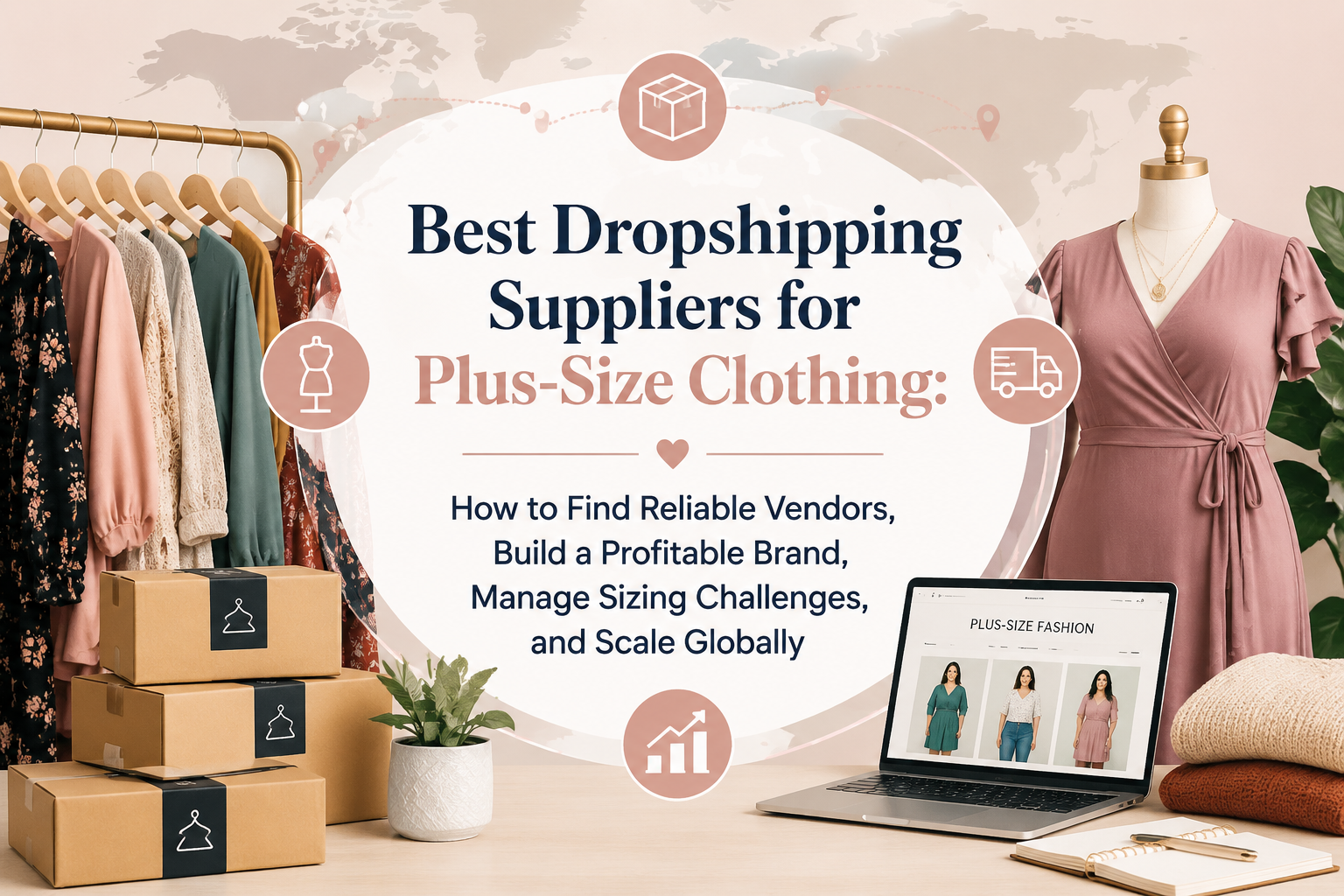
Best Dropshipping Suppliers for Plus-Size Clothing: How to Find Reliable Vendors, Build a Profitable Brand, Manage Sizing Challenges, and Scale Globally

The most successful dropshipping stores in the plus-size clothing industry focus on reliability rather than simply finding the lowest-cost products. Customers in this market often become repeat buyers when they discover a store that consistently delivers accurate sizing, quality products, and dependable shipping.
Choosing suppliers with strong quality control systems, transparent sizing information, stable inventory management, and regional fulfillment capabilities creates a foundation for sustainable growth. While lower-cost suppliers may appear attractive initially, the long-term costs associated with returns, refunds, and customer dissatisfaction can quickly outweigh any short-term savings.
How to Find Reliable Partners With Consistent Sizing and Fast Shipping
The global plus-size clothing market has grown far beyond a niche segment. As body positivity movements continue to influence consumer behavior and major retailers expand their size ranges, demand for fashionable plus-size apparel is increasing across North America, Europe, and Australia. For dropshippers, this presents a significant opportunity. However, success depends heavily on choosing the right supplier. Unlike standard apparel, plus-size clothing introduces additional challenges related to sizing accuracy, inventory consistency, and customer expectations.
Why Plus-Size Clothing Requires Specialized Suppliers
Many new dropshippers assume that any clothing supplier can adequately serve the plus-size market. In reality, this assumption often leads to customer complaints and high return rates.
Plus-size consumers are generally more sensitive to sizing inconsistencies because fit directly impacts comfort and confidence. A customer who normally wears a 3XL may receive two different garments from the same supplier that fit completely differently. This issue becomes even more problematic when suppliers source products from multiple factories without maintaining consistent measurement standards.
Reliable plus-size clothing suppliers typically invest more effort into detailed size charts, standardized production processes, and quality control. These factors help reduce sizing discrepancies and improve customer satisfaction.
Evaluating Size Consistency Before Choosing a Supplier
One of the most important factors when searching for the best dropshipping suppliers for plus-size clothing is sizing consistency.
Instead of relying solely on generic labels such as XL, XXL, or 4XL, professional suppliers provide detailed garment measurements including bust width, waist circumference, hip measurements, shoulder width, and garment length. This information allows customers to compare measurements directly rather than relying on arbitrary size labels.
Testing products before launching is often a worthwhile investment. Ordering samples enables store owners to verify sizing accuracy and compare actual measurements against supplier-provided charts. This process can reveal quality issues that may not be visible in product photos.
Suppliers that regularly update product specifications and maintain consistent sizing across product collections tend to generate fewer customer service issues over time.
Fast Shipping Is No Longer Optional
Shipping speed has become a major competitive factor in ecommerce. Customers increasingly expect delivery times similar to those offered by large online retailers.
For plus-size clothing stores, long shipping times can negatively impact conversion rates. Consumers often purchase clothing for specific events, seasonal needs, or wardrobe updates. Delays can lead to order cancellations and negative reviews.
The best dropshipping suppliers for plus-size clothing often operate warehouses in the United States or Europe, allowing delivery within a few business days rather than several weeks. Local warehousing also reduces customs complications and improves tracking accuracy.
Although local inventory may cost slightly more than direct factory shipping, many sellers find that higher conversion rates and lower dispute rates offset the additional expense.
Inventory Stability Matters More Than Product Variety
A common mistake among new dropshippers is prioritizing the largest possible product catalog. While variety can attract customers, inventory stability often has a greater impact on long-term profitability.
Frequent stock shortages create a poor customer experience and increase administrative workload. Plus-size apparel is particularly vulnerable because larger sizes usually have lower production volumes and may sell out faster.
Reliable suppliers typically provide real-time inventory synchronization, helping store owners avoid selling unavailable products. Automated inventory updates can significantly reduce overselling issues and protect store reputation.
When evaluating suppliers, inventory management capabilities should be considered alongside product selection.
Private Label and Branding Options
The plus-size fashion industry has evolved dramatically over the past decade. What was once viewed as a limited niche has become one of the fastest-growing segments within online apparel. Consumers are no longer satisfied with basic oversized garments; they increasingly seek fashionable designs, quality materials, and brands that understand their needs. For ecommerce entrepreneurs, this shift creates a unique opportunity. While many dropshipping businesses compete solely on price, those that incorporate private label and branding strategies often build stronger customer loyalty and higher profit margins. Choosing the best dropshipping suppliers for plus-size clothing with branding capabilities can be a crucial step toward long-term success.
Why Branding Matters More in the Plus-Size Market
Many apparel categories are highly competitive, making it difficult for dropshippers to stand out. The plus-size segment is different because customers often struggle to find brands that consistently provide flattering fits, accurate sizing, and inclusive fashion options.
When shoppers have a positive experience with a plus-size clothing brand, they are more likely to return for future purchases. This creates an environment where brand recognition becomes extremely valuable. Unlike one-time impulse purchases, plus-size apparel customers often become repeat buyers if they trust the sizing and quality.
A generic dropshipping store selling products from dozens of suppliers may generate short-term sales, but it is difficult to build lasting customer relationships. Branding allows sellers to create a unique identity that customers remember long after their first purchase.
How Private Label Creates Higher Profit Margins
One of the biggest limitations of traditional dropshipping is the inability to differentiate products. When multiple stores sell identical items, competition often turns into a race to the lowest price.
Private label suppliers solve this problem by allowing sellers to place their own brand name on products. This may include custom neck labels, branded packaging, hang tags, thank-you cards, or customized shipping materials.
Once customers associate a product with a specific brand rather than a generic supplier, pricing becomes less dependent on competitors. Stores can often charge significantly higher prices because buyers perceive greater value.
In many cases, a branded plus-size dress that costs only a few dollars more to produce can command a much higher retail price than its unbranded equivalent. The resulting margin improvement can substantially increase overall profitability.
What to Look for in a Private Label Plus-Size Supplier
Not every supplier offering plus-size clothing is capable of supporting branding initiatives. Some suppliers focus exclusively on standard dropshipping and have limited customization options.
Reliable private label suppliers typically offer services such as custom woven labels, logo printing, personalized packaging, and branded inserts. More advanced suppliers may also provide custom photography, packaging design support, and product development services.
Another important factor is flexibility. Many traditional manufacturers require large minimum order quantities before offering customization. However, modern ecommerce-focused suppliers increasingly support low-MOQ or hybrid fulfillment models that allow growing brands to test products before committing to larger inventory investments.
This flexibility reduces risk while still providing access to branding opportunities.
Building Customer Loyalty Through Brand Identity
The most successful plus-size fashion brands understand that customers are purchasing more than clothing. They are buying confidence, self-expression, and a shopping experience that makes them feel understood.
A well-developed brand identity can communicate these values through product descriptions, packaging, social media content, and customer interactions. Consistent branding helps create emotional connections that generic marketplaces often struggle to achieve.
For example, a store specializing in trendy plus-size fashion for professional women may develop messaging centered around confidence and workplace style. Another brand targeting younger consumers may focus on body positivity, self-expression, and social media trends.
These brand narratives help customers connect with the business on a deeper level than product specifications alone.
Why Branded Stores Scale More Easily
As advertising costs continue to rise across platforms such as Facebook, Instagram, and TikTok, relying solely on paid traffic becomes increasingly challenging. Businesses that build recognizable brands often benefit from stronger word-of-mouth marketing, repeat purchases, and higher customer lifetime value.
Branded stores also tend to perform better when expanding into email marketing, loyalty programs, influencer collaborations, and content marketing strategies. Customers who recognize and trust a brand are generally more responsive to future promotions and product launches.
For this reason, many experienced ecommerce entrepreneurs eventually transition from pure dropshipping models toward branded operations, even if they initially started with generic products.
Best Dropshipping Suppliers for Plus-Size Clothing in the USA: Faster Delivery and Higher Conversion Rates
The United States is one of the largest plus-size apparel markets in the world. Growing consumer demand, increasing acceptance of inclusive fashion, and higher disposable income have created significant opportunities for ecommerce businesses targeting this segment. While many dropshippers focus primarily on product selection and advertising, supplier location often has an equally important impact on profitability. Choosing the best dropshipping suppliers for plus-size clothing in the USA can improve shipping speed, reduce refund rates, and increase customer satisfaction. As customer expectations continue to rise, local fulfillment is becoming a competitive advantage rather than a luxury.
Why the US Plus-Size Fashion Market Continues to Grow
The plus-size clothing industry has experienced consistent growth over the past decade. Consumers are no longer limited to basic oversized garments. Instead, they actively seek fashionable dresses, activewear, casual apparel, office wear, and seasonal collections that reflect current fashion trends.
This shift has encouraged retailers and suppliers to expand their plus-size offerings. At the same time, social media platforms have helped normalize body diversity, increasing demand for brands that serve a wider range of sizes.
For dropshipping businesses, this means the market is not only large but also increasingly willing to spend on quality products. Customers often prioritize fit, comfort, and reliability over simply finding the lowest possible price.
How Faster Shipping Directly Impacts Conversion Rates
One of the biggest advantages of working with US-based suppliers is faster delivery.
Modern ecommerce customers have become accustomed to rapid fulfillment. Waiting three to four weeks for apparel shipments is increasingly viewed as unacceptable, particularly when purchasing fashion items. Long shipping times often cause hesitation during the checkout process and can lead to abandoned carts.
When products are shipped from domestic warehouses, delivery times can often be reduced to two to seven business days. This shorter fulfillment window increases buyer confidence because customers know they will receive their orders quickly.
Many online stores experience improved conversion rates simply by displaying realistic domestic shipping estimates. Faster delivery reduces uncertainty and makes purchasing decisions easier for consumers.
Lower Return Rates Through Better Customer Experience
Returns represent one of the largest hidden costs in apparel ecommerce. This issue becomes even more significant in the plus-size clothing category because fit and comfort play a critical role in customer satisfaction.
US-based suppliers often provide better quality control and more standardized sizing compared to suppliers sourcing products from multiple overseas factories. More accurate product descriptions and sizing charts reduce the likelihood of customer disappointment after delivery.
Additionally, when returns do occur, domestic fulfillment centers can process exchanges and refunds much faster. Customers appreciate efficient service, and a positive return experience often encourages future purchases.
Reducing return-related friction can significantly improve long-term customer retention.
Comparing US Suppliers and Overseas Suppliers
Many entrepreneurs initially choose overseas suppliers because of lower product costs. While this strategy may reduce upfront expenses, it does not always maximize profitability.
Lower manufacturing costs can be offset by longer shipping times, higher dispute rates, increased refund requests, and weaker customer satisfaction. These factors can negatively affect advertising performance and overall business growth.
US suppliers generally charge higher wholesale prices, but they often compensate for these costs through improved customer experiences. Faster shipping, more reliable inventory management, and easier communication create operational efficiencies that support long-term scaling.
For many stores targeting American consumers, local fulfillment produces better results despite slightly higher sourcing costs.
Inventory Reliability Supports Business Growth
Inventory management becomes increasingly important as stores scale. Nothing damages customer trust faster than accepting orders for products that are no longer available.
Many established US-based dropshipping suppliers offer real-time inventory synchronization, allowing ecommerce platforms to automatically update stock availability. This reduces overselling and minimizes manual order management.
Reliable inventory data also improves advertising efficiency. Store owners can confidently promote products without worrying about sudden stock shortages disrupting campaigns.
As product catalogs expand, inventory accuracy becomes a key component of sustainable growth.
Building a Competitive Advantage Through Domestic Fulfillment
Competition within the apparel industry continues to intensify. Many stores sell similar products and target the same audiences. As a result, operational advantages can become powerful differentiators.
Domestic fulfillment allows businesses to market faster shipping, provide more accurate delivery estimates, and offer stronger customer support experiences. These factors contribute to higher trust levels and improved customer satisfaction.
Consumers are increasingly willing to pay slightly higher prices when they know products will arrive quickly and reliably. This creates opportunities for higher margins while maintaining strong conversion rates.
Profit Margins, Pricing Strategy, and Market Demand Analysis
The plus-size fashion industry has become one of the most attractive segments in ecommerce. Rising consumer demand, increasing fashion inclusivity, and relatively higher average order values have created significant opportunities for online sellers. However, many entrepreneurs enter the market without fully understanding how profitability works in this niche. While finding the best dropshipping suppliers for plus-size clothing is important, long-term success depends equally on pricing strategy, product selection, and understanding customer demand. A supplier that offers low wholesale prices may not necessarily generate the highest profits if operational costs and customer acquisition expenses are ignored.
the Growing Demand for Plus-Size Fashion
The global apparel industry has undergone a major shift as consumers increasingly expect brands to offer inclusive sizing. Plus-size customers are no longer satisfied with limited selections or basic designs. They want access to the same fashion trends available to mainstream consumers.
This demand has encouraged manufacturers to expand their collections across categories such as casual wear, activewear, formal dresses, swimwear, and seasonal fashion. As a result, the available product range has grown substantially, creating more opportunities for ecommerce stores to target specific customer segments.
Unlike many saturated fashion niches, the plus-size market continues to benefit from a gap between consumer demand and available high-quality options. This imbalance creates favorable conditions for new entrants who can provide reliable products and a positive shopping experience.
Why Plus-Size Clothing Often Generates Higher Margins
One advantage of the plus-size niche is that customers frequently prioritize fit, comfort, and quality over simply finding the lowest price.
In many apparel categories, products are heavily commoditized, leading to aggressive price competition. Plus-size shoppers, however, often place greater value on accurate sizing and dependable quality because poor-fitting clothing creates frustration and inconvenience.
This behavior allows sellers to maintain stronger pricing power. A well-positioned store can often charge significantly more than its product acquisition cost while still providing value to customers.
Many successful plus-size dropshipping businesses achieve gross margins ranging from 40% to 65%, depending on product category and marketing efficiency. Dresses, shapewear, activewear, and premium casual apparel frequently produce higher margins than basic essentials due to stronger perceived value.
Choosing Products With Sustainable Profit Potential
Not all plus-size products perform equally well. Some categories naturally support higher profitability because customers purchase them based on style and confidence rather than price alone.
Fashion-forward dresses often command strong margins because buyers are willing to pay more for designs that flatter their body shape. Activewear has also become increasingly profitable as health and wellness trends continue to expand. Consumers frequently purchase multiple items once they find a brand that offers both comfort and performance.
Seasonal collections can generate short-term sales spikes, but evergreen categories often provide greater stability. Building a product catalog that balances trending products with year-round demand helps reduce revenue volatility.
The most profitable stores typically avoid competing solely on low-cost basics and instead focus on products that solve specific customer needs.
Developing an Effective Pricing Strategy
Pricing strategy has a direct impact on both conversion rates and profitability. Many inexperienced sellers make the mistake of setting prices based exclusively on product costs.
A more effective approach considers the entire customer acquisition process, including advertising expenses, payment processing fees, refund rates, and operational costs. A product that appears profitable on paper may generate little actual profit once these expenses are included.
Successful stores often position themselves in the mid-to-premium segment rather than competing at the lowest price point. Customers shopping for plus-size apparel frequently associate higher prices with better quality and more reliable sizing.
Strategic pricing can also improve brand perception. Products that appear too inexpensive may raise concerns about fabric quality, durability, or fit accuracy.
Increasing Average Order Value for Better Economics
One reason the plus-size clothing niche attracts experienced ecommerce operators is its potential for higher average order values.
Customers rarely purchase a single item when shopping for apparel. A shopper buying a dress may also add accessories, shapewear, leggings, or complementary garments. This creates opportunities for bundle offers and cross-selling strategies.
Increasing average order value helps offset rising advertising costs and improves overall business efficiency. Even a modest increase in cart size can significantly improve net profitability without requiring additional customer acquisition spending.
Stores that focus on outfit-based merchandising often achieve stronger financial performance than stores selling individual products in isolation.
Long-Term Profitability Depends on Customer Retention
While acquiring customers is important, long-term profitability often comes from repeat purchases. Plus-size shoppers who find a store with consistent sizing and reliable quality frequently return for future purchases.
This repeat buying behavior reduces dependence on paid advertising and increases customer lifetime value. Over time, loyal customers become one of the most valuable assets in the business.
Email marketing, loyalty programs, personalized recommendations, and consistent product quality all contribute to stronger retention rates. These strategies often generate more profit than constantly pursuing new customers through paid advertising alone.
Best Dropshipping Suppliers for Plus-Size Clothing That Offer Trendy Fashion Instead of Basic Apparel
The plus-size fashion industry has undergone a major transformation in recent years. For decades, many retailers treated plus-size clothing as a functional category, offering limited styles, conservative designs, and basic wardrobe essentials. Today’s consumers expect much more. Influenced by social media, celebrity fashion, and evolving beauty standards, plus-size shoppers increasingly seek the same trendy styles available in mainstream fashion. This shift has created a significant opportunity for ecommerce entrepreneurs. Choosing the best dropshipping suppliers for plus-size clothing that focus on fashion-forward products rather than generic basics can help stores differentiate themselves, attract younger audiences, and achieve stronger profit margins.
The Rise of Fashion-Conscious Plus-Size Consumers
Consumer expectations have changed dramatically. Plus-size shoppers no longer want to choose between fit and style. They expect both.
The growing popularity of body positivity movements has encouraged fashion brands to embrace inclusive sizing while maintaining modern aesthetics. As a result, demand has expanded beyond basic T-shirts and leggings into categories such as statement dresses, streetwear, oversized blazers, matching sets, activewear, and seasonal fashion collections.
This trend is particularly visible among younger consumers who actively follow fashion influencers and social media creators. They view clothing as a form of self-expression and are willing to spend more on products that reflect current trends.
For dropshippers, this means the opportunity is no longer limited to selling functional apparel. Fashion-focused product selection can become a major competitive advantage.
Why Trendy Fashion Often Outperforms Basic Apparel
Basic apparel products are generally easy to find and highly competitive. Large retailers, marketplaces, and discount stores all offer similar items, creating intense price pressure.
Fashion-oriented products operate differently. Consumers are often motivated by appearance, exclusivity, and personal style rather than simply replacing wardrobe essentials. This emotional purchasing behavior creates stronger demand and supports higher retail pricing.
A trendy plus-size dress inspired by current fashion trends can often command a significantly higher margin than a standard T-shirt. Customers are less likely to compare prices directly because they are purchasing a specific look rather than a generic item.
This allows ecommerce stores to compete through product selection and brand positioning instead of constantly lowering prices.
The Influence of Social Media on Plus-Size Fashion Trends
Platforms such as TikTok, Instagram, and Pinterest have fundamentally changed how fashion trends spread. Viral videos and influencer content can rapidly generate demand for specific styles, colors, fabrics, and silhouettes.
Plus-size fashion creators have become especially influential because they provide styling inspiration for audiences that have historically been underserved by traditional fashion marketing.
Many successful dropshipping stores monitor social media trends closely and work with suppliers that can quickly introduce new products. The ability to react rapidly to changing consumer preferences can provide a substantial advantage over competitors relying on slower supply chains.
Suppliers that regularly update collections and launch seasonal products are often better positioned to support this strategy than suppliers focused exclusively on evergreen basics.
What to Look for in a Trend-Focused Supplier
Not all plus-size clothing suppliers prioritize fashion innovation. Some focus primarily on stable inventory and standard designs, which may limit growth opportunities for trend-driven stores.
The best dropshipping suppliers for plus-size clothing often demonstrate several characteristics. They release new collections frequently, provide professional product photography, maintain accurate sizing information, and offer products inspired by current fashion trends.
Product diversity is also important. Stores that can offer dresses, tops, outerwear, activewear, and occasion wear within a consistent fashion style often create a more cohesive shopping experience.
Equally important is product quality. Trendy designs may attract attention initially, but repeat purchases depend on customer satisfaction after delivery.
Seasonal Trends Create Revenue Opportunities
Fashion is inherently seasonal, creating opportunities for stores that plan product launches strategically.
Spring and summer collections often emphasize dresses, swimwear, and lightweight fabrics. Fall and winter introduce opportunities for jackets, sweaters, boots, and layered outfits. Holiday events and special occasions can generate additional demand spikes throughout the year.
Trend-focused suppliers typically adjust inventory based on these seasonal shifts. This enables stores to continuously refresh their product catalogs and maintain customer interest.
Regularly introducing new products also encourages repeat visits from existing customers, increasing the likelihood of additional purchases.
Building a Fashion Brand Instead of a Product Catalog
Many dropshipping stores fail because they simply upload large numbers of products without developing a clear identity. In contrast, successful fashion brands create a recognizable style and target audience.
A store specializing in trendy plus-size fashion can position itself around confidence, self-expression, and modern style. Product selection, website design, social media content, and marketing campaigns should reinforce this identity consistently.
Customers are more likely to remember and return to a store that feels curated and intentional rather than one that appears to sell random products from multiple suppliers.
Over time, strong brand positioning can reduce reliance on discounts and improve customer loyalty.
Solving Common Problems Like Returns, Size Inconsistencies, and Inventory Issues
The plus-size clothing market offers significant opportunities for ecommerce entrepreneurs, but it also presents unique operational challenges that many sellers underestimate. While growing consumer demand has made this niche increasingly attractive, profitability is often determined by how effectively a business handles common issues such as returns, sizing discrepancies, inventory shortages, and quality control concerns. Choosing the best dropshipping suppliers for plus-size clothing is not only about finding fashionable products; it is about minimizing risks that can quickly erode profit margins.
Why Returns Are More Common in Plus-Size Fashion
Returns are a reality in every apparel business, but they tend to occur more frequently in the plus-size category. The primary reason is fit.
Unlike electronics or home goods, clothing must accommodate a wide range of body shapes and proportions. Two customers who both wear a 2XL may have very different body measurements, making fit expectations difficult to standardize.
When customers receive products that feel tighter, looser, shorter, or longer than expected, dissatisfaction often leads to refund requests. High return rates increase operational costs and reduce overall profitability.
Reliable suppliers help mitigate this problem by providing detailed measurement charts rather than relying solely on generalized size labels. Accurate product descriptions and consistent manufacturing standards can significantly reduce customer disappointment after delivery.
The Challenge of Inconsistent Sizing Standards
One of the most frustrating issues for both customers and store owners is inconsistent sizing.
Many suppliers source products from multiple factories, each using different grading methods and measurement standards. As a result, a customer may order two garments labeled as the same size but receive products that fit completely differently.
This inconsistency damages trust and increases support requests. Customers who cannot rely on sizing accuracy are less likely to become repeat buyers.
The best dropshipping suppliers for plus-size clothing typically maintain standardized production processes and provide comprehensive sizing information for every product. Some suppliers even include model measurements and fit recommendations, helping shoppers make more informed purchasing decisions.
Stores that prioritize sizing transparency often experience lower refund rates and stronger customer retention.
Inventory Synchronization Can Make or Break Operations
Inventory management becomes increasingly important as stores grow.
A common dropshipping problem occurs when products displayed as available on a website are actually out of stock at the supplier level. This creates fulfillment delays, canceled orders, and frustrated customers.
The issue is particularly problematic in plus-size apparel because larger sizes often have lower production volumes and can sell out unexpectedly. Popular sizes such as XL, 2XL, and 3XL frequently experience stock shortages during seasonal demand spikes.
Suppliers offering real-time inventory synchronization provide a major advantage. Automated stock updates allow ecommerce platforms to reflect actual inventory levels, reducing overselling and minimizing customer service issues.
Accurate inventory management protects both customer satisfaction and brand reputation.
Quality Control Is Essential for Long-Term Success
Many dropshipping businesses focus heavily on sourcing costs while overlooking quality control. This can be a costly mistake.
Plus-size consumers often place a high value on fabric quality, durability, comfort, and garment construction. Products that look appealing in supplier photos but fail to meet customer expectations after delivery frequently generate negative reviews and refund requests.
Working with suppliers that conduct thorough quality inspections helps reduce these risks. Ordering product samples before launching a collection can also reveal issues related to stitching, fabric thickness, sizing accuracy, or overall craftsmanship.
Investing time in quality verification often prevents much larger losses later.
Managing International Shipping Risks
Many dropshipping suppliers operate internationally, creating additional logistical challenges.
Extended transit times, customs delays, and inconsistent tracking information can negatively affect the customer experience. Apparel purchases are often time-sensitive, particularly when customers are shopping for vacations, seasonal wardrobes, or special occasions.
When shipments arrive later than expected, refund requests and chargebacks become more likely.
Suppliers with domestic warehouses in key markets such as the United States, Canada, the United Kingdom, or Europe can significantly improve fulfillment performance. Faster shipping not only increases customer satisfaction but also reduces order-related disputes.
Using Automation to Reduce Operational Complexity
As order volume increases, manual processes become difficult to manage efficiently.
Modern dropshipping suppliers increasingly offer automation tools that simplify inventory updates, order routing, shipment tracking, and product synchronization. These systems reduce human error and improve operational efficiency.
Automation also enables store owners to focus more on marketing, customer acquisition, and brand development rather than spending excessive time resolving fulfillment issues.
Businesses that implement automated workflows typically scale more effectively than those relying on manual order management.


No Comments