


Best Automotive Dropshipping Suppliers: How to Find Reliable, High-Profit Sources in 2026

The search for the best automotive dropshipping suppliers is ultimately a supply chain strategy decision. Each region—US, EU, and China—plays a different role in profitability, delivery speed, and business scalability. Having a good sense of these differences allows sellers to build a more resilient and competitive automotive e-commerce store in 2026 and beyond.
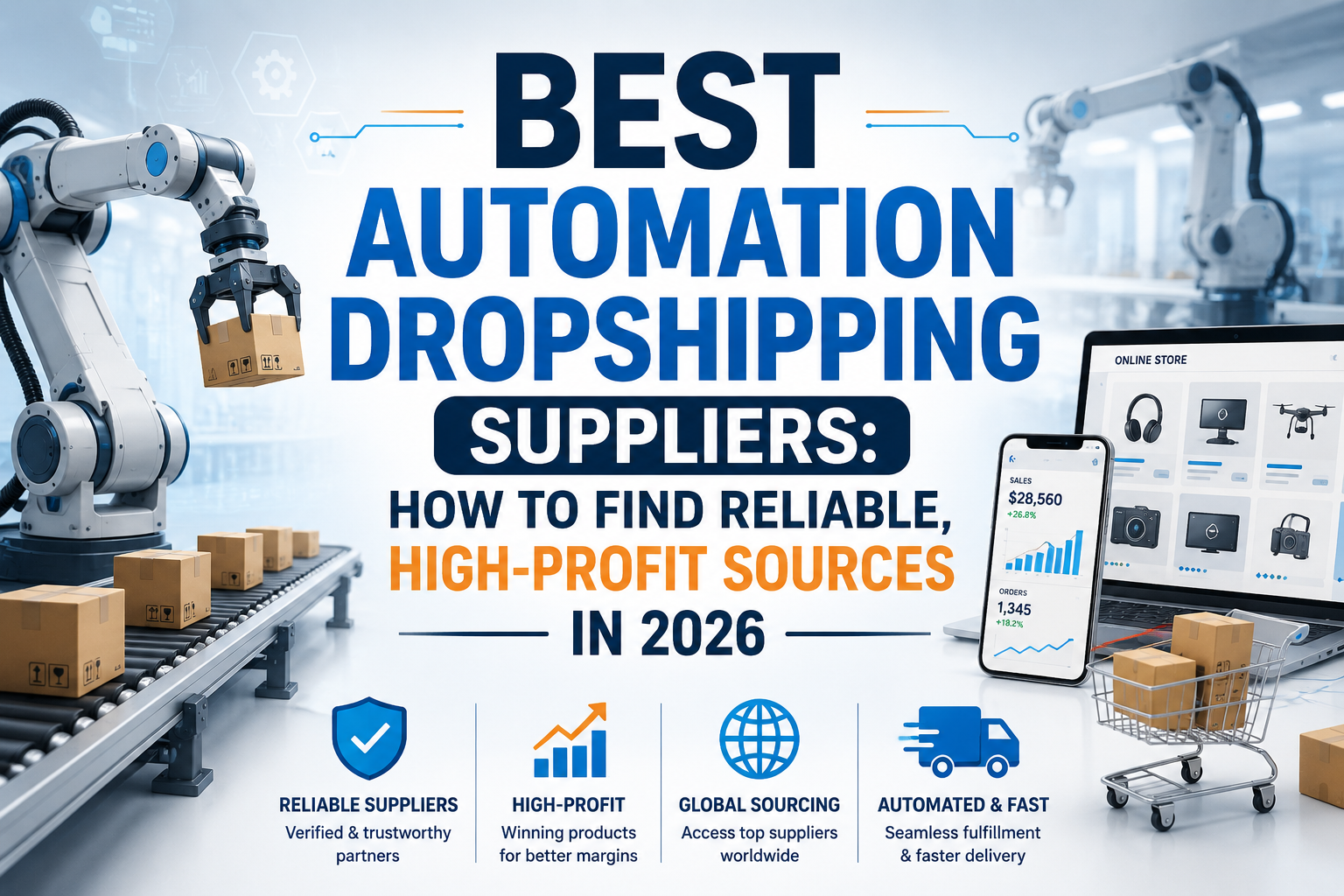
Automotive Dropshipping Suppliers by Region (US vs EU vs China)
When people search for the best automotive dropshipping suppliers, they often focus on product catalogs or platform names. However, in the automotive niche, the supplier’s region is often more important than the supplier itself.
Car parts and accessories are sensitive to shipping time, return handling, compatibility standards, and even regulatory requirements. A supplier in the wrong region can turn a profitable product into a high-return liability.
United States Automotive Dropshipping Suppliers: Speed and Trust at a Cost
US-based suppliers are usually the strongest option for sellers targeting North American customers. Their biggest advantage is delivery speed. In many cases, shipping can be completed within 2–5 days, which significantly increases conversion rates for automotive products where urgency matters, such as replacement parts or car electronics.
Another strength is product reliability and compliance. US suppliers often operate under stricter quality standards, reducing the risk of defective items. This also simplifies return handling, since customers can ship items domestically.
However, this region has clear drawbacks. Prices are typically higher, which compresses profit margins. Product variety can also be limited compared to global marketplaces. For beginners, US suppliers are ideal for testing high-conversion products, but scaling may require supplementing with lower-cost regions.
European Automotive Dropshipping Suppliers: Compliance and Premium Positioning
European suppliers are often overlooked, but they are extremely valuable for sellers targeting EU markets such as Germany, France, and the Netherlands. The main advantage is regulatory alignment. Products from EU suppliers are more likely to comply with VAT rules, safety certifications, and consumer protection laws.
Shipping within Europe is also relatively fast and predictable, usually ranging from 2–7 days depending on the country. This makes EU suppliers a strong choice for building a premium automotive brand, especially for accessories like interior upgrades, lighting systems, and maintenance tools.
The downside is similar to the US market: higher operational costs and slightly limited product flexibility compared to global sourcing platforms. EU suppliers prioritize compliance over aggressive pricing, which affects margin potential but improves long-term stability.
China Automotive Dropshipping Suppliers: Scale, Variety, and Price Advantage
China remains the largest sourcing hub for automotive dropshipping suppliers due to its unmatched cost efficiency and product variety. Platforms like wholesale manufacturers and sourcing agents offer thousands of SKUs ranging from LED lights to car organizers and diagnostic tools.
The main advantage is scalability. Sellers can quickly test large product catalogs with minimal upfront investment. This makes China-based suppliers ideal for trend-driven stores and TikTok-style impulse buying products.
However, challenges are significant. Shipping times can range from 7–25 days depending on logistics method, which may reduce conversion rates in high-expectation markets like the US or Europe. Quality control also varies widely between suppliers, requiring careful vetting and sample testing.
Despite these issues, China remains the backbone of most global dropshipping operations due to its unbeatable cost structure.
How to Choose the Right Region for Your Automotive Store
Selecting the right supplier region depends on your business model rather than a single “best” option.
If your strategy is focused on fast shipping and high customer trust, US suppliers are the strongest foundation. If your goal is to build a compliant EU-focused brand with stable logistics, European suppliers provide a balanced solution. If you prioritize testing products at scale and maximizing margins, China-based suppliers offer the most flexibility.
In many successful automotive dropshipping businesses, the real strategy is not choosing one region—but combining all three. US or EU suppliers can be used for winning products, while China suppliers support product testing and catalog expansion.
Automotive Dropshipping Suppliers for High-Profit Car Accessories
When analyzing the best automotive dropshipping suppliers, many beginners focus on catalog size or shipping speed. However, experienced sellers know that long-term success depends on one key factor: profit margin per order.
Not all automotive products are equal. Some generate strong returns with low competition, while others look attractive but suffer from high shipping costs, return rates, or price pressure. Choosing the right suppliers is not just about sourcing products—it is about identifying suppliers that consistently support high-profit automotive niches.
Why Automotive Accessories Are a High-Margin Dropshipping Category
Automotive accessories are uniquely positioned in e-commerce because they combine functional necessity with emotional buying behavior. Customers often purchase products that improve comfort, appearance, or convenience inside their vehicles.
Items like interior lighting kits, phone mounts, seat organizers, and smart electronics tend to perform better than heavy mechanical parts. The reason is simple: they are lightweight, visually appealing, and perceived as upgrades rather than repairs.
High-profit suppliers in this niche typically focus on products with low production cost but strong perceived value. This gap between cost and perceived value is where dropshipping margins are created.
High-Profit Automotive Product Categories to Prioritize
Within the automotive dropshipping ecosystem, certain categories consistently outperform others in profitability.
Interior accessories, for example, offer strong margins because they are easy to ship and rarely require technical installation. Products such as ambient LED lighting, storage organizers, and seat enhancements are often sourced cheaply but sold at significantly higher retail prices.
Car electronics represent another profitable segment. Devices like wireless adapters, dash cameras, and Bluetooth integration tools appeal to modern drivers and can command premium pricing when bundled with branding or perceived convenience.
Exterior accessories can also be profitable, but they require careful selection. Products that enhance aesthetics—such as trims or protective covers—perform better than heavy or installation-intensive parts.
The key pattern across all high-profit categories is simple: low weight, high visual impact, and easy installation.
How Suppliers Influence Profit Margins in Automotive Dropshipping
Not all suppliers support high-margin strategies equally. The best automotive dropshipping suppliers are those that allow flexible pricing, product bundling, and private labeling options.
Suppliers that provide generic, unbranded products often limit your ability to differentiate, forcing you into price competition. In contrast, suppliers that offer customization or packaging options allow you to build a perceived premium product, even if the base item cost is low.
Shipping structure also plays a direct role in profitability. Suppliers with consolidated logistics or regional warehouses help reduce shipping costs, which directly improves net margin per order.
Ultimately, a supplier is not just a source of inventory—it is a margin control system.
Common Mistakes That Reduce Profit in Automotive Dropshipping
Many sellers unintentionally choose suppliers that limit their profitability. One common mistake is selecting products based solely on low cost without considering return rates or shipping complexity. A cheap product that breaks easily or arrives late can destroy profit through refunds.
Another mistake is ignoring product differentiation. If multiple stores source identical items from the same supplier, price competition becomes unavoidable, and margins collapse.
Finally, relying too heavily on slow-shipping suppliers can reduce conversion rates, especially in competitive markets like the US and EU. Even high-margin products lose value if customers do not trust delivery timelines.
How to Verify Reliable Automotive Dropshipping Suppliers
In the automotive dropshipping industry, finding suppliers is easy—but finding reliable automotive dropshipping suppliers is the real challenge. Because car-related products often involve safety, compatibility, and durability, a bad supplier decision does not just affect profit—it can damage your store reputation permanently.
Scams, low-quality manufacturers, and unreliable intermediaries are common in this niche. Many beginners assume that a large catalog or low price means legitimacy, but in reality, supplier reliability must be verified through structured evaluation, not assumptions.
Why Automotive Dropshipping Has Higher Supplier Risk
Compared to general e-commerce products, automotive items carry higher risk due to their functional nature. A defective phone case might lead to a refund, but a faulty car accessory can lead to safety complaints, negative reviews, and chargebacks.
Another issue is product complexity. Automotive parts often have compatibility requirements (vehicle model, year, installation type), which increases the chance of incorrect orders being fulfilled.
Because of this, unreliable suppliers can create cascading problems: delayed shipping, inconsistent inventory, and mismatched specifications. These issues make supplier verification a critical step rather than an optional one.
Key Signs of Unreliable Automotive Suppliers
One of the most common indicators of a risky supplier is inconsistent communication. Suppliers that take too long to respond, provide unclear answers, or avoid direct questions about manufacturing origin should be treated cautiously.
Another warning sign is unrealistic pricing. If a supplier offers automotive products at prices significantly lower than market average, it often indicates compromised quality, counterfeit goods, or unstable sourcing channels.
Lack of transparency is another major risk factor. Reliable suppliers can clearly explain their production process, shipping timelines, and return policies. If these details are vague or constantly changing, it suggests operational instability.
Finally, absence of verifiable business identity—such as no official website, no traceable business registration, or only generic marketplace listings—should always be considered a red flag.
Practical Steps to Verify Automotive Dropshipping Suppliers
A structured verification process significantly reduces risk when selecting suppliers.
The first step is sample testing. Ordering product samples allows you to evaluate build quality, packaging, and shipping time firsthand. In the automotive niche, this step is essential because appearance alone is not enough to judge functionality.
The second step is order simulation testing. Instead of a single sample, placing multiple test orders across different product categories helps identify consistency in fulfillment speed and accuracy.
The third step is communication stress testing. Asking detailed technical questions about compatibility, installation, and materials helps reveal whether the supplier actually understands the product or is simply reselling listings from another source.
The fourth step is policy validation. Reliable suppliers should have clear return, refund, and replacement policies. If these policies are missing or overly vague, it increases operational risk significantly.
Avoiding Common Scams in Automotive Dropshipping
One of the most common scams involves “middle-layer agents” pretending to be manufacturers. These suppliers often inflate prices while hiding the actual production source. This reduces your margin and creates dependency without transparency.
Another frequent issue is inventory manipulation, where suppliers list products as available but delay fulfillment after orders are placed. This creates long shipping times and customer dissatisfaction.
Fake tracking numbers are also a known issue in low-quality supplier networks. These numbers may appear valid initially but fail to update after a few days, leading to disputes and refunds.
To avoid these issues, sellers should prioritize traceable supply chains and avoid relying solely on unverified single-source suppliers.
Building a Long-Term Reliable Supplier Network
Instead of relying on one supplier, successful automotive dropshipping businesses build redundant supplier networks. This means having multiple verified suppliers for similar product categories to reduce dependency risk.
Over time, the goal is to shift from random supplier sourcing to structured partnerships. Reliable suppliers become part of your operational infrastructure, not just product providers.
Consistency, transparency, and communication quality matter more than short-term price advantages. In automotive dropshipping, stability always outperforms cheap but unreliable sourcing.
Best Platforms to Find Automotive Dropshipping Suppliers: Alibaba, AliExpress, ScaleOrder, CJdropshipping & More
When searching for the best automotive dropshipping suppliers, most beginners start with individual suppliers. However, in 2026, the more efficient approach is to start from platform ecosystems. These platforms act as supplier aggregators, logistics networks, and automation tools combined.
The platform you choose directly impacts product selection, shipping speed, pricing structure, and even how scalable your automotive store can become. Instead of asking “which supplier is best,” experienced sellers ask “which platform gives me the best supplier ecosystem?”
Alibaba: Best for Bulk Negotiation and Private Supplier Relationships
Alibaba remains one of the most powerful sourcing platforms for automotive dropshipping suppliers, especially for sellers who want to build long-term supplier relationships.
Its biggest advantage is manufacturing access. Unlike retail-focused marketplaces, Alibaba connects sellers directly with factories or large trading companies. This makes it ideal for automotive accessories where customization, branding, and bulk pricing matter.
For example, sellers can negotiate private labeling for car electronics, custom packaging for interior accessories, or even exclusive product variations.
However, Alibaba is not fully optimized for dropshipping workflows. Shipping is often not automated, and communication with suppliers requires manual negotiation. It is better suited for sellers who are transitioning from dropshipping into semi-wholesale or brand building.
AliExpress: Best Entry Point for Beginners and Fast Testing
AliExpress is often the first platform new sellers use when exploring automotive dropshipping suppliers. Its main strength is low entry friction.
Products are already listed in retail-ready format, making it easy to import items into Shopify or WooCommerce stores. For automotive niches, this includes car phone mounts, LED interior lights, cleaning tools, and small electronic accessories.
The platform also supports relatively fast ePacket or regional shipping options depending on the supplier.
However, AliExpress has limitations. Product saturation is extremely high, meaning many stores sell identical items. This leads to price competition and lower long-term differentiation potential.
AliExpress is best used for product validation and early-stage testing, not long-term scaling.
CJdropshipping: Best for Automation and Global Fulfillment
CJdropshipping has become one of the most popular platforms for automotive dropshipping suppliers due to its end-to-end fulfillment system.
Unlike AliExpress, CJ integrates sourcing, warehousing, packaging, and shipping into a single workflow. This reduces operational complexity significantly, especially for automotive products that require consistent delivery performance.
CJ also provides access to global warehouses, which can dramatically reduce shipping times to the US and Europe.
Another advantage is product customization. Sellers can request branding services or packaging upgrades, which helps differentiate automotive stores in competitive niches.
The limitation is that product pricing can be slightly higher than direct factory sourcing, but the tradeoff is operational stability and automation.
ScaleOrder: Best for Supplier Automation and Store Scaling
ScaleOrder is not a traditional supplier but a dropshipping automation platform that connects multiple automotive suppliers into one system.
Its strength lies in automation: product imports, price monitoring, stock updates, and order fulfillment can all be managed from a single dashboard.
For automotive stores managing large catalogs—such as car accessories, gadgets, and maintenance tools—this automation reduces manual workload significantly.
ScaleOrder supports multiple supplier sources, including AliExpress and other marketplaces, making it a central hub for scaling operations.
However, ScaleOrder depends on underlying suppliers, so product quality and shipping speed still vary depending on the source.
Spocket: Best for US/EU Automotive Suppliers and Fast Shipping
Spocket focuses heavily on US and EU-based automotive dropshipping suppliers, making it ideal for sellers targeting high-trust markets.
The platform emphasizes faster delivery times and more consistent product quality compared to Asian marketplaces.
For automotive niches, Spocket is useful for interior accessories, car care products, and lifestyle-oriented vehicle upgrades.
Its main advantage is customer experience—shorter shipping times lead to higher conversion rates and lower refund risks.
The downside is a smaller product catalog and higher average costs compared to global sourcing platforms.
Automotive Dropshipping Suppliers for Shopify Stores
Building a Shopify store in the automotive niche is easy. Building a profitable one depends on something less visible: how well your store is connected to automotive dropshipping suppliers.
Many beginners treat suppliers as a separate decision from store setup. In reality, Shopify performance is directly shaped by supplier quality, integration depth, and fulfillment automation. A fast, optimized store with poor supplier workflows will still fail due to delays, stock issues, and inconsistent delivery.
To scale successfully, Shopify sellers must think in terms of end-to-end systems, not isolated tools.
Why Shopify Is Strong for Automotive Dropshipping
Shopify remains one of the most effective platforms for automotive e-commerce because it supports flexible product structures and multiple supplier integrations.
Automotive products often require detailed product pages—compatibility notes, installation instructions, and visual demonstrations. Shopify allows full customization of product templates, which is essential for reducing refund rates in this niche.
Another advantage is ecosystem integration. Shopify connects easily with automation apps, fulfillment platforms, and supplier networks, making it suitable for scaling automotive catalogs beyond a few products.
However, Shopify does not solve logistics by itself. The platform is only as strong as the suppliers behind it.
Choosing Automotive Suppliers That Fit Shopify Workflows
Not all suppliers are optimized for Shopify dropshipping. The best automotive dropshipping suppliers for Shopify stores are those that support real-time inventory syncing, API integration, or automated order forwarding.
Suppliers that provide manual ordering processes may work for small stores, but they become a bottleneck when scaling.
For automotive niches, consistency is more important than catalog size. A supplier that reliably ships 20 core products is often more valuable than one offering 2,000 unstable listings.
Product categories like LED lighting, car electronics, and interior accessories perform best when suppliers can guarantee stable stock and predictable shipping times.
Automation: The Key to Scaling Automotive Shopify Stores
Automation is what separates hobby stores from real businesses.
In automotive dropshipping, automation typically involves three layers: product import, inventory sync, and order fulfillment.
Product import tools allow sellers to quickly test automotive accessories without manual listing creation. Inventory sync ensures that products are not oversold, which is critical for high-demand items like car gadgets or seasonal accessories.
Order fulfillment automation reduces human error. When a customer places an order, it is automatically forwarded to the supplier, minimizing delays and ensuring consistency.
Without automation, automotive Shopify stores often struggle with scalability due to manual workload and operational errors.
Shipping Time Optimization and Customer Expectations
Shipping speed is one of the most important factors in automotive dropshipping success. Customers purchasing car accessories expect relatively fast delivery, especially in markets like the US and Europe.
Shopify sellers must carefully select suppliers based on regional warehouse availability. Suppliers with US or EU warehouses significantly improve conversion rates because customers trust shorter delivery windows.
For China-based suppliers, shipping optimization strategies such as ePacket alternatives or hybrid logistics models can reduce delivery time, but expectations must be managed through clear product page communication.
Failing to align shipping expectations with supplier reality often leads to chargebacks and negative reviews.
Branding vs Commodity Suppliers in Automotive Dropshipping
A major decision Shopify sellers face is whether to use generic suppliers or build branded product lines.
Commodity suppliers offer low-cost automotive accessories that are easy to list but difficult to differentiate. This leads to price competition and thin margins.
Brand-oriented suppliers, on the other hand, allow customization such as logo printing, packaging design, or product bundling. In the automotive niche, this is particularly powerful for items like interior accessories or electronic upgrades.
Shopify stores that invest in branding through suppliers typically achieve higher customer retention and better long-term profitability.
Challenges of Automotive Dropshipping Suppliers
When people search for the best automotive dropshipping suppliers, they usually focus on product selection and pricing. However, the real challenge in this niche is not finding suppliers—it is managing supplier-related risks at scale.
Automotive products introduce higher operational complexity than most e-commerce categories. Issues like shipping delays, product mismatches, and quality inconsistency can quickly turn a profitable store into a loss-making operation.
Shipping Delays: The Most Common Breakdown Point
Shipping performance is one of the most critical weaknesses in automotive dropshipping supply chains. Unlike digital products or small accessories, car-related items often have higher customer expectations regarding delivery speed.
Many automotive dropshipping suppliers rely on cross-border logistics, which can introduce unpredictable delays due to customs processing, carrier bottlenecks, or warehouse backlogs.
Even when products are available, fulfillment time can vary significantly between suppliers, especially when sourcing from multiple regions.
These inconsistencies directly affect conversion rates. Customers are less likely to purchase automotive products if delivery times appear uncertain or overly long.
Product Quality Inconsistency: A Silent Profit Killer
One of the biggest risks in automotive dropshipping is inconsistent product quality. Unlike standardized retail goods, automotive accessories often come from multiple manufacturers with varying production standards.
A supplier may deliver a high-quality batch initially, but later shipments can differ in materials, finish, or durability. This inconsistency creates unpredictable customer experiences.
In automotive niches, this is especially damaging because customers often expect functional reliability. A defective car accessory does not just lead to refunds—it can result in negative reviews that affect future sales performance.
Without strict supplier control and testing procedures, quality issues can scale quickly as order volume increases.
Returns and Refund Complexity in Automotive Products
Return handling is another major challenge when working with automotive dropshipping suppliers.
Unlike lightweight consumer goods, automotive accessories often involve compatibility checks, installation requirements, and user error. This increases the likelihood of disputes between customers and sellers.
In many cases, return shipping costs exceed product value, making refunds more expensive than the original sale.
Additionally, cross-border returns are particularly difficult to manage. Suppliers may not accept returns, or they may require complex verification processes before issuing replacements.
This creates a financial risk structure where every failed order has a disproportionate impact on profit margins.
Supplier Communication Gaps and Operational Friction
Efficient communication is often overlooked but plays a major role in supplier reliability.
Many automotive dropshipping suppliers operate in different time zones, use inconsistent communication channels, or lack structured support systems.
This leads to delays in problem resolution, especially when dealing with urgent issues such as out-of-stock items or shipping errors.
In fast-moving e-commerce environments, even a 24–48 hour delay in response can result in customer dissatisfaction.
Suppliers that lack operational transparency tend to create friction that increases workload and reduces scalability.
Inventory Instability and Stock Synchronization Issues
Another major challenge is inventory inconsistency. Automotive products often experience fluctuating demand, especially for trending accessories like LED lights or smart car gadgets.
Some suppliers do not maintain real-time stock updates, which leads to overselling and order cancellations after purchase.
This creates a negative customer experience and increases refund rates.
Stores that scale without proper inventory synchronization tools often face repeated fulfillment failures, especially when relying on multiple suppliers across different platforms.
How to Build a More Stable Automotive Supply Chain
Despite these challenges, it is possible to build a stable system by applying structured supplier management strategies.
Successful sellers rarely rely on a single supplier. Instead, they build redundant supplier networks, ensuring that each product category has multiple fulfillment options.
Quality control through sample testing and periodic re-evaluation helps reduce inconsistency over time.
In addition, prioritizing suppliers with regional warehouses can significantly reduce shipping volatility.
Finally, integrating automation tools for inventory tracking and order routing helps minimize human error and operational delays.




No Comments