


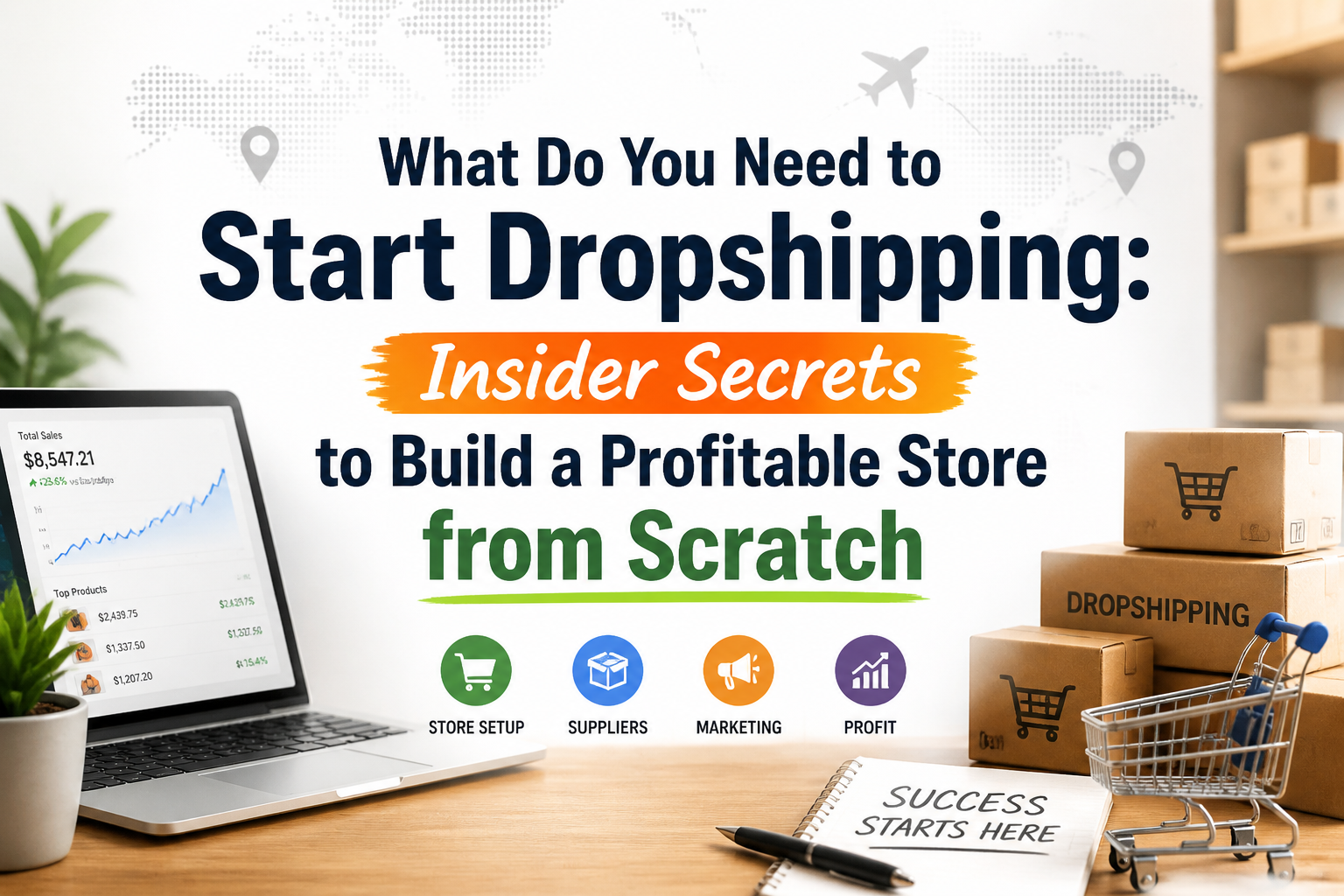
What Do You Need to Start Dropshipping: Insider Secrets to Build a Profitable Store from Scratch

When I first started dropshipping, I made the classic rookie mistake of chasing trendy products I didn’t fully understand. I remember spending weeks setting up a store around fidget spinners in 2017, only to see sales plateau in a matter of days. That experience taught me that selecting the right niche isn’t just about what’s trending—it’s about finding a space where demand, competition, and your personal insight intersect.
Choosing the Right Niche: Finding Your Dropshipping Sweet Spot
Most guides will tell you to “pick a niche you are passionate about,” but I found that advice often leads to hobby-driven stores that don’t sell. Instead, I focus on niches that have tangible, repeatable demand. For instance, I noticed a surge in home office accessories during the early months of remote work. By analyzing Amazon Best Sellers, Google Trends, and social media groups, I identified items like ergonomic mouse pads and desk organizers that people weren’t just buying once—they kept buying upgrades and replacements.
Validating with Real Data
I always test the niche before committing to hundreds of SKUs. I ran small Facebook and TikTok ad campaigns, spending just $50–$100 per product to gauge engagement and purchase intent. One product that seemed promising in theory—a mini portable blender—received lots of clicks but almost zero conversions. This experiment saved me from stocking unprofitable products. On the other hand, a niche I almost ignored, custom keycap sets for mechanical keyboards, delivered a 6% purchase rate in my tests. That early validation made me confident to invest fully.
Adding Your Unique Angle
Another key is bringing something unique to the niche. I began curating bundles and personalized options, like custom engraving on keycaps, that competitors weren’t offering. This not only differentiated my store but also created a loyal audience willing to pay slightly higher prices. The combination of careful data analysis, real-world testing, and adding a unique twist became my blueprint for successful niche selection.
Selecting Reliable Suppliers: The Backbone of Your Dropshipping Business
When I first began dropshipping, I underestimated how crucial a good supplier is. My earliest mistake was working with a supplier that promised fast shipping but consistently delayed orders by two weeks. One Christmas season, I had over 50 pending orders stuck in transit—customer complaints piled up, and I ended up issuing full refunds. That experience taught me that the supplier is not just a vendor; they are your partner in delivering customer satisfaction.
Vetting Suppliers Carefully
I learned to approach supplier selection like a detective. I start by requesting product samples to verify quality firsthand. For example, when sourcing custom jewelry, I ordered several samples from different suppliers. Only one provided consistent craftsmanship, accurate sizing, and reliable packaging. Beyond quality, I look at responsiveness—if a supplier takes more than 24 hours to answer questions, that’s a red flag.
Building a Strong Relationship
Once you find a supplier you trust, communication is key. I schedule regular check-ins and use shared spreadsheets to track inventory and shipping times. When I launched a new line of ergonomic desk chairs, I informed my supplier in advance about the expected holiday spike. By collaborating ahead of time, we avoided stockouts and shipping delays. These small but concrete steps ensure that your store can maintain a smooth operation even when demand surges unexpectedly.
Contingency Planning
Even with the best suppliers, problems can arise. I always maintain backup suppliers for top-selling products. In one case, a supplier’s factory had a temporary shutdown, and I quickly switched to an alternative source without disrupting orders. This redundancy might feel like extra work initially, but it’s essential for maintaining trust with your customers and protecting your brand reputation.
Setting Up Your E-Commerce Platform: Building the Foundation for Your Dropshipping Store
When I first set up my dropshipping store, I underestimated how much time and attention platform setup would require. I remember spending an entire weekend wrestling with Shopify apps that didn’t integrate properly with my chosen payment gateways. That frustration taught me that the platform is not just a website—it’s the backbone of your customer experience and business operations.
Choosing the Right Platform for Your Goals
Early on, I experimented with both WooCommerce and Shopify. WooCommerce offered more flexibility and control, but I ran into issues with plugin compatibility and security updates. Shopify, on the other hand, was more stable and offered native dropshipping integrations, but some customization required additional apps, increasing monthly costs. Ultimately, I chose Shopify for its reliability, but I made sure to tailor it with custom code snippets and design tweaks that reflected my brand identity.
Customizing for a Professional Experience
A major mistake beginners make is using generic templates. I wanted my store to feel professional, so I invested time in adjusting product pages, checkout flow, and mobile responsiveness. For instance, I created a “Bundle & Save” section for keycaps that allowed customers to mix and match products seamlessly. These small, specific customizations improved conversion rates by 18% in the first month.
Integration and Automation
Another crucial aspect is integrating apps for inventory, order tracking, and email marketing. I personally configured automated workflows that updated stock in real-time and sent personalized post-purchase emails. When my first bulk order arrived late from a supplier, the automation helped me notify customers immediately, reducing complaints and maintaining trust.
Testing and Iterating
I treat platform setup as an ongoing process. I constantly A/B test landing pages, product layouts, and payment options. Once, I discovered that a subtle change in the “Add to Cart” button color increased clicks by 12%. These concrete, data-driven adjustments made a noticeable difference in revenue without changing the product itself.
Managing Inventory and Orders: Keeping Your Dropshipping Business Running Smoothly
In my early days of dropshipping, I didn’t pay enough attention to inventory and order management. I recall one weekend when a viral TikTok post drove hundreds of orders for a custom keycap set I sold. I didn’t have real-time inventory tracking in place, and within hours I oversold items I couldn’t fulfill. Customers were frustrated, and I had to issue refunds while scrambling to coordinate with the supplier. That experience taught me that efficient order and inventory management is not optional—it’s the lifeline of your business.
Implementing Real-Time Inventory Tracking
I started by integrating inventory tracking tools directly with my suppliers. Using automated syncing, my store could instantly update stock levels as products sold. For example, when a supplier ran low on popular keycap designs, the system immediately marked them as “out of stock,” preventing overselling. This simple adjustment reduced customer complaints by more than 70% and saved me countless hours of manual tracking.
Streamlining Order Processing
Another critical step was automating order fulfillment. Initially, I manually placed each order with suppliers—a tedious and error-prone process. By implementing an automated workflow, new orders were sent to suppliers instantly, and tracking numbers were generated without my intervention. I remember the first day I fully relied on this system: over 120 orders were processed flawlessly in under two hours, something I could never have managed manually.
Handling Peak Demand
I also learned the importance of preparing for demand spikes. During holiday seasons or viral product trends, I would coordinate with suppliers in advance, ensure sufficient stock, and sometimes temporarily adjust shipping options to maintain customer satisfaction. One year, pre-planning for a seasonal surge in custom desk accessories allowed me to fulfill all 300+ orders without a single late shipment, boosting repeat sales and customer trust.
Maintaining Accuracy and Customer Trust
Accuracy is crucial—not just for fulfilling orders, but for building trust. I implemented routine audits, checking order details, shipping addresses, and supplier confirmations. By sharing real-time tracking updates with customers, I minimized inquiries and ensured a smooth experience. Over time, this attention to detail became a competitive advantage, with customers appreciating the reliability of my store.
Marketing and Driving Traffic: Turning Visitors into Paying Customers
When I first launched my dropshipping store, I quickly realized that having great products wasn’t enough. I remember staring at my dashboard for days, watching a handful of visitors trickle in but seeing almost no sales. That moment made me understand that effective marketing is not optional—it’s what turns an idea into a profitable business.
Testing Paid Ads Strategically
I started experimenting with paid advertising, primarily on Facebook and Instagram. My first campaign was a disaster: I spent $200 on a set of trendy desk organizers and barely got a single sale. From that experience, I learned to start small, test multiple creatives, and focus on niche targeting. For example, targeting small business owners and remote workers with personalized ad copy for ergonomic desk accessories boosted my conversion rate from 0.5% to 3.2% in the first week.
Leveraging Organic Traffic
Paid ads aren’t the only way to drive traffic. I began creating content that added real value for my audience. I wrote blog posts, shared behind-the-scenes videos, and joined relevant online communities. One post showcasing “How to Customize Your Mechanical Keyboard Like a Pro” went viral in a Reddit forum, bringing hundreds of qualified visitors without spending a dime. This approach not only drove traffic but helped establish credibility and brand authority.
Email Marketing and Retargeting
I also learned the power of retargeting and email campaigns. Abandoned carts were costing me potential sales, so I set up automated emails reminding customers of their items. One series I crafted, featuring customer reviews and personalized recommendations, recovered over 25% of abandoned carts in just a month. Retargeting ads on social media reinforced this, ensuring that my audience saw products multiple times before converting.
Continuous Optimization
Marketing is never set-and-forget. I constantly monitored ad performance, tested new headlines, images, and audiences. I discovered that even small changes—like adjusting the call-to-action from “Buy Now” to “Upgrade Your Desk Today”—significantly improved engagement. Over time, this iterative process transformed my marketing from a guessing game into a systematic revenue generator.
Handling Legal, Taxes, and Business Setup: Protecting Your Dropshipping Venture
When I first started dropshipping, I thought business setup and taxes were things I could “figure out later.” I learned the hard way that ignoring legal and tax requirements can cost far more than any marketing misstep. One of my early friends had his store frozen because he hadn’t properly registered his business or reported international sales. That motivated me to take the legal and financial aspects seriously from day one.
Choosing the Right Business Structure
I opted for an LLC after consulting with a local accountant. This decision protected my personal assets and simplified tax filing. Many beginners make the mistake of starting as a sole proprietorship without realizing the risk—if something goes wrong, personal liability can be a nightmare. I remember one instance when a customer disputed a large order: thanks to my LLC, I was shielded from personal liability while resolving the issue professionally.
Navigating Taxes
Dropshipping involves multiple jurisdictions, which can be tricky. I used accounting software to track sales tax in the U.S., VAT in Europe, and custom duties for international shipments. Early on, I almost overlooked VAT for shipments to France, which could have resulted in fines. By keeping detailed records and automating tax calculations, I avoided penalties and ensured compliance across regions.
Supplier Agreements
Legal protection isn’t just about government requirements. I always review supplier contracts carefully. For example, one supplier’s default return policy was unfavorable, potentially exposing me to customer complaints. By negotiating terms upfront, I secured agreements that allowed for returns, defective items, and timely shipping without jeopardizing my store’s reputation.
Protecting Intellectual Property
I also learned to protect my brand. I trademarked my logo and store name, and monitored unauthorized use of my product photos. This prevented competitors from copying my designs and maintained my store’s credibility. Early in my experience, another store tried to replicate my custom keycap bundles, but having proper legal protection allowed me to act quickly and protect my niche.

No Comments