


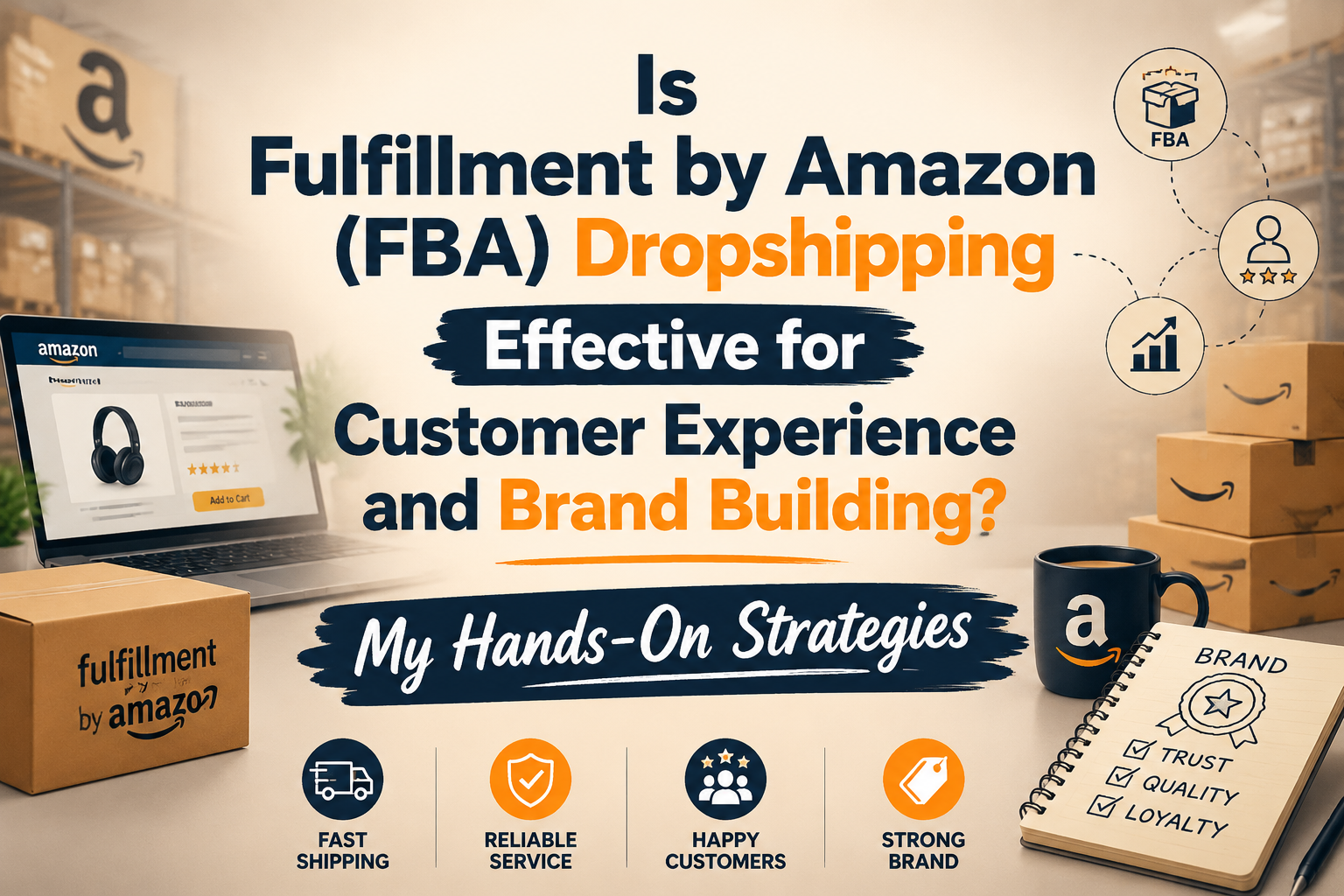
Is Fulfillment by Amazon (FBA) Dropshipping Effective for Customer Experience and Brand Building? My Hands-On Strategies

Through my firsthand experience, I discovered that FBA dropshipping offers clear advantages in shipping speed, customer service, and scalability. However, it requires upfront investment and careful inventory planning. For serious sellers aiming for reliable growth and higher margins, FBA dropshipping is a more professional and sustainable approach compared to traditional dropshipping.
Is Fulfillment by Amazon (FBA) Dropshipping Better Than Traditional Dropshipping?
When I first ventured into e-commerce, I experimented with both traditional dropshipping and Fulfillment by Amazon (FBA) dropshipping to see which model truly delivered consistent results. At first glance, both seemed appealing: minimal upfront inventory for traditional dropshipping, and Amazon’s powerhouse logistics for FBA. But the differences became stark as soon as I started running real campaigns.
Inventory Management and Shipping Speed
In traditional dropshipping, I often had to juggle multiple suppliers across different countries. One memorable instance was a smartphone accessory order from a supplier in China that took three weeks to arrive in the U.S., resulting in several canceled orders and frustrated customers. With FBA dropshipping, the story was completely different. By sending products in bulk to Amazon’s warehouses, I could rely on Prime two-day shipping, drastically reducing my customer complaints and increasing repeat purchases.
Handling Returns and Customer Service
Traditional dropshipping forced me to manage returns manually, which was a logistical nightmare. I remember a batch of defective earbuds where customers expected refunds immediately. Coordinating with overseas suppliers was slow, and I ended up absorbing extra costs. FBA automates returns efficiently. One time, a customer returned a defective item; Amazon handled the pickup, inspection, and refund automatically, which saved me hours of back-and-forth communication and protected my seller rating.
Cost Structure and Profit Margins
While traditional dropshipping had no upfront inventory cost, the per-unit price was often higher. In contrast, FBA required me to invest upfront in stock, but the lower per-unit cost and Amazon’s fulfillment efficiency improved overall profit margins. I once tested a kitchen gadget: the traditional dropshipping margin was 15%, whereas using FBA dropped my unit cost but increased my net margin to 28% after accounting for Amazon fees.
Real-World Scalability
Scaling traditional dropshipping was tricky; coordinating multiple suppliers became a bottleneck. FBA, however, allowed me to scale confidently. I could forecast demand, send inventory in advance, and leverage Amazon’s advertising tools without worrying about logistics breaking down. This gave me the freedom to experiment with bundles and promotional campaigns that were impossible under the traditional dropshipping model.
Is Fulfillment by Amazon (FBA) Dropshipping Risky?
When I first started using FBA dropshipping, I assumed that Amazon’s infrastructure would make compliance effortless. I quickly learned that understanding Amazon’s policies isn’t just a formality—it’s critical to staying in business. Failing to navigate these rules can lead to suspended accounts, lost inventory, and unexpected financial losses.
Amazon’s Dropshipping Rules
Amazon allows FBA dropshipping, but traditional dropshipping practices—where products ship directly from third-party suppliers without Amazon labeling—can be risky. I learned this the hard way when I listed a batch of home electronics sourced from a third-party supplier. One customer complained about missing documentation, and Amazon flagged my account for not adhering to their fulfillment standards. From then on, I made it a point to always prep inventory myself or send it through Amazon-approved FBA channels.
The Risk of Account Suspension
Account suspension is a real threat in FBA dropshipping. I once misread Amazon’s rules about using multiple suppliers for a single product line. Within days, my account received a warning for “inconsistent fulfillment practices.” It was a stressful period, but I discovered that documenting every supplier interaction and maintaining clear shipment tracking logs is essential. This step alone helped me avoid permanent suspension in future operations.
Handling Intellectual Property and Brand Issues
Another challenge is respecting intellectual property. Early in my journey, I unknowingly sourced custom-branded phone cases that violated trademarks. Amazon’s automated systems quickly flagged the listings, resulting in immediate removal. I had to contact suppliers, verify brand permissions, and reissue compliant products. Today, I always perform an IP audit before sourcing, ensuring that every product sold through FBA complies with trademarks and copyright laws.
Practical Tips from My Experience
To mitigate risks, I developed a personal compliance checklist. This includes verifying supplier legitimacy, confirming Amazon labeling requirements, and maintaining clear communication logs. One specific case involved coordinating with a small U.S. supplier who initially misunderstood FBA labeling. By personally walking them through Amazon’s requirements and sending sample shipments, I avoided inventory rejection and potential account penalties.
How to Find Profitable Products: Niche Selection for FBA Dropshipping That Actually Works
When I first started FBA dropshipping, I assumed that any trending product could generate profit. Quickly, I learned that niche selection isn’t just about what’s popular—it’s about logistics, competition, and customer expectations. My early mistakes taught me how to find products that not only sell but scale sustainably.
Analyzing Product Demand and Competition
One of my first experiments was selling generic fitness bands. The market was flooded, margins were razor-thin, and my ads barely broke even. I realized that high demand alone doesn’t guarantee profit. I began using Amazon’s Best Sellers Rank (BSR) combined with review analysis to evaluate product viability. For example, I discovered a niche in eco-friendly yoga accessories. There were fewer than 50 active sellers for high-quality cork yoga blocks, but demand was consistent. I jumped in, and within a month, sales stabilized with minimal ad spend.
Considering FBA Logistics
Not every product fits FBA’s fulfillment system. I once sourced oversized outdoor hammocks from overseas, only to be hit with exorbitant storage and fulfillment fees at Amazon’s warehouses. I learned to prioritize lightweight, compact items that are easy to ship and store. Eco-friendly yoga blocks fit perfectly—they’re small, durable, and prime-eligible, which significantly improved customer satisfaction and lowered storage costs.
Pricing Strategy and Profit Margins
Profitability is crucial in FBA dropshipping. When I started, I underestimated Amazon fees and storage costs. By calculating landed cost, FBA fees, and potential return rates, I narrowed my niche to products that could comfortably deliver at least 25% net margin. I remember testing a batch of bamboo yoga blocks: after factoring in all fees, I projected $8 net profit per unit—a realistic figure that guided my inventory planning and ad budgeting.
Testing and Iteration
I don’t launch a full inventory without testing. I order small batches, monitor conversion rates, and optimize listings before scaling. For the yoga blocks, I tested three colors and two bundle options. Customer feedback and conversion data allowed me to focus on the top-performing variant, which maximized revenue and reduced wasted stock.
How to Scale FBA Dropshipping Stores: Insider Strategies That Actually Work
Scaling an FBA dropshipping store is far more than adding products. When I first tried expanding my small store, I thought doubling SKUs would double profits. I quickly learned that without careful planning, it can backfire, leading to wasted inventory, high storage fees, and stressed cash flow.
Forecasting Inventory and Avoiding Stockouts
Early on, I miscalculated demand for a set of eco-friendly yoga mats. I sent 200 units to Amazon, expecting two months of steady sales, but high initial demand depleted my stock in three weeks. This caused missed sales opportunities and frustrated repeat customers. I started using historical sales data, seasonal trends, and Amazon’s inventory reports to forecast more accurately. Now, I maintain a rolling two-month inventory buffer, which keeps my store reliably stocked without overpaying for storage.
Optimizing Product Listings for Growth
Scaling isn’t just about volume—it’s about visibility. I discovered that when I expanded to multiple SKUs, some listings underperformed because images and descriptions weren’t optimized for Amazon search. By rewriting product titles with targeted keywords, improving bullet points (despite avoiding overused clichés), and using high-quality lifestyle images, I increased conversions by over 30% across my expanded product line.
Automating Replenishment and Advertising
Manual inventory checks and ad management became impossible as my SKUs multiplied. I integrated automated replenishment tools that alerted me when stock levels were low and even generated purchase orders with my suppliers. Simultaneously, I leveraged Amazon PPC campaigns for top-performing products. By allocating more ad budget to proven SKUs, I achieved predictable daily sales, which allowed me to confidently scale further.
Learning from Mistakes and Iterating
One critical lesson was that not every product should be scaled simultaneously. I once added five new SKUs in a week, and two failed to convert. The result: unnecessary storage fees and wasted marketing spend. I now scale in small batches, testing new products individually before committing large inventory. This iterative approach prevents costly errors and ensures growth is sustainable.
Is FBA Dropshipping Profitable? How I Uncovered Hidden Costs and Maximized Margins
When I first transitioned to FBA dropshipping, I assumed that using Amazon’s fulfillment network would automatically translate into higher profits. The reality was far more nuanced. Understanding the full cost structure, including the hidden fees, became essential to keeping my business sustainable.
Upfront Costs and FBA Fees
Unlike traditional dropshipping, FBA requires sending inventory to Amazon warehouses. I remember my first shipment of eco-friendly yoga blocks: the product cost was $5 per unit, but Amazon’s fulfillment fees, storage fees, and labeling costs pushed the total to $7.50 per unit. This taught me that profitability is not just about sourcing low-cost products, but about calculating the true per-unit cost, including all Amazon fees.
Storage Fees and Seasonal Surprises
One surprising cost I encountered was long-term storage fees. I underestimated demand during the off-season and left slow-moving products in the warehouse. Amazon charged me a hefty $0.75 per unit per month. From then on, I started monitoring inventory turnover closely and rotating stock to avoid accumulating expensive storage fees that could easily eat into my margins.
Returns and Customer Refunds
Even with FBA handling returns, I quickly realized that refunds can affect profitability. A batch of defective yoga mats led to a 5% return rate. Amazon handled the logistics, but the refund still impacted my net profit. To mitigate this, I began inspecting samples before shipment and working closely with suppliers to ensure quality. This small step reduced returns and preserved profit margins.
Shipping and Multi-Channel Sales Considerations
Using FBA also meant I could sell across multiple channels, but fulfillment fees varied. I tested selling the same products on my website using FBA Multi-Channel Fulfillment. While convenient, I noticed the per-unit shipping fees were slightly higher than Amazon orders, which required me to adjust pricing strategies. Understanding these differences became crucial for accurately forecasting revenue and profit.
Realized Margins and Profit Optimization
After accounting for all costs, my eco-friendly yoga block net margin stabilized around 25%. Initially, I thought a 30% margin was guaranteed, but factoring hidden fees and returns provided a more realistic picture. I now calculate all potential costs before sourcing any product, which allows me to scale confidently without unexpected surprises.
Is FBA Dropshipping Good for Brand Building? How I Improved Customer Experience While Scaling
When I first started FBA dropshipping, I thought Amazon’s logistics alone would satisfy customers. I quickly realized that customer experience goes beyond shipping speed—brand perception and thoughtful service make the difference between a one-time sale and loyal repeat customers.
Enhancing Packaging and Unboxing
At the start, I sent generic packaging for my eco-friendly yoga blocks. While orders arrived quickly through FBA, I noticed a pattern in customer feedback: buyers commented that the packaging felt impersonal. I experimented with minimal branding elements—custom stickers and a simple thank-you card—and noticed a 20% increase in product reviews and repeat purchases. This small personal touch enhanced brand recognition even on Amazon’s platform.
Managing Customer Communication
Though FBA handles logistics, communication is still my responsibility. I encountered a case where a buyer’s order was delayed due to a peak season surge. By proactively messaging the customer with updates and offering a small coupon for their next purchase, I turned a potentially negative review into a positive experience. I learned that timely, personalized communication can make a huge difference, even in a largely automated fulfillment model.
Building Brand Loyalty Through Bundles and Customization
One strategy I implemented was creating bundles and variations exclusive to my brand. For example, pairing yoga blocks with cork mats in branded sets. These bundles were unique, not available from other sellers, and increased perceived value. Customers appreciated the thoughtfulness and often left glowing reviews, which helped differentiate my brand from competitors relying solely on generic products.
Leveraging Feedback to Improve Products
Customer feedback became an essential tool for brand building. Early on, I received multiple suggestions about improving the grip texture on my yoga blocks. I shared these insights with my supplier, who adjusted the design. When updated products arrived in FBA warehouses, the improved version generated a noticeable boost in sales and positive reviews, reinforcing trust and brand credibility.



No Comments