


Is Dropshipping White Label Beauty Products Profitable: A Complete Guide to Maximizing Profit Margins and Scaling a Beauty Business

White label beauty products dropshipping remains highly profitable in 2026 when approached as a branding business rather than a simple product reselling model. Gross margins often range from 70% to 85%, repeat purchase rates are significantly higher than many e-commerce categories, and customer lifetime value can substantially exceed acquisition costs. While advertising expenses and compliance requirements must be carefully managed, entrepreneurs who focus on branding, customer retention, and product quality are well-positioned to build scalable and sustainable beauty businesses in the growing global cosmetics market.
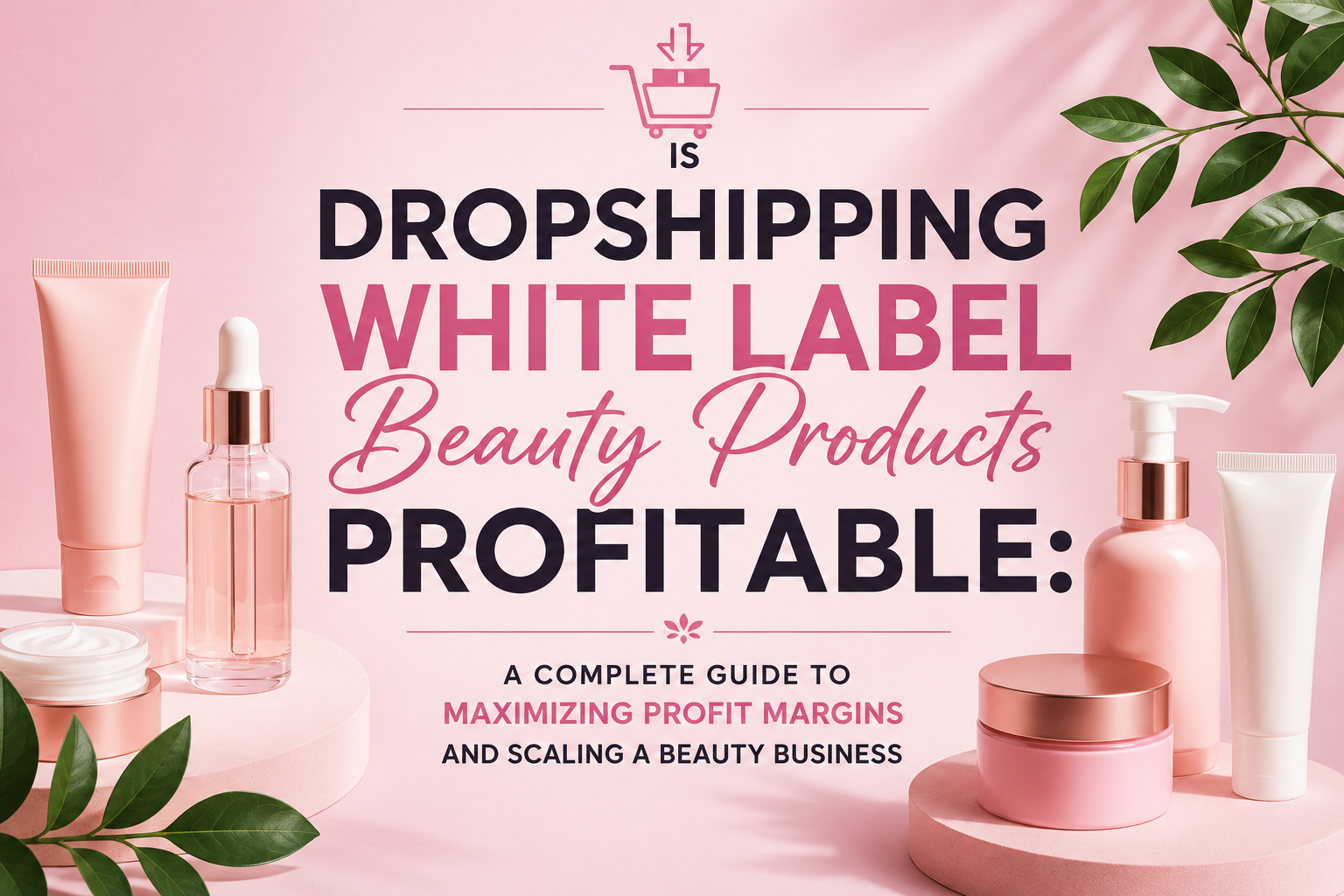
Is White Label Beauty Products Dropshipping Profitable? Analysis of Margins, Customer Retention, and Scalability
The beauty industry has remained one of the most resilient sectors in global e-commerce. Even during periods of economic uncertainty, consumers continue purchasing skincare, haircare, and personal care products because these items are often viewed as necessities rather than luxury goods. As a result, many entrepreneurs are exploring white label beauty products dropshipping as a way to enter the market without investing heavily in manufacturing or inventory. The key question remains: is white label beauty products dropshipping actually profitable in 2026?
The Growing Demand for White Label Beauty Products
Global beauty and personal care sales continue to expand as online shopping becomes the preferred purchasing channel for younger consumers. The rise of TikTok, Instagram, and influencer-driven product discovery has accelerated demand for niche beauty brands that offer specialized solutions rather than generic products.
Unlike traditional dropshipping, white label beauty products allow sellers to market products under their own brand name. Customers often perceive these products as premium offerings, creating opportunities for higher pricing and stronger customer loyalty. This branding advantage can significantly improve profitability compared to selling generic beauty products found on large marketplaces.
Many successful beauty brands initially started with white label formulations before investing in custom product development. This approach reduces startup risk while allowing businesses to test market demand efficiently.
Gross Margins in White Label Beauty Products Dropshipping
One of the main reasons entrepreneurs enter the beauty sector is the attractive gross margin potential.
A typical white label facial serum may cost between $4 and $8 from a supplier. After custom labeling and packaging, the product can often retail for $25 to $45 depending on branding and positioning. This creates gross margins ranging from 70% to 85%.
For example:
- Product cost: $6
- Packaging and branding: $2
- Total landed cost: $8
- Retail price: $32
The gross profit becomes $24 per unit, representing a 75% gross margin.
Hair growth oils, anti-aging serums, vitamin C products, and lash enhancement solutions frequently achieve similar margin structures. Compared to many consumer electronics categories where margins may fall below 20%, beauty products provide significantly more room to absorb advertising and operational costs.
Customer Retention Drives Long-Term Profitability
The biggest advantage of beauty products is not necessarily the initial sale but the repeat purchase cycle.
Consumers typically repurchase skincare products every 30 to 90 days. A customer who purchases a facial serum today may generate multiple future orders throughout the year if the product delivers satisfactory results.
Consider a customer who spends $35 per order and purchases four times annually. The annual customer value reaches $140. If the customer acquisition cost is $25, the first purchase may only generate a modest profit. However, subsequent purchases dramatically improve overall profitability.
Many successful beauty stores report customer lifetime values that are three to five times higher than acquisition costs. This recurring revenue model is one of the primary reasons investors and e-commerce operators favor beauty brands over many other dropshipping categories.
The Impact of Advertising Costs
Advertising remains the largest expense for most beauty businesses. Facebook, Instagram, Google, and TikTok campaigns can quickly consume profit margins if campaigns are poorly optimized.
In 2026, customer acquisition costs for beauty products often range from $15 to $40 depending on competition, targeting quality, and product positioning. Brands relying solely on paid traffic may struggle to maintain profitability.
However, businesses that combine paid advertising with influencer partnerships, email marketing, and user-generated content frequently achieve much better results. Email marketing alone can generate 20% to 35% of total store revenue while requiring minimal ongoing costs.
Because white label products allow sellers to establish a recognizable brand identity, they are generally more effective at building customer loyalty than generic dropshipping products.
Scalability and Brand Value
Another important factor when evaluating profitability is scalability. Generic dropshipping stores often face intense competition because competitors can sell identical products with little differentiation.
White label beauty products create a stronger competitive advantage. Custom packaging, branded websites, and unique marketing messages make it harder for competitors to directly copy a business model.
As customer trust grows, brands can expand into complementary categories such as cleansers, moisturizers, masks, supplements, and haircare products. This expansion increases average order value and strengthens customer retention.
Some entrepreneurs eventually transition from white label products to fully customized formulations, creating even greater brand equity and pricing power.
Best White Label Beauty Products for Dropshipping
The beauty industry offers one of the most attractive opportunities for e-commerce entrepreneurs because it combines high gross margins, recurring customer demand, and strong branding potential. However, not all beauty products perform equally well in a white label beauty products dropshipping business. Some categories generate higher repeat purchase rates, lower return rates, and stronger customer lifetime value than others.
Choosing the right products is often the difference between a store that struggles to achieve profitability and a brand that generates sustainable long-term growth.
Facial Serums Continue to Dominate the Beauty Market
Facial serums remain one of the strongest white label beauty categories because consumers increasingly seek targeted skincare solutions rather than general-purpose products.
Vitamin C serums, hyaluronic acid serums, niacinamide treatments, and anti-aging formulations consistently attract demand from customers across multiple age groups. Because these products are used daily, consumers often reorder every one to three months.
A typical white label serum may cost between $4 and $7 to source, while retail prices frequently range from $25 to $45. This often results in gross margins exceeding 75%.
The popularity of skincare content on social media platforms has further increased consumer awareness of ingredient-focused products. Customers are no longer simply purchasing skincare; they are investing in solutions for specific concerns such as hydration, dark spots, or wrinkle prevention.
For dropshipping businesses, this creates opportunities to position products around clear customer outcomes rather than competing solely on price.
Hair Growth and Hair Care Products Generate Repeat Revenue
Hair care products have become one of the fastest-growing segments of the beauty industry. Concerns about hair thinning, hair damage, and scalp health affect consumers globally, creating consistent demand throughout the year.
White label hair growth oils, scalp treatments, leave-in conditioners, and hair repair serums often perform exceptionally well because they encourage long-term usage. Customers typically need several weeks or months of consistent application before evaluating results, increasing the likelihood of repeat purchases.
Many suppliers offer these products at costs ranging from $5 to $10 per unit, while branded retail prices frequently exceed $30.
This pricing structure can create gross margins between 65% and 80%, making hair care one of the most profitable beauty categories for dropshipping businesses focused on recurring revenue.
Lash and Brow Enhancement Products Offer Exceptional Margins
The global popularity of beauty influencers has significantly increased consumer interest in eyelashes and eyebrows. Products designed to improve lash appearance or brow fullness often attract highly engaged customers.
White label lash serums are particularly attractive because they are lightweight, inexpensive to ship, and relatively affordable to source. Manufacturing costs may remain below $6 while retail prices commonly range from $30 to $60.
This creates some of the highest gross margins available within the beauty sector.
Unlike fashion products that are heavily influenced by seasonal trends, lash and brow enhancement products address ongoing beauty goals, helping businesses generate more stable sales throughout the year.
Because customers often purchase these products repeatedly, they can become valuable long-term buyers who later purchase additional beauty products from the same brand.
Body Care Products Benefit from Broad Consumer Demand
While skincare often receives the most attention, body care products have experienced substantial growth in recent years.
Body scrubs, body oils, firming creams, moisturizing lotions, and stretch mark treatments appeal to a wide demographic and often face less advertising competition than facial skincare products.
Many white label body care products cost between $4 and $9 per unit and can retail for $20 to $40 depending on branding and packaging quality.
Although average selling prices may be slightly lower than premium skincare products, body care products frequently achieve higher purchase frequency because consumers use larger quantities and replenish supplies more often.
This makes them particularly effective for subscription models and customer retention campaigns.
Anti-Aging Products Command Premium Pricing
Anti-aging remains one of the most profitable segments in the global beauty market because consumers are often willing to pay premium prices for products that promise visible results.
White label anti-aging creams, retinol treatments, collagen serums, and peptide-based formulations allow sellers to position themselves in higher-value market segments.
Products in this category frequently retail for $40 to $80 while maintaining sourcing costs below $15.
As a result, gross margins commonly exceed 70%.
Additionally, anti-aging customers often demonstrate stronger brand loyalty compared to buyers in trend-driven beauty categories. Once consumers find products they trust, they are more likely to continue purchasing from the same brand for extended periods.
Why Repeat Purchase Rate Matters More Than Product Price
Many beginners focus exclusively on finding products with the highest selling prices. However, long-term profitability is often determined by repeat purchase behavior rather than individual transaction value.
A skincare serum that generates four purchases per year can produce significantly more profit than a one-time beauty accessory purchase. This is why successful white label beauty brands prioritize consumable products that naturally encourage replenishment.
Facial serums, hair treatments, lash enhancers, body care products, and anti-aging solutions all share a critical advantage: customers need to buy them repeatedly. This recurring demand reduces dependence on constant customer acquisition and improves overall marketing efficiency.
How to Build a Successful Beauty Brand with White Label Dropshipping
The beauty industry is one of the few e-commerce sectors where branding often matters more than the product itself. Consumers rarely purchase a skincare serum, hair treatment, or body lotion based solely on ingredients. Instead, they buy into a brand’s promise, identity, and perceived expertise. This reality creates a major opportunity for entrepreneurs using white label beauty products dropshipping. While suppliers can provide the same formulations to multiple sellers, the businesses that build strong brands are the ones that achieve sustainable growth and premium pricing.
The challenge is no longer simply finding a product to sell. The real objective is creating a beauty brand that customers trust, remember, and repeatedly purchase from.
Why Branding Matters More Than Product Selection
Many new dropshippers spend months searching for the “perfect” beauty product. In reality, dozens of competitors may already be selling similar formulations from the same manufacturers.
What separates successful brands from unsuccessful stores is positioning.
Consider two businesses selling nearly identical vitamin C serums. One presents itself as a generic online store focused on discounts and promotions. The other develops a professional brand identity centered around skin health, transparency, and long-term skincare routines.
Even when the products are nearly identical, consumers often perceive the branded version as significantly more valuable.
This perception directly impacts pricing power. Generic beauty products may struggle to sell at $19.99, while well-positioned brands can command prices of $39.99 or more for similar formulations. As a result, strong branding contributes directly to higher gross margins and improved profitability.
Creating a Brand Identity Customers Remember
A successful beauty brand begins with a clear market position. Instead of trying to appeal to everyone, effective brands focus on a specific audience and solve a particular problem.
Some brands target acne-prone teenagers. Others focus on anti-aging solutions for professionals over forty. Some concentrate on clean beauty products for environmentally conscious consumers.
A clearly defined audience makes every aspect of marketing more effective, from website design to advertising creatives.
Visual consistency is equally important. Packaging, logo design, product photography, and website aesthetics should communicate a unified message. Studies in consumer behavior consistently show that shoppers form opinions about a brand within seconds of visiting a website.
When branding appears professional and trustworthy, consumers become more willing to pay premium prices.
Custom Packaging Increases Perceived Value
One of the most significant advantages of white label beauty products dropshipping is the ability to customize packaging without developing products from scratch.
Custom labels, branded boxes, inserts, and thank-you cards can dramatically improve customer perception.
For example, a facial serum that costs $6 to source may require an additional $1 to $2 for premium packaging. However, that same packaging upgrade can often justify a retail price increase of $10 or more.
The return on branding investment is often substantial.
Premium packaging also improves the unboxing experience, which can encourage customers to share their purchases on social media platforms. User-generated content reduces future customer acquisition costs and increases brand visibility.
Leveraging Social Proof to Build Trust
Beauty consumers are highly influenced by reviews, testimonials, and real-world results.
Unlike many other e-commerce categories, customers want evidence before purchasing skincare or cosmetic products. They need reassurance that a product will deliver the promised benefits.
This makes social proof one of the most powerful branding tools available.
Successful beauty brands actively collect customer reviews, before-and-after photos, and video testimonials. These assets increase conversion rates because they reduce uncertainty during the buying process.
Influencer partnerships can also accelerate trust building. Consumers often view recommendations from creators as more authentic than traditional advertisements.
As trust increases, brands can reduce their dependence on discounts and compete on value rather than price.
Increasing Customer Lifetime Value Through Retention
Many entrepreneurs focus excessively on acquiring new customers. However, the most profitable beauty brands prioritize retention.
Beauty products naturally support repeat purchases because they are consumable. A customer who purchases a moisturizer today may need a replacement within sixty to ninety days.
The key is maintaining engagement after the first purchase.
Email marketing remains one of the most effective retention channels. Automated product education sequences, replenishment reminders, skincare tips, and personalized recommendations encourage repeat purchases without significant advertising costs.
Consider a customer who spends $35 on their first order. If they purchase four times annually, their yearly value increases to $140. If the acquisition cost was $25, profitability improves substantially after the initial transaction.
Many successful beauty brands generate over half of their revenue from returning customers rather than first-time buyers.
Expanding Product Lines for Sustainable Growth
Once customer trust has been established, brands can increase revenue by introducing complementary products.
A customer who purchases a vitamin C serum may later purchase a cleanser, moisturizer, sunscreen, or eye cream from the same brand. This strategy increases average order value while strengthening customer loyalty.
Cross-selling within a cohesive beauty ecosystem is often far more profitable than continuously searching for new customers.
As the customer base grows, businesses can eventually transition from standard white label products to proprietary formulations, creating even greater competitive advantages and stronger brand equity.
White Label Beauty Products Dropshipping Suppliers: Quality Control, Compliance, and Fulfillment
Choosing the right supplier is arguably the most important decision in a white label beauty products dropshipping business. Marketing can generate traffic, branding can create perceived value, and advertising can drive sales, but none of these factors matter if the supplier fails to deliver consistent product quality and reliable fulfillment. In the beauty industry, a poor supplier can quickly damage customer trust, generate refund requests, and destroy a brand’s reputation.
As competition within the beauty market continues to increase, successful entrepreneurs are shifting their focus away from simply finding the lowest-cost manufacturer. Instead, they are evaluating suppliers based on quality control, regulatory compliance, fulfillment efficiency, and long-term scalability.
Why Supplier Selection Directly Impacts Profitability
Many new sellers focus almost exclusively on product costs. While lower costs may improve gross margins on paper, they often create hidden operational expenses.
For example, a supplier offering a facial serum at $4 per unit may initially appear more attractive than a supplier charging $6. However, if the cheaper supplier produces inconsistent quality or experiences frequent shipping delays, customer complaints can quickly erode profits.
A business that spends $20 acquiring a customer cannot afford repeated refund requests or chargebacks. Even a small increase in return rates can significantly reduce overall profitability.
Successful beauty brands often prioritize supplier reliability over marginal cost savings because customer retention ultimately generates greater long-term value than slightly higher margins on the first sale.
Evaluating Product Quality Before Launching
Beauty products directly affect consumers’ skin, hair, and personal appearance, making quality assurance particularly important.
Before launching any product, businesses should request multiple samples from potential suppliers. Evaluating a single sample is rarely sufficient because manufacturers may occasionally provide higher-quality samples than their standard production batches.
Testing should focus on several factors:
Product texture, fragrance consistency, packaging durability, labeling quality, and shelf-life stability all contribute to the customer experience.
If a serum leaks during shipping or a cream arrives with inconsistent texture, customers may immediately question product safety.
Many successful beauty brands conduct trial testing with friends, employees, or small customer groups before investing heavily in advertising campaigns. Early feedback often reveals issues that suppliers fail to disclose.
Quality testing may require additional time upfront, but it significantly reduces future operational risks.
Regulatory Compliance Requirements
Compliance is often overlooked by beginners entering the beauty market. However, regulatory violations can lead to product removals, marketplace suspensions, or legal liabilities.
Different regions maintain different cosmetic regulations.
In the United States, cosmetic products must comply with requirements established by the U.S. Food and Drug Administration. While most cosmetics do not require pre-approval, businesses remain responsible for product safety and accurate labeling.
Within the European Union, cosmetic products generally require ingredient documentation and compliance with the Cosmetic Products Regulation. Products sold in Europe may also require registration through relevant regulatory systems before entering the market.
The United Kingdom maintains similar cosmetic compliance standards following its post-Brexit regulatory framework.
When evaluating suppliers, businesses should request supporting documentation, including ingredient lists, manufacturing certifications, safety reports, and testing records. Reputable suppliers are typically willing to provide these materials.
Fulfillment Speed Has Become a Competitive Advantage
Customer expectations have changed dramatically over the past decade. Consumers increasingly compare every online shopping experience to services offered by major e-commerce platforms.
As a result, fulfillment speed has become a major factor influencing customer satisfaction.
Many low-cost suppliers ship products directly from overseas factories, resulting in delivery times exceeding two weeks. While this approach may reduce sourcing costs, it can negatively affect conversion rates and increase customer support inquiries.
More advanced suppliers often operate regional warehouses in North America, Europe, or other major consumer markets. Local inventory enables significantly faster delivery while reducing customs-related delays.
Although local fulfillment typically increases operational costs, improved customer satisfaction frequently outweighs the additional expense.
Brands focused on long-term growth often prioritize delivery reliability because repeat customers generate substantially more profit than one-time buyers.
Scalability and Operational Capacity Matter
A supplier that performs well at fifty orders per month may struggle when order volume reaches several thousand units.
Scalability should therefore be evaluated before rapid growth occurs.
Key considerations include production capacity, inventory management systems, warehouse automation, and communication responsiveness.
Businesses should ask suppliers how they handle sudden increases in demand. Viral marketing campaigns, influencer promotions, and seasonal sales can create significant order spikes within a short period.
Suppliers with limited production capabilities may experience stock shortages that interrupt revenue growth and damage customer trust.
Long-term partnerships are generally more valuable than constantly switching suppliers in pursuit of marginal cost savings.
The Importance of Branding Support
Not all white label suppliers offer the same branding capabilities.
Some suppliers provide only basic label customization, while others support premium packaging, custom inserts, branded shipping materials, subscription packaging, and product bundles.
These branding options directly influence perceived value.
A serum packaged in a professionally designed branded box often commands significantly higher retail pricing than an identical product shipped in generic packaging.
Because beauty consumers frequently associate packaging quality with product quality, branding support should be considered a strategic advantage rather than a cosmetic detail.
White Label vs Private Label Beauty Products Dropshipping
Entrepreneurs entering the beauty industry are often faced with a critical decision: should they build their business using white label beauty products or invest in private label products? While both models allow sellers to create branded beauty businesses without owning manufacturing facilities, they differ significantly in terms of startup costs, profit margins, customization opportunities, operational complexity, and long-term scalability.
the Difference Between White Label and Private Label
White label beauty products are pre-formulated products manufactured by a supplier and sold to multiple brands. Sellers typically customize labels, packaging, and branding elements while the underlying product remains largely unchanged.
For example, a supplier may manufacture a vitamin C serum that dozens of brands sell under different names and packaging designs.
Private label beauty products, on the other hand, involve greater customization. Businesses often modify ingredients, fragrances, textures, packaging designs, or product formulations to create a more unique offering.
While the distinction may appear subtle, it creates major differences in investment requirements and competitive positioning.
White label focuses on speed and efficiency, whereas private label emphasizes exclusivity and differentiation.
Startup Costs and Financial Risk
One of the primary reasons entrepreneurs choose white label beauty products dropshipping is the relatively low startup cost.
Most white label suppliers require little or no minimum order quantity when integrated with dropshipping operations. Businesses can launch products quickly without investing heavily in inventory.
A new beauty entrepreneur may spend a few hundred dollars on branding, website development, and marketing before launching sales.
Private label products typically require significantly larger investments.
Manufacturers often impose minimum order quantities ranging from several hundred to several thousand units. Product development costs, packaging design expenses, laboratory testing, and regulatory documentation further increase upfront capital requirements.
For entrepreneurs seeking to validate demand before making substantial investments, white label offers a lower-risk entry point.
Comparing Gross Profit Margins
A common misconception is that private label automatically generates higher profits.
In reality, both models can achieve strong gross margins, although the path to profitability differs.
White label beauty products often cost between $5 and $10 per unit while retail prices frequently range from $25 to $50. Gross margins of 70% to 80% are common when branding and positioning are executed effectively.
Private label products may achieve even higher selling prices because customers perceive them as more exclusive. A customized anti-aging serum costing $10 to produce may retail for $60 or more.
However, higher product margins do not always translate into higher business profitability. Product development expenses, inventory carrying costs, and slower product launches can offset the pricing advantages of private label products.
For many small and medium-sized businesses, white label models often generate faster returns on investment despite slightly lower pricing power.
Speed to Market and Business Agility
The beauty industry changes rapidly. Trends driven by social media platforms can emerge and disappear within months.
White label businesses possess a significant advantage in this environment because they can launch products almost immediately.
A seller can identify a growing trend, select an existing formulation, design branded packaging, and begin marketing within weeks.
Private label development typically requires a much longer timeline.
Custom formulation, testing, production approval, and regulatory compliance can extend product launch schedules by several months.
This slower development cycle reduces flexibility and makes it more difficult to capitalize on emerging trends.
For entrepreneurs focused on market responsiveness and rapid experimentation, white label often provides a more practical solution.
Building Long-Term Brand Equity
Brand equity is where private label products begin to demonstrate stronger advantages.
Because private label formulations are customized, competitors cannot easily replicate the exact product. This exclusivity creates stronger differentiation and reduces direct price competition.
Customers may become attached not only to the brand but also to the unique product itself.
White label businesses can still build successful brands, but differentiation relies more heavily on marketing, customer experience, packaging, content creation, and community building.
Many successful beauty brands initially launch using white label products before gradually transitioning toward private label development as revenue grows.
This hybrid approach allows businesses to minimize risk during the early stages while creating opportunities for future exclusivity.
Operational Complexity and Scalability
White label beauty products dropshipping offers relatively simple operations.
Suppliers typically manage manufacturing, inventory, and fulfillment processes, allowing entrepreneurs to focus on branding and customer acquisition.
Private label businesses assume greater operational responsibility. Inventory forecasting, production scheduling, warehousing, and quality assurance become increasingly important as order volume grows.
While private label brands may eventually achieve stronger market positions, scaling these operations requires significantly more management resources and financial investment.
Businesses must determine whether they prefer operational simplicity or greater product control.
Which Model Is Better for Most Entrepreneurs?
For most new and intermediate e-commerce entrepreneurs, white label beauty products dropshipping represents the more practical starting point.
It requires less capital, reduces inventory risk, enables faster product launches, and still provides attractive gross margins that often exceed 70%.
Private label products become more attractive when a business has already validated demand, developed a loyal customer base, and accumulated sufficient capital to support custom product development.
Rather than viewing the two models as competitors, many successful beauty brands use white label as a foundation and later evolve into private label businesses as they mature.
Legal Requirements for White Label Beauty Products Dropshipping
The beauty industry offers attractive profit margins and strong consumer demand, but it is also one of the most heavily regulated sectors in e-commerce. Unlike apparel or home décor products, cosmetics and personal care products directly interact with consumers’ skin, hair, and overall health. As a result, governments worldwide impose strict requirements on manufacturing standards, product labeling, ingredient disclosure, safety testing, and marketing claims.
For entrepreneurs entering the white label beauty products dropshipping market, compliance should not be viewed as a bureaucratic obstacle. Instead, it is a critical component of long-term business sustainability. A compliance failure can result in product recalls, marketplace suspensions, legal penalties, and significant reputational damage.
Why Compliance Matters More in Beauty Than Other Dropshipping Niches
Many traditional dropshipping categories such as phone accessories or home decorations face relatively limited regulatory oversight. Beauty products operate under a different framework because consumers apply these products directly to their bodies.
A misleading claim, undisclosed ingredient, or manufacturing defect can potentially cause allergic reactions, skin irritation, or other health concerns.
Consequently, regulatory agencies around the world pay close attention to cosmetics and personal care products.
For beauty brands, compliance is not simply about avoiding penalties. Consumers increasingly expect transparency regarding ingredients, product safety, sustainability, and ethical sourcing. Businesses that demonstrate strong compliance practices often gain a competitive advantage in crowded markets.
Product Labeling Requirements
Product labeling is one of the most important compliance areas for white label beauty products dropshipping.
Most major markets require labels to clearly identify product contents and usage information.
Typical requirements include:
- Product name
- Ingredient list
- Net quantity
- Manufacturer or responsible company information
- Usage instructions
- Safety warnings when applicable
- Batch or lot identification numbers
Improper labeling is among the most common reasons beauty products face regulatory scrutiny.
For example, if a skincare serum contains active ingredients that could cause sensitivity under certain conditions, appropriate warnings may be required. Failure to provide accurate labeling can expose businesses to consumer complaints and legal liabilities.
Because regulations vary by country, sellers should ensure that labeling complies with the requirements of each target market.
Cosmetic Claims and Advertising Rules
Marketing claims represent another major compliance challenge.
Many new beauty entrepreneurs unintentionally violate regulations by making exaggerated promises about product performance.
Statements such as “eliminates wrinkles permanently” or “cures acne” may trigger regulatory concerns because they imply medical effects rather than cosmetic benefits.
In many jurisdictions, cosmetic products cannot be marketed as drugs unless they undergo additional approval processes.
Instead of making medical claims, compliant beauty brands focus on cosmetic benefits such as hydration, appearance improvement, skin smoothness, or enhanced radiance.
Supporting marketing statements with scientific evidence and supplier documentation can further reduce compliance risks.
The more aggressive the claim, the greater the burden of proof typically becomes.
Manufacturing Standards and Supplier Documentation
Even when using dropshipping suppliers, beauty brands remain responsible for ensuring product safety.
Businesses should request documentation demonstrating that products are manufactured according to recognized quality standards.
Common documents include:
- Ingredient lists
- Safety assessments
- Stability testing reports
- Manufacturing certifications
- Product specification sheets
Reputable suppliers generally maintain extensive compliance records and can provide documentation when requested.
Working with suppliers that cannot provide supporting documentation significantly increases operational risk.
Although regulatory responsibilities differ by market, businesses are generally expected to exercise reasonable due diligence regarding product safety.
Choosing compliant suppliers is therefore one of the most effective risk management strategies available.
Regulatory Considerations in Major Markets
Different regions impose different cosmetic regulations.
In the United States, cosmetic products fall under the oversight of the U.S. Food and Drug Administration. Companies are responsible for ensuring product safety, accurate labeling, and compliance with applicable cosmetic regulations.
Within the European Union, cosmetics are governed by comprehensive regulations that require ingredient transparency, product safety assessments, and responsible-party designation before products can be marketed.
The United Kingdom maintains its own cosmetic regulatory framework that closely resembles EU requirements while operating independently.
Countries such as Canada, Australia, Japan, and South Korea also maintain unique regulatory requirements that beauty brands must understand before entering those markets.
Expanding internationally often requires adapting packaging, documentation, and compliance procedures for each region.
Product Liability and Business Protection
Even fully compliant products carry some level of legal risk.
Consumers may experience allergic reactions or report dissatisfaction despite proper manufacturing and labeling practices.
For this reason, many established beauty brands obtain product liability insurance.
Insurance can help protect businesses against claims involving alleged product-related injuries or damages.
While insurance costs vary depending on product category and sales volume, the expense is often minor compared to the financial impact of a significant legal dispute.
As a beauty business grows, insurance becomes an increasingly important component of risk management.
Data Privacy and Consumer Protection Requirements
Compliance extends beyond the physical product itself.
Beauty brands that collect customer information through websites, email marketing campaigns, and loyalty programs must also comply with privacy regulations.
Depending on the target market, businesses may need to comply with consumer data protection laws, cookie consent requirements, marketing communication rules, and refund policies.
Consumers increasingly expect transparency regarding how their personal information is collected and used.
Strong privacy practices not only reduce legal risk but also contribute to brand credibility.
Building Compliance Into Your Growth Strategy
Many entrepreneurs view compliance as a cost center that slows growth. In reality, the opposite is often true.
Brands that invest in regulatory compliance from the beginning typically experience fewer disruptions as they scale. They can expand into new markets more efficiently, establish stronger relationships with suppliers, and build greater trust among consumers.
Compliance also becomes increasingly important when seeking partnerships with retailers, marketplaces, distributors, or investors.
A well-documented compliance framework can become a competitive advantage rather than an administrative burden.


No Comments