


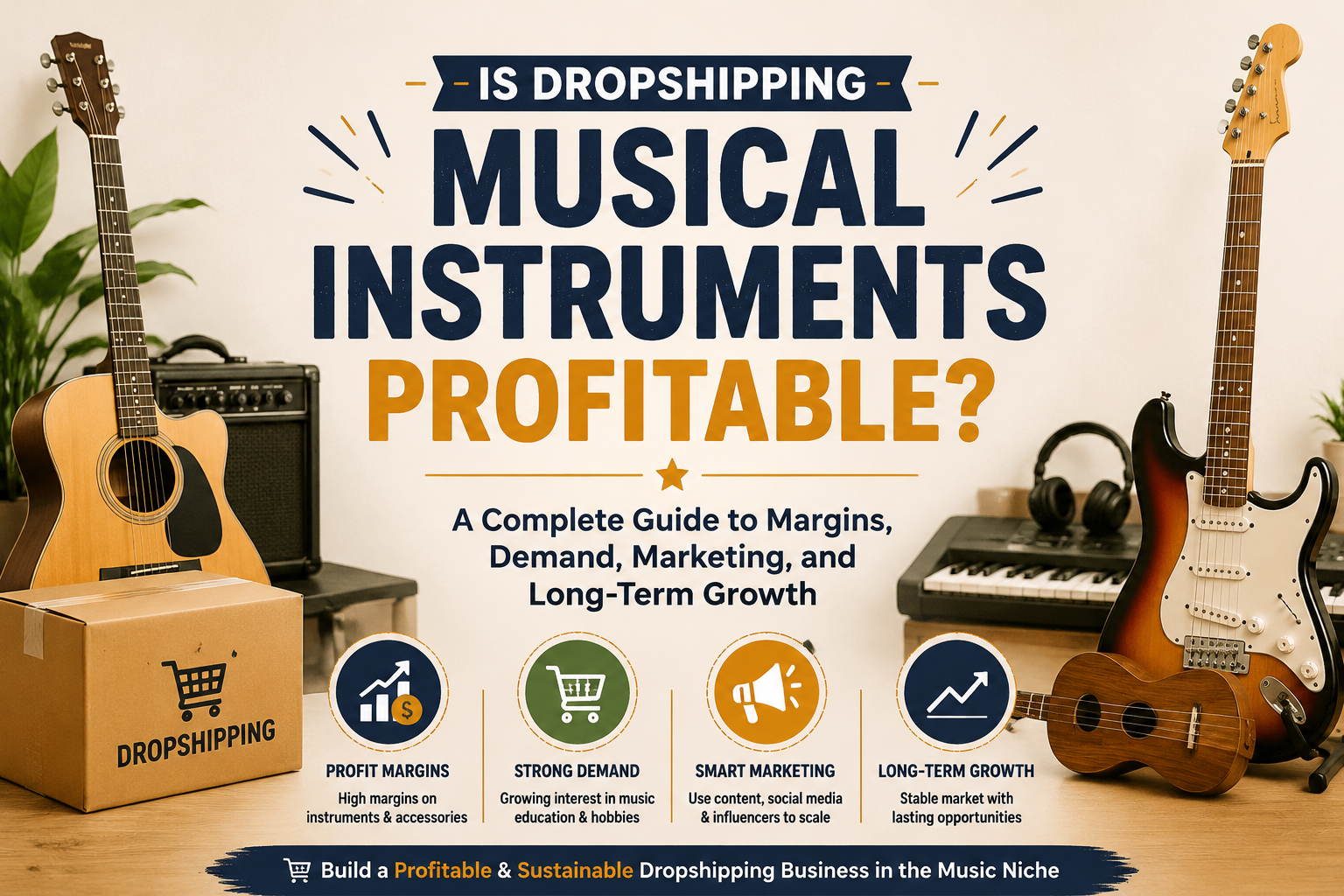
Is Dropshipping Musical Instruments Profitable? A Complete Guide to Margins, Demand, Marketing, and Long-Term Growth

From a demand perspective, the answer to “is dropshipping musical instruments profitable” appears positive. The industry benefits from several favorable characteristics: stable long-term demand, growing participation in music education, expanding social media influence, and a broad customer base ranging from beginners to enthusiasts.
Unlike short-lived product trends, musical instruments are supported by enduring consumer interests. As online learning, home studios, and content creation continue to grow, demand for affordable instruments and related accessories is expected to remain resilient, providing a solid foundation for profitable dropshipping businesses.
Is Dropshipping Musical Instruments Profitable? Market Demand and Consumer Trends
The question “is dropshipping musical instruments profitable” largely depends on whether consumer demand can support sustainable sales. From a market perspective, the outlook remains favorable. The global musical instrument industry has maintained steady growth over the last decade, driven by increasing interest in home entertainment, music education, social media content creation, and independent music production.
Industry reports estimate that the worldwide musical instrument market is worth more than $18 billion, with annual growth rates generally ranging between 5% and 8%. While traditional acoustic instruments continue to attract beginners and enthusiasts, digital pianos, MIDI controllers, electronic drum kits, and portable recording equipment have experienced even faster growth due to the expansion of YouTube creators, podcasting, and home studios.
Unlike highly seasonal product categories, musical instruments benefit from relatively stable year-round demand. Although sales often peak during holidays and back-to-school periods, interest remains consistent because learning music is usually considered a long-term hobby rather than an impulse purchase.
Music Education Creates a Continuous Stream of Buyers
One of the most important factors supporting profitability is the large and recurring customer base. Millions of students worldwide begin learning instruments every year. Parents are willing to invest in beginner instruments, while intermediate players frequently upgrade equipment after gaining experience.
This creates several layers of demand:
- First-time buyers seeking affordable instruments.
- Intermediate musicians looking for higher-quality products.
- Professional users purchasing specialized equipment.
- Existing musicians replacing worn-out accessories.
Compared with many trending products that lose popularity quickly, musical instruments often enjoy longer product life cycles. A beginner guitar model, for example, can remain relevant for years without becoming obsolete.
The increasing availability of online music lessons has also expanded the market. Platforms such as YouTube and various online learning communities have lowered barriers to entry, encouraging more people to start learning instruments from home.
Social Media Has Expanded Consumer Interest
Consumer trends have shifted significantly over the past five years. TikTok, YouTube Shorts, and Instagram Reels have helped revive interest in music-related hobbies. Viral performances and tutorial videos frequently inspire viewers to purchase instruments and recording equipment.
Many consumers no longer aspire to become professional musicians. Instead, they purchase instruments for recreational purposes, content creation, or stress relief. This broadens the addressable market beyond traditional music students.
Portable instruments and beginner-friendly products are especially popular among younger consumers. Ukuleles, mini keyboards, MIDI controllers, electric guitars, and compact drum pads have gained considerable traction because they fit modern lifestyles and smaller living spaces.
This shift benefits dropshipping businesses because compact products are easier to ship and generally involve fewer logistical complications.
Regional Markets Offer Significant Opportunities
North America and Europe remain the largest markets for musical instruments. The United States alone accounts for a substantial share of global demand due to strong music education programs and high disposable income.
Australia, Canada, Germany, the United Kingdom, and France also represent attractive markets. In many of these countries, consumers are accustomed to buying hobby-related products online, making them suitable targets for dropshipping stores.
Emerging markets are also contributing to industry growth. Rising middle-class populations in Southeast Asia, Latin America, and parts of Eastern Europe have increased spending on leisure activities, including music.
As internet penetration improves and e-commerce adoption expands, online sales channels continue to capture a larger portion of the overall market.
Consumer Preferences Favor Entry-Level Products
Consumer behavior data suggests that beginners account for a large percentage of purchases. Most first-time buyers prioritize affordability rather than premium brands. This creates opportunities for dropshippers who work with manufacturers offering competitive prices.
Entry-level instruments typically retail between $80 and $400. Wholesale costs often represent 50% to 70% of the final selling price, allowing gross margins ranging from 30% to 50%.
For example, a beginner electric guitar package purchased from suppliers for approximately $120 may sell online for $220 to $280. Similarly, electronic keyboards sourced at around $90 can retail for $170 to $240 depending on features and branding.
Because consumers often purchase additional accessories such as stands, gig bags, tuners, straps, and replacement strings, average order values can increase significantly. These supplementary products frequently generate gross margins above 50%, improving overall profitability.
Is Dropshipping Musical Instruments Profitable? Analyzing Profit Margins and Supplier Costs
When entrepreneurs ask whether dropshipping musical instruments is profitable, the answer depends heavily on the relationship between supplier costs, selling prices, logistics expenses, and gross margins. Unlike fast-fashion or commodity products, musical instruments often command higher average order values, which can create attractive revenue opportunities. However, profitability varies considerably across different product categories.
The global musical instrument industry continues to expand, and online sales represent an increasing percentage of total purchases. Consumers are becoming more comfortable purchasing guitars, keyboards, electronic drum kits, and audio accessories online, allowing dropshipping stores to compete without maintaining physical inventory.
From a financial perspective, musical instruments generally offer healthier margins than many low-ticket consumer products, especially when merchants focus on beginner and intermediate markets.
Gross Margins Vary by Product Category
Not every instrument produces the same level of profitability. Entry-level products tend to provide the most balanced combination of demand and margin.
Beginner acoustic guitars that cost suppliers around $45 to $70 are commonly sold online for $90 to $150, resulting in gross margins between 35% and 55%. Electronic keyboards sourced for approximately $80 to $130 often retail for $160 to $260, generating margins close to 40%.
Ukuleles represent another attractive segment. Wholesale prices typically range from $15 to $35, while retail prices frequently exceed $50 to $90. In many cases, gross margins can reach 50% or even 60%.
Professional-grade instruments, on the other hand, present a different situation. Although selling prices are higher, margins are often narrower. A high-end electric guitar purchased for $700 may only sell for $900 to $1,000, producing margins below 30%. Furthermore, professional buyers are more sensitive to brand reputation and product specifications, increasing the importance of supplier quality.
For this reason, many successful dropshipping businesses focus on beginner and hobbyist customers rather than professional musicians.
Accessories Often Produce Higher Profits Than Instruments
Many experienced sellers discover that accessories contribute disproportionately to overall profits.
Products such as guitar strings, picks, straps, tuners, capos, drumsticks, stands, microphone holders, and instrument bags are inexpensive to source while maintaining strong retail pricing.
For example, a capo costing $2 from suppliers can easily sell for $10 to $15. Guitar picks purchased for less than $1 may retail for $5 or more. Instrument stands sourced at $10 frequently sell for $25 to $40.
These products commonly deliver gross margins between 50% and 75%, substantially higher than complete instruments.
Accessories also provide additional advantages. They are lightweight, less fragile, and cheaper to ship internationally. Lower shipping costs translate directly into improved profitability and fewer customer complaints.
As a result, many successful stores rely on a combination of instruments and complementary accessories to maximize average order value.
Shipping Costs Can Significantly Affect Margins
One of the biggest challenges in musical instrument dropshipping is transportation.
Large products such as digital pianos, drum kits, and full-size guitars require oversized packaging and additional protection. International shipping expenses can represent 15% to 30% of total product costs.
For example, a guitar package valued at $100 may incur shipping fees of $20 to $35. If free shipping is offered to customers, net profits can decline rapidly.
Damage during transit presents another concern. Musical instruments are sensitive products, and replacement costs can quickly erode margins. Therefore, supplier selection becomes more important than simply pursuing the lowest price.
Many merchants prefer working with suppliers that maintain warehouses in the United States, Europe, or Australia. Although unit costs may be slightly higher, shorter delivery times and lower damage rates often improve overall profitability.
Supplier Quality Determines Long-Term Success
Choosing reliable suppliers is essential because product defects and inconsistent quality directly affect refund rates.
Low-quality instruments may initially appear attractive due to lower prices, but customer dissatisfaction can lead to negative reviews and higher return expenses. Even a refund rate of 5% to 8% can eliminate a significant portion of profits.
Higher-quality suppliers generally produce lower return rates, better packaging, and more consistent customer experiences. These factors support stronger brand reputation and improve customer lifetime value.
Private-label opportunities also exist within the musical instrument industry. Sellers can customize packaging, add logos, and establish stronger brand identity, enabling higher selling prices and improved margins.
Branded beginner instruments often command retail premiums of 20% to 40% compared with generic products.
Balancing Cost Structure and Revenue Potential
Profitability in musical instrument dropshipping ultimately depends on maintaining healthy margins while controlling logistics expenses and returns.
Entry-level instruments typically generate gross margins between 35% and 55%, while accessories frequently exceed 60%. Combining both categories allows businesses to increase average order value and diversify revenue streams.
Is Dropshipping Musical Instruments Profitable? Marketing Strategies and Advertising Performance
Many entrepreneurs focus primarily on supplier prices and product selection when evaluating whether dropshipping musical instruments is profitable. However, marketing efficiency often has a greater impact on profitability than product costs alone. A store with average products and strong customer acquisition strategies can outperform competitors selling similar items.
The musical instrument industry is unique because purchases are frequently driven by emotion, hobbies, creativity, and personal aspirations rather than necessity. Consumers are influenced by demonstrations, tutorials, performances, and social proof. This makes content marketing and video platforms particularly effective compared with traditional display advertising.
As digital media consumption continues to increase, musicians, beginners, and hobbyists are spending more time on platforms where products can be demonstrated visually, creating favorable conditions for online sellers.
Video Content Drives Consumer Decisions
Unlike many consumer products, musical instruments are easier to sell when customers can hear and see them in action.
Short-form videos on TikTok, Instagram Reels, and YouTube Shorts have transformed how beginners discover instruments. Tutorials, covers, and product demonstrations regularly generate millions of views, creating demand that traditional advertisements struggle to match.
For example, beginner guitar tutorials, piano learning videos, and electronic music production content attract large audiences worldwide. Consumers often decide to purchase after seeing the instrument used in real situations.
This behavior creates opportunities for dropshipping businesses to build organic traffic alongside paid advertising.
Educational content also tends to remain relevant for years, producing long-term traffic instead of relying solely on continuous advertising spending.
Social Media Advertising Can Produce Favorable Returns
Facebook and Instagram remain effective channels for reaching hobbyists and aspiring musicians.
According to industry averages, e-commerce click-through rates generally range between 1% and 2%, while music-related products often perform slightly above average because they appeal to emotional interests. Conversion rates typically fall between 2% and 4%, depending on pricing and landing page quality.
Suppose a beginner keyboard sells for $220 with a gross margin of 45%. If customer acquisition costs average $30 to $40, healthy profits can still be achieved.
Higher-ticket products provide additional advantages because advertising expenses represent a smaller percentage of total revenue. A customer purchasing a $250 instrument generates more room for profit than someone buying a $25 impulse product.
Retargeting campaigns further improve profitability. Consumers frequently spend days or weeks researching instruments before making purchasing decisions. Retargeted ads can recover abandoned visitors and increase conversion rates significantly.
YouTube Influencer Marketing Offers Long-Term Value
YouTube remains one of the most influential platforms in the music industry.
Musicians regularly rely on reviews and demonstrations before purchasing instruments. Even smaller creators with audiences between 10,000 and 100,000 subscribers often maintain highly engaged communities.
Compared with mainstream fashion influencers, music-focused creators tend to attract niche audiences with stronger purchase intent.
Collaboration with content creators can generate traffic at relatively low costs. Instead of paying thousands of dollars to celebrity influencers, many brands partner with micro-influencers who produce authentic reviews and tutorials.
Affiliate arrangements are particularly attractive because commissions are only paid after successful sales, reducing upfront marketing risk.
As a result, influencer marketing can contribute to lower customer acquisition costs and stronger long-term profitability.
Search Engine Optimization Creates Sustainable Traffic
Search engine traffic is especially valuable in the musical instrument industry because many buyers conduct extensive research before purchasing.
Potential customers search phrases such as:
- best beginner guitar for adults
- affordable electronic keyboard
- acoustic guitar for kids
- MIDI controller for home studio
- digital piano vs keyboard
These informational searches indicate strong buying intent.
Unlike paid advertisements, SEO traffic compounds over time. Once pages rank well, businesses can acquire customers without paying for every click.
For stores operating on limited budgets, content marketing may produce higher returns than relying exclusively on Facebook Ads or Google Ads.
Many successful e-commerce businesses in this niche combine product pages with blogs, tutorials, buying guides, and comparison articles. This strategy attracts both beginners and experienced musicians while improving conversion rates.
Email Marketing Increases Customer Lifetime Value
Musical instrument buyers frequently become repeat customers.
After purchasing a guitar, customers often need strings, tuners, straps, capos, stands, cases, amplifiers, and maintenance accessories. This creates opportunities for email marketing and cross-selling.
In many industries, email campaigns achieve average click rates of around 2% to 3%. However, hobby-related categories often experience higher engagement because customers maintain ongoing interest in their equipment.
Repeat purchases reduce dependence on paid advertising and improve customer lifetime value. Accessories commonly generate gross margins above 60%, making repeat customers highly profitable.
Building an email list therefore becomes an important component of long-term success.
Is Dropshipping Musical Instruments Profitable? the Biggest Challenges and Risks
When discussing whether dropshipping musical instruments is profitable, many entrepreneurs focus on revenue opportunities and gross margins. However, profitability is equally influenced by operational difficulties. Compared with lightweight consumer products, musical instruments involve unique challenges related to shipping, product quality, customer expectations, and after-sales support.
Although the industry offers attractive average order values and relatively stable demand, the complexity of selling musical instruments means that success depends heavily on execution rather than simply selecting popular products.
Businesses that understand and manage these risks effectively are far more likely to achieve sustainable long-term profits.
Shipping Large and Fragile Products Increases Costs
One of the biggest obstacles in musical instrument dropshipping is logistics.
Unlike phone accessories or clothing, many instruments are bulky and delicate. Acoustic guitars, digital pianos, electronic drum kits, and amplifiers require protective packaging and careful transportation. Shipping costs therefore consume a larger percentage of revenue.
For example, international freight expenses for a beginner acoustic guitar may range between $20 and $50, depending on destination and shipping speed. Larger products such as digital pianos may cost over $100 to transport internationally.
These expenses directly affect gross margins. A product with a theoretical margin of 50% can easily fall below 30% after accounting for shipping costs and packaging materials.
Transit damage creates additional risks. Even minor cosmetic defects may lead to refund requests or replacement shipments. Industry return rates for general e-commerce often remain below 10%, but fragile products can experience significantly higher rates if suppliers fail to package products properly.
As a result, many experienced sellers prefer suppliers with local warehouses in the United States, Canada, Australia, or Europe. Although product costs may be slightly higher, lower shipping risks frequently improve net profitability.
Product Quality Expectations Are Extremely High
Musical instruments are emotional purchases. Buyers often associate their instruments with personal hobbies, creativity, and long-term learning goals. Consequently, customer expectations are considerably higher than those found in many commodity markets.
A beginner who purchases an inexpensive guitar may still expect acceptable tuning stability, sound quality, and durability. Professional users are even more demanding regarding specifications and craftsmanship.
Poor-quality products can quickly generate negative reviews and damage store credibility.
Suppose a store processes 500 orders monthly with an average order value of $180. If only 6% of customers request refunds because of quality issues, the financial impact can become substantial. Refund expenses, replacement shipments, and customer service costs can eliminate a significant portion of monthly profits.
Therefore, choosing suppliers based solely on the lowest price often proves to be a costly mistake.
Longer Decision Cycles Affect Conversion Rates
Unlike impulse purchases, musical instruments usually involve careful consideration.
Consumers spend time comparing brands, reading reviews, watching YouTube demonstrations, and evaluating specifications before making a purchase. This longer buying journey means conversion rates are generally lower than those found in low-cost consumer categories.
Many customers may visit a store several times before completing an order. Some buyers postpone purchases for weeks or months.
This behavior increases customer acquisition costs because businesses must invest in retargeting advertisements, email marketing, and educational content to maintain engagement.
For paid advertising campaigns, the delay between ad spending and actual sales can create cash-flow challenges, particularly for smaller businesses.
However, patient customer nurturing often produces higher average order values and more loyal buyers.
Returns and Warranty Issues Can Reduce Profitability
After-sales service represents another challenge.
Musical instruments occasionally arrive with defects, damaged components, or missing accessories. Customers may also experience difficulties assembling or using electronic products.
Because many buyers are beginners, they frequently require technical assistance. Questions regarding tuning, setup, or compatibility can increase support workloads.
Warranty claims further complicate operations. Handling international returns is expensive and time-consuming. In some cases, return shipping costs may exceed the original product cost.
To minimize these problems, successful stores often provide instructional videos, setup guides, and responsive customer support. Educational resources reduce unnecessary returns while improving customer satisfaction.
Investing in customer service may appear costly initially, but it usually lowers long-term operating expenses.
Competition from Established Brands Creates Pressure
The musical instrument industry contains many well-established brands with decades of reputation and customer trust.
Consumers are familiar with companies such as Yamaha, Fender, Roland, and Casio. Competing directly against these manufacturers can be difficult, especially when selling generic products.
Large retailers also benefit from economies of scale and faster shipping capabilities.
Consequently, many dropshipping businesses struggle when attempting to compete solely on price.
Successful entrepreneurs often focus on underserved niches, beginner packages, or accessories rather than entering direct competition with premium brands. Building a brand identity through educational content and superior customer support can create differentiation that price competition alone cannot achieve.
Is Dropshipping Musical Instruments Profitable? Niche Opportunities in Specialty Instruments and Accessories
Beyond mainstream instruments like guitars, keyboards, and drums, specialty instruments and accessories present significant dropshipping opportunities. Focusing on niche products allows entrepreneurs to target smaller, passionate communities that often have less competition and higher willingness to pay. These products include items such as ukuleles, cajón drums, kalimbas, MIDI controllers, digital audio interfaces, effect pedals, and unique accessories.
Because these products cater to enthusiasts, hobbyists, and content creators, consumers are generally willing to pay premiums for quality and uniqueness. This creates the potential for gross margins above 40%, especially when sourcing directly from manufacturers or working with suppliers that offer bundled packages.
Accessories Generate Disproportionate Margins
While full-sized instruments often involve shipping challenges and higher upfront costs, accessories are lightweight, inexpensive to source, and easy to ship internationally. Examples include guitar strings, tuners, capos, drumsticks, instrument stands, microphone holders, and cables.
For instance, a drumstick set that costs $3 from suppliers may retail for $12 to $18 online, resulting in gross margins exceeding 60%. Guitar tuners purchased at $8 can sell for $20 to $30, often yielding similar margins. Because these items are small and durable, they also reduce the risk of shipping damage, which can significantly affect net profitability.
Accessories also benefit from repeat purchases. Guitar strings, for example, are consumable and may require replacement every few months. By combining high-margin accessories with instruments, dropshippers can increase average order value and build long-term customer relationships.
Targeting Emerging Musical Communities
Many emerging musical communities focus on compact or digital instruments suited for home recording, live streaming, or social media content creation. Digital instruments such as MIDI keyboards, electronic drum pads, audio interfaces, and portable synthesizers have seen growing adoption among younger audiences, especially those producing content for TikTok or YouTube.
These audiences often seek affordability combined with functionality. Dropshippers can position themselves as specialized providers of beginner-to-intermediate products with carefully curated bundles, offering better value than larger retailers that sell generic products.
Bundling Increases Revenue and Average Order Value
Bundling complementary items is an effective strategy in niche musical instrument dropshipping. For example, beginner guitar packages can include a guitar, tuner, strap, picks, and carrying bag. This not only increases perceived value but also raises gross margins.
A beginner guitar bundle sourced for $120 can be sold for $220 to $260, depending on packaging and branding. Including accessories in the bundle often increases margins by 5% to 15% compared with selling products individually.
Bundle marketing also encourages repeat purchases. Customers who start with a package are more likely to return for replacement strings, additional pedals, or advanced accessories.
Specialty Instruments Attract Loyal Communities
Certain instruments, such as kalimbas, cajón drums, or ethnic percussion instruments, attract dedicated and loyal communities. These buyers frequently participate in online forums, social media groups, and local workshops, creating opportunities for targeted marketing campaigns.
Because competition is limited in niche categories, dropshippers can often maintain premium pricing. Margins for small, high-demand specialty instruments can range between 35% and 55%, sometimes exceeding margins for mainstream products.
Strategic Supplier Selection Is Key
Profitability in niche dropshipping depends heavily on supplier reliability. Specialty instruments and accessories require precise craftsmanship and consistent quality. Partnering with suppliers that maintain high standards and provide reliable shipping is essential.
Dropshippers can further enhance profitability by choosing suppliers with warehouses in target regions. This reduces shipping times, lowers risk of damage, and improves customer satisfaction—all factors that contribute to repeat sales and long-term business growth.
Is Dropshipping Musical Instruments Profitable? Scaling and Long-Term Sustainability Strategies
Profitability in musical instrument dropshipping is not only about selling single products with healthy margins; long-term success depends on scalability. Scaling requires careful selection of products, efficient operations, and strategic expansion into complementary categories. Many entrepreneurs find that initial profits are modest until systems are optimized for volume and repeat sales.
Dropshipping offers the advantage of minimal upfront inventory investment. Once product sourcing, logistics, and customer acquisition processes are optimized, the same store can gradually expand its catalog without significant capital. Scaling, however, requires attention to supply chain reliability, order fulfillment speed, and marketing efficiency.
Expanding Product Lines to Increase Revenue Streams
A critical aspect of long-term sustainability is diversifying offerings. While beginner guitars, keyboards, and digital drum kits may generate steady sales, adding accessories and specialty instruments can significantly increase average order value.
For instance, adding products such as guitar pedals, microphone stands, portable speakers, MIDI controllers, or music recording software allows the store to capture multiple purchase occasions per customer. Average gross margins on these supplementary products often exceed 50%, compared to 35%–45% for standard instruments.
Many dropshipping businesses adopt a tiered strategy: entry-level instruments attract beginners, mid-range products capture upgrading musicians, and accessories or bundles increase per-customer revenue. This approach balances risk while maximizing profitability.
Automation and Operational Efficiency
Sustainable dropshipping requires operational efficiency. Manual order processing, repetitive customer service, and inconsistent supplier communication can limit growth and reduce margins.
Automation tools—such as Shopify or WooCommerce plugins that integrate with supplier inventories—help maintain accurate stock levels, reduce shipping errors, and provide timely updates to customers. Automated email sequences for abandoned carts, upselling, and post-purchase follow-ups increase conversion rates and repeat purchases without increasing labor costs.
Efficient operations also reduce the likelihood of shipping delays or refunds, protecting gross margins in the range of 35%–55%.
Customer Retention Drives Long-Term Profitability
Repeat buyers are particularly valuable in the musical instrument niche. Many musicians purchase instruments, then later buy replacement strings, pedals, stands, or other accessories. Others upgrade to higher-end instruments as their skills improve.
Retention strategies, such as personalized recommendations, loyalty programs, and targeted email campaigns, can generate additional revenue without increasing advertising costs. Because accessory products often have margins above 50%, repeat purchases contribute disproportionately to profitability.
Focusing on long-term customer relationships also reduces dependence on continuously acquiring new customers, stabilizing cash flow and improving business sustainability.
Data-Driven Marketing and Continuous Optimization
Scaling requires continuous monitoring of marketing performance. Tracking conversion rates, customer acquisition costs, and product-specific profitability allows dropshippers to allocate budgets to the most efficient channels.
Paid advertising campaigns, SEO, influencer collaborations, and email marketing must be optimized to maximize return on ad spend (ROAS). For example, if an average order value is $220 with a gross margin of 45%, keeping acquisition costs under $35–$40 ensures profitability. Regularly analyzing which channels yield the highest-margin sales ensures that scaling does not erode profitability.
International Expansion Opportunities
Once operational processes are stable, expanding to additional markets can significantly increase revenue. North America and Europe remain primary markets, but emerging regions with growing middle classes, such as Southeast Asia, Latin America, and parts of Eastern Europe, offer increasing demand for musical instruments.
Shipping strategies, warehouse locations, and localized marketing can reduce costs and improve customer satisfaction in these new markets, contributing to sustainable long-term margins.
Building a Sustainable Brand
Dropshipping success is no longer purely transactional. A sustainable business often invests in brand identity, educational content, and community engagement. By creating a trusted brand, stores can command higher retail prices, improve repeat purchase rates, and reduce customer acquisition costs over time.
A recognized brand in the musical instrument niche can generate gross margins above 50% on accessories and 35%–45% on instruments while enjoying stronger customer loyalty—a critical factor for long-term sustainability.





No Comments