


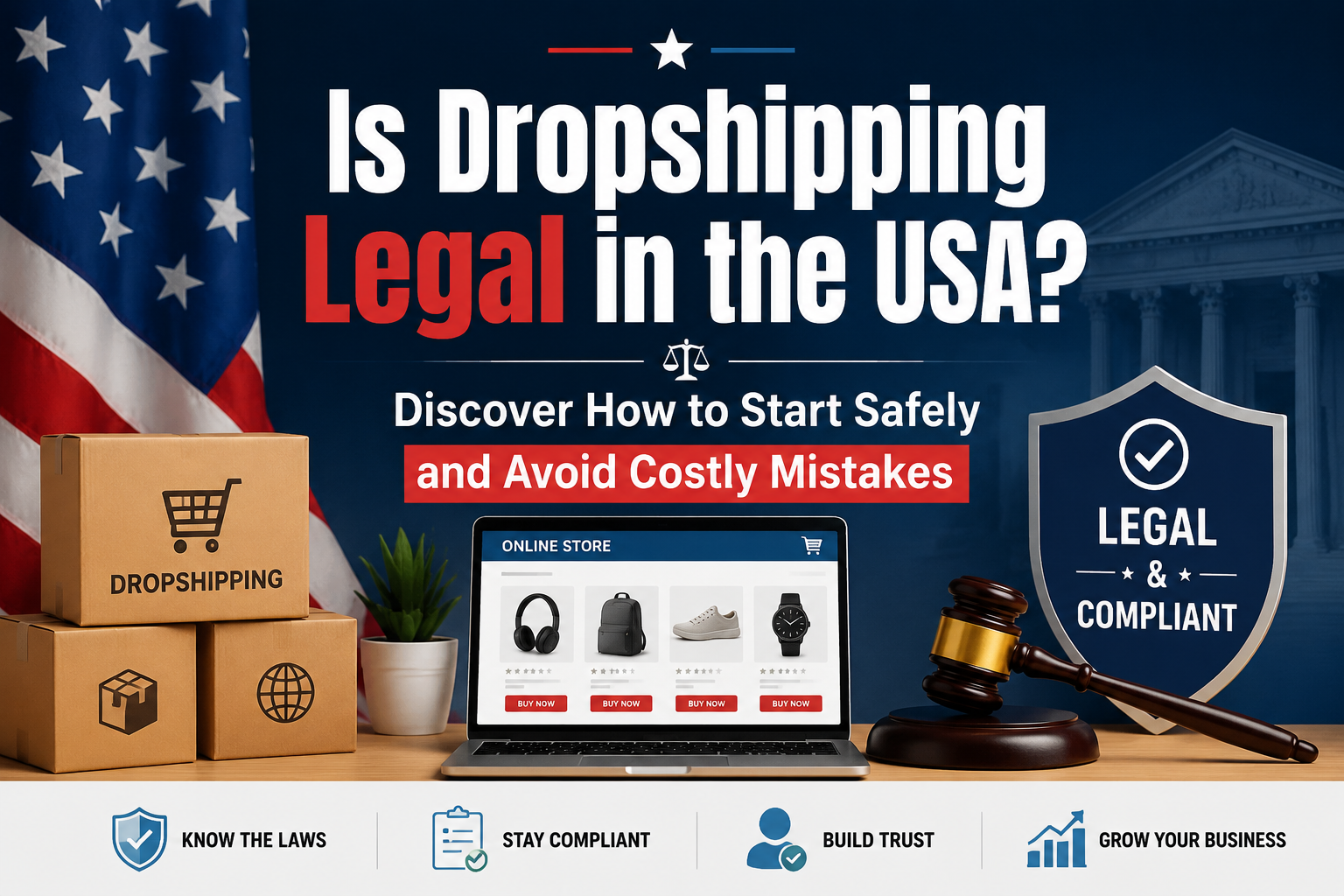
Is Dropshipping Legal in the USA? Discover How to Start Safely and Avoid Costly Mistakes

Operating a dropshipping business legally in the USA requires more than just selling products online. Entrepreneurs must proactively understand federal and state laws, register their business properly, manage tax obligations, comply with consumer protection regulations, and secure proper agreements with suppliers. By integrating legal awareness into daily operations, dropshipping entrepreneurs can focus on growth without facing avoidable legal risks.
The Legal Framework for Dropshipping in the USA
Starting a dropshipping business in the USA can seem straightforward, especially with the ease of setting up online stores on platforms like Shopify or WooCommerce. However, entrepreneurs often underestimate the importance of understanding the legal framework. Complying with federal, state, and local regulations is essential to protect your business from fines, lawsuits, and operational disruptions. While dropshipping itself is legal, ignoring the legal requirements can create serious risks.
Business Registration and Licensing Requirements
The first step in operating legally is registering your business. Most dropshipping businesses in the USA fall under the category of sole proprietorships, limited liability companies (LLCs), or corporations. Choosing the right structure affects your tax obligations, personal liability, and credibility. Additionally, some states require a general business license even if your store is purely online. Ensuring your registration aligns with federal and state requirements is critical for long-term stability.
Tax Obligations and Compliance
One of the most overlooked aspects of dropshipping legality is tax compliance. U.S. federal law requires businesses to report income accurately and pay taxes. Moreover, sales tax collection varies by state. The 2018 Supreme Court ruling in South Dakota v. Wayfair, Inc. expanded states’ authority to require online sellers to collect sales tax, even without a physical presence. Entrepreneurs must understand which states mandate collection and implement systems to ensure compliance.
Consumer Protection and Federal Regulations
The Federal Trade Commission (FTC) enforces consumer protection laws that directly impact dropshipping operations. Misrepresentation of products, false advertising, and deceptive marketing can lead to penalties. Dropshippers must ensure their product descriptions are accurate, shipping times are realistic, and return policies are transparent. Following these rules not only avoids legal trouble but also builds trust with customers.
Contractual Considerations with Suppliers
Working with reliable suppliers is another key element. Drafting clear contracts that define responsibilities, shipping standards, and liability protects your business. Even though you are not physically handling the products, you are still legally responsible for fulfilling orders. A legally sound agreement can prevent disputes and ensure compliance with U.S. laws.
State-Specific Regulations and Licensing Requirements for Dropshipping in the USA
While dropshipping is legal at the federal level in the USA, each state can impose its own rules that affect online sellers. Entrepreneurs who overlook state-specific regulations risk fines, revoked licenses, or complications with tax authorities.
Business Licenses Vary by State
Most states require businesses, including online stores, to obtain a general business license. The type of license and associated fees differ from state to state. For example, California mandates a seller’s permit for any business collecting sales tax, while some states, like Delaware, do not charge sales tax at all. Entrepreneurs must research local requirements to avoid unintentional violations.
Sales Tax Permits and Nexus Rules
Sales tax compliance is a central concern for dropshippers. States enforce the concept of “economic nexus,” meaning that businesses exceeding a certain revenue threshold or transaction volume in a state must collect sales tax, even without a physical presence. For instance, if your sales in New York exceed $500,000 annually, you are required to collect and remit state sales tax. Each state sets its own thresholds, and keeping track of these is essential.
Local Zoning and Home-Based Business Regulations
Even though dropshipping typically operates from home offices, some states or municipalities impose zoning restrictions or home-based business rules. Certain areas may limit commercial activity in residential zones or require special permits for shipping and receiving packages. Ignoring local ordinances can lead to legal notices or fines.
Other State-Specific Requirements
Additional requirements may include business registration renewal, reporting obligations, and specific documentation for e-commerce activities. Some states also have stricter consumer protection laws, requiring clearer disclosure of shipping times, return policies, or product origin. Compliance with these rules ensures smooth operations and builds credibility with customers.
Intellectual Property and Trademark Risks in Dropshipping
While dropshipping is legally permissible in the USA, many entrepreneurs underestimate the importance of intellectual property (IP) compliance. Selling products without regard for trademarks, patents, or copyrights can lead to legal disputes, account suspensions, or costly settlements. Awareness of these risks is crucial for sustaining a reputable and profitable business.
Trademark Infringement Risks
One of the most common pitfalls in dropshipping is selling products that infringe on trademarks. Popular branded items or counterfeit goods are often marketed by suppliers at low cost, tempting new sellers. However, the U.S. Patent and Trademark Office (USPTO) actively protects registered trademarks, and brand owners can pursue legal action against unauthorized sellers. Dropshippers should avoid listing branded products unless they are authorized resellers.
Copyright Considerations
Copyright laws protect creative works such as images, logos, and product designs. Using supplier-provided photos or third-party marketing content without permission can constitute copyright infringement. Even seemingly minor violations can result in takedown notices, platform penalties, or lawsuits. Creating original content and obtaining explicit permission for product visuals are essential preventive measures.
Patent Issues
Though less common, some products may be covered by patents. Selling patented products without authorization could expose a dropshipper to infringement claims. Entrepreneurs should verify the patent status of unique or innovative products, particularly if they plan to market them extensively in the USA. Legal counsel can help identify potential risks before committing to a supplier or product line.
Supplier Agreements and Liability
Establishing clear contracts with suppliers is another layer of protection. A solid agreement can clarify who is responsible if a product infringes on intellectual property rights. While dropshippers often rely on third-party suppliers, U.S. law generally holds the seller accountable for compliance. Including indemnification clauses and requiring supplier warranties can mitigate risks.
Consumer Protection and Refund Policies in Dropshipping
In the USA, consumer protection laws are enforced to ensure fair treatment of buyers and transparency in commerce. For dropshipping businesses, compliance with these laws is not optional—it is a legal requirement. Failure to adhere to consumer protection standards can lead to fines, negative reviews, account suspensions, or even lawsuits.
Truth in Advertising and Accurate Product Descriptions
The Federal Trade Commission (FTC) requires that all marketing materials, product descriptions, and advertisements be truthful and not misleading. Dropshippers must accurately describe products, specify materials, and set realistic expectations regarding functionality and quality. Misrepresenting products, whether intentionally or inadvertently, can result in legal penalties and harm your business reputation.
Transparent Shipping and Delivery Practices
Shipping transparency is another key aspect of consumer protection. Customers expect timely delivery, and delays must be clearly communicated. Since dropshipping relies on third-party suppliers, entrepreneurs must actively monitor shipping times and provide updates. Offering accurate tracking information and clearly stating expected delivery windows helps prevent disputes and maintains compliance with federal consumer protection standards.
Return and Refund Policies
U.S. law does not require a universal return policy, but many states have specific rules that protect consumers. Dropshippers should provide clear, accessible return and refund policies. Policies should specify conditions for returns, timelines for refunds, and any associated fees. Implementing a straightforward, customer-friendly approach reduces the risk of complaints and builds trust.
Handling Complaints and Disputes
Responding promptly to customer complaints is critical. The FTC and state consumer protection agencies expect businesses to address issues in good faith. Establishing internal procedures for handling disputes, offering replacements, or issuing refunds when necessary can prevent escalation to formal complaints or legal action.
Sales Tax and E-commerce Compliance for Dropshipping in the USA
For dropshipping businesses in the USA, understanding sales tax obligations is one of the most critical aspects of legal compliance. While it may seem straightforward to sell products online, the complex interplay of federal, state, and local tax rules requires careful attention. Ignoring these responsibilities can result in penalties, audits, or even business closure.
Economic Nexus and Its Implications
The 2018 Supreme Court ruling in South Dakota v. Wayfair, Inc. fundamentally changed the landscape of online sales tax. The concept of economic nexus means that businesses exceeding a certain sales threshold in a state must collect and remit sales tax, even without a physical presence. Thresholds differ by state, typically based on revenue or transaction volume. Dropshippers must monitor their sales in each state and configure their platforms to collect the correct amount of tax.
State Registration and Sales Tax Permits
Once a nexus is established in a state, businesses are required to register for a sales tax permit. Operating without a permit, while still collecting tax or selling to residents, can trigger compliance issues. Registration ensures that collected taxes are remitted properly, keeping the business within the law and avoiding interest or penalties for late payments.
Automation Tools for Compliance
Managing sales tax manually across multiple states can be overwhelming. Many e-commerce platforms and software solutions, such as Shopify Tax, Avalara, or TaxJar, provide automation for calculating, collecting, and remitting sales tax. Leveraging these tools helps dropshippers maintain compliance efficiently while minimizing human error.
Record-Keeping and Reporting Requirements
Accurate record-keeping is another essential aspect of compliance. Entrepreneurs must maintain detailed sales records, invoices, and tax filings for each state where they collect tax. This documentation is crucial for audits and ensures that the business can verify compliance if questions arise.
Legal Pitfalls in Dropshipping and How to Protect Your Business in the USA
While dropshipping is a legal business model in the USA, entrepreneurs often face unexpected legal challenges. From intellectual property disputes to tax compliance issues, overlooking potential pitfalls can jeopardize both revenue and reputation. Awareness and preparation are key to running a sustainable dropshipping business.
Common Legal Pitfalls
One of the most frequent mistakes is selling products that violate intellectual property rights. Counterfeit goods, unlicensed branded items, or copyrighted images can result in takedown notices, fines, or lawsuits. Additionally, failure to comply with state-specific licensing and sales tax requirements often leads to penalties and audits. Other pitfalls include misleading product descriptions, unrealistic shipping promises, and unclear return policies—all of which can attract regulatory attention from the FTC or state authorities.
Supplier and Contract Risks
Dropshipping relies heavily on third-party suppliers, which introduces additional legal exposure. Suppliers may fail to deliver products, ship defective items, or provide misleading product information. Without clear contracts defining responsibilities, the dropshipper assumes liability for these failures. Legal agreements that include warranties, indemnification clauses, and dispute resolution provisions are essential for risk mitigation.
Protective Measures for Entrepreneurs
Proactive compliance is the most effective defense against legal pitfalls. Dropshippers should:
- Verify the legitimacy of suppliers and products.
- Maintain accurate and honest product descriptions.
- Obtain necessary business licenses and sales tax permits in all relevant states.
- Clearly communicate shipping times and return policies to customers.
- Keep comprehensive records of transactions, supplier communications, and customer interactions.
Insurance and Professional Advice
Business liability insurance can provide an extra layer of protection, covering certain claims that arise from product issues or customer disputes. Consulting with legal and tax professionals ensures that your business aligns with federal, state, and local regulations, reducing the risk of costly mistakes.
By establishing proper contracts, complying with tax and licensing laws, respecting intellectual property, and maintaining transparency with customers, dropshippers can protect their business and focus on growth. Legal diligence is not just a requirement—it is a competitive advantage that safeguards long-term success.



No Comments