


Is Dropshipping Legal in the UK? Complete Guide to Laws, Taxes, Consumer Rights, and Compliance Rules

Dropshipping in the UK is not only legal but also well-supported within existing e-commerce laws. The key principle is simple: the business model is allowed, but the operator must comply with standard retail, tax, and consumer protection obligations.
In other words, UK law does not regulate dropshipping as a special category—it regulates it as normal online retail. This means success depends less on legality and more on how professionally and transparently the business is run.
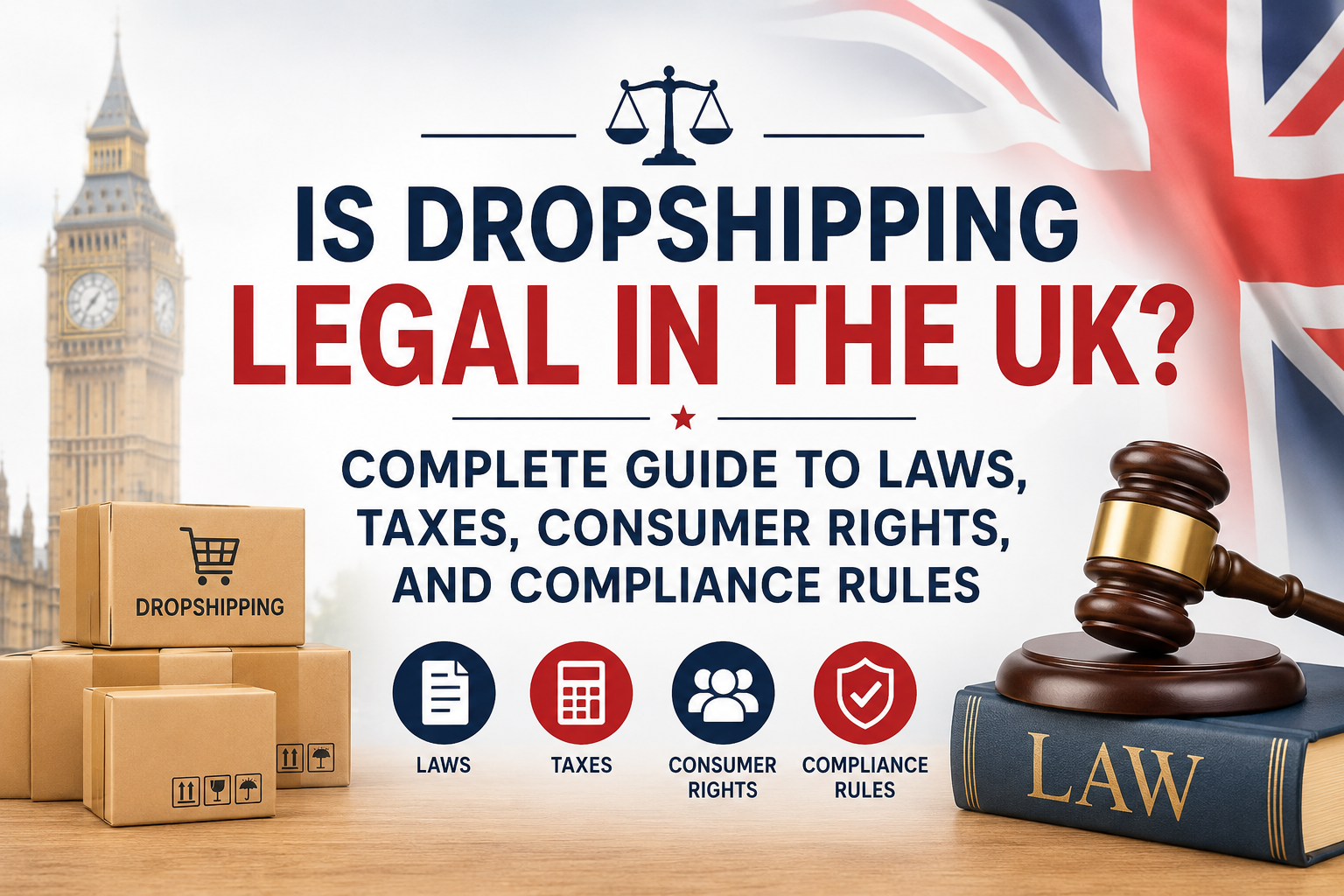
Is Dropshipping Legal in the UK? E-Commerce Laws, Business Compliance, and Consumer Protection Rules
Dropshipping is fully legal in the United Kingdom, and it is widely used by thousands of entrepreneurs running e-commerce businesses through platforms such as Shopify, WooCommerce, Amazon, and eBay. However, while the business model itself is legal, the way it is operated determines whether it remains compliant with UK law.
At its core, dropshipping is simply a retail fulfillment method. You sell products online without holding physical inventory, and a third-party supplier ships the product directly to your customer. UK law does not prohibit this structure. Instead, it regulates how businesses must operate within it, particularly in terms of taxation, consumer protection, and business transparency.
Legal Structure: What Makes Dropshipping Allowed in the UK
In the UK, dropshipping falls under general e-commerce and retail business regulations. There is no specific law that bans or restricts it as a business model.
Most dropshippers operate as either:
- Sole traders (self-employed individuals)
- Limited companies registered with Companies House
Both structures are legally acceptable. The key requirement is that you are conducting a legitimate commercial activity and complying with UK business regulations.
From a legal standpoint, you are considered the “seller of record.” This means you are responsible for the transaction, even though a supplier fulfills the order. This distinction is important because it places legal obligations on you, not the supplier, in the eyes of UK law.
Consumer Protection Laws You Must Follow
One of the most important legal frameworks affecting dropshipping in the UK is the Consumer Rights Act 2015. This law ensures that customers are protected when buying goods online.
Even if you do not physically handle the product, you are still responsible for:
- Ensuring the product matches its description
- Delivering goods that are of satisfactory quality
- Providing accurate delivery timelines
- Handling returns and refunds when required
In practice, this means that dropshippers cannot avoid liability by blaming suppliers. If a customer receives a faulty or misleading product, the legal responsibility still lies with the business that made the sale.
In addition, UK consumers typically have a 14-day cooling-off period under distance selling regulations, allowing them to return most online purchases without giving a reason. This must be clearly stated in your refund policy.
Business Transparency and Trading Standards
UK law also requires that online businesses operate with clear and honest communication. Under the Consumer Contracts Regulations, dropshipping stores must provide:
- Clear product descriptions
- Transparent pricing (including taxes and shipping costs)
- Business contact information
- Delivery timelines before purchase
Misleading marketing is one of the most common legal risks in dropshipping. For example, exaggerating product quality, using fake urgency timers, or hiding long shipping times can be considered unfair trading practices.
Trading Standards authorities in the UK have the power to investigate and penalize businesses that engage in deceptive practices.
Do You Need to Register a Business?
Legally, you do not need to register a company before starting dropshipping. However, if you are operating with the intention of making profit, you are considered self-employed and must register with HMRC once your income exceeds the trading allowance threshold.
Many sellers choose to register a Limited Company early because it:
- Improves credibility with suppliers and customers
- Separates personal and business liability
- Makes tax reporting more structured
While not mandatory at the beginning, business registration becomes practically necessary as your store scales.
Is Dropshipping Legal in the UK? VAT, Income Tax, and HMRC Rules for Online Sellers
Dropshipping is legal in the UK, but its legality is closely tied to how well a business complies with tax regulations. Many beginners assume that because they do not hold inventory, they are exempt from taxation rules. This is incorrect. In the eyes of HM Revenue & Customs (HMRC), dropshipping is treated the same as any other trading business.
Whether you are selling through Shopify, Amazon, or your own website, your income is subject to UK tax law once you begin making profits or exceed certain thresholds.
Income Tax Obligations for Dropshipping Businesses
If you are operating as a sole trader or a limited company, your dropshipping profits are taxable in the UK. HMRC defines taxable profit as total revenue minus allowable business expenses.
For sole traders, you must register for Self Assessment once your trading income becomes regular or exceeds the trading allowance. You will then be required to submit an annual tax return.
The tax you pay depends on your total income:
- Basic rate taxpayers pay 20% income tax
- Higher rate taxpayers pay 40% on income above the threshold
- Additional rate taxpayers pay 45% on very high earnings
It is important to note that dropshipping profits are not treated differently from any other business income. Even if your suppliers are overseas, HMRC still considers your business UK-based if you are operating from the UK.
VAT Rules in UK Dropshipping
Value Added Tax (VAT) is one of the most misunderstood aspects of dropshipping taxation.
In the UK, you must register for VAT if your taxable turnover exceeds the VAT threshold (currently £90,000 in a 12-month period). However, even before reaching this threshold, some dropshipping businesses voluntarily register for VAT to improve credibility and manage import taxes more efficiently.
VAT becomes more complex in dropshipping due to cross-border transactions. Many suppliers are based in China, the US, or the EU, which introduces import VAT and customs duties.
In general, there are three key VAT scenarios:
When selling within the UK, standard UK VAT rules apply. When importing goods from outside the UK directly to customers, import VAT may be charged at customs. When selling to EU customers, different VAT systems such as OSS (One-Stop Shop) may apply depending on your setup.
HMRC Compliance and Record Keeping
HMRC requires all dropshipping businesses to maintain accurate financial records. This includes sales, expenses, invoices, and shipping costs. Poor record keeping is one of the most common reasons small e-commerce businesses face penalties.
You are expected to:
- Keep digital or physical records of all transactions
- Track international payments and currency conversions
- Record platform fees (Shopify, PayPal, Stripe, etc.)
- Maintain evidence of supplier invoices
HMRC may request these records during an audit. Even if your business is small, compliance expectations still apply.
In addition, businesses must submit tax returns on time. Late submissions or incorrect reporting can result in fines, interest charges, or investigations.
Common Tax Mistakes in Dropshipping
Many new dropshippers in the UK make similar mistakes that can create legal and financial risks. These often include underreporting income, ignoring VAT obligations, or failing to declare overseas earnings.
Another common issue is misunderstanding “profit.” Some sellers mistakenly assume revenue equals profit, without deducting ad costs, supplier fees, and platform charges. HMRC, however, taxes only net profit, making accurate bookkeeping essential.
Business Registration, Licenses, and Legal Requirements
Dropshipping is legal in the UK, and one of the most common misconceptions is that you need a special “dropshipping license” to start. In reality, there is no specific license required for dropshipping as a business model. Instead, it falls under standard e-commerce and retail business regulations.
This means you are not applying for permission to “do dropshipping” itself. What matters in the UK legal system is whether you are properly registered as a business entity and complying with tax and trading laws.
Business Registration Options in the UK
When starting a dropshipping business in the UK, you generally have two main legal structures to choose from:
Most beginners start as a sole trader. This is the simplest structure and does not require formal incorporation. You are simply required to register as self-employed with HMRC once you begin trading with the intention of making profit. As a sole trader, you and your business are legally the same entity, meaning you are personally responsible for any debts or obligations.
The second option is registering a limited company through Companies House. This structure creates a separate legal entity, which means your personal assets are generally protected from business liabilities. Many scaling dropshipping businesses choose this option because it improves credibility with suppliers, payment processors, and advertising platforms.
There is no legal requirement to start as a limited company, but it becomes increasingly beneficial as revenue grows or when operating internationally.
Do You Need a Business License or Permit?
In the UK, there is no dedicated “dropshipping license” issued by the government. However, depending on what you sell, certain product categories may require compliance with additional regulations.
For example, products such as cosmetics, electrical goods, or children’s toys must meet UK safety standards before being sold. In these cases, you are not applying for a license, but you are legally responsible for ensuring that your products meet regulatory requirements.
This is a key distinction: dropshipping itself is not licensed, but the products you sell must still comply with UK law.
HMRC Registration and Legal Trading Requirements
From a tax perspective, all dropshipping businesses must comply with regulations set by HM Revenue & Customs.
If you operate as a sole trader, you must register for Self Assessment once you begin trading regularly. This allows HMRC to track your income and ensure correct taxation.
If you operate through a limited company, you must register the company with Companies House and also register for corporation tax with HMRC after incorporation.
Even if your dropshipping store is small, you are still legally considered a business once you start selling with intent to profit. This means your obligations begin from day one, not only after reaching a certain income threshold.
Legal Responsibilities Beyond Registration
Registering your business is only the first step. UK law also requires dropshippers to comply with broader commercial regulations.
You must clearly display business information on your website, including contact details and trading identity. Customers must know who they are buying from. You are also required to follow consumer protection laws, which means handling refunds, returns, and product disputes fairly.
If you use misleading branding or fail to disclose important information such as shipping times or supplier origin, you may be considered in breach of consumer protection regulations.
These obligations apply regardless of whether you are a sole trader or a limited company.
Common Misunderstandings About Legal Setup
A frequent misconception is that forming a company automatically makes a dropshipping business “legal.” In reality, legality depends more on compliance behavior than structure.
Another misunderstanding is that operating without registration is immediately illegal. While HMRC allows a short grace period before registration, you are still technically required to report taxable income once trading begins.
The structure you choose affects liability and tax efficiency, but not whether the business model itself is allowed.
Is Dropshipping Legal in the UK? Refund Rules, Returns Policy, and Customer Protection
Dropshipping is legal in the UK, but its legality depends heavily on how well a business complies with consumer protection laws. Many new sellers assume that because they do not physically handle products, they are not responsible for refunds, returns, or product quality issues. In reality, UK law places full responsibility on the seller, not the supplier.
This is where consumer rights become one of the most important legal foundations for any dropshipping business operating in the UK.
Consumer Rights Act 2015 and Dropshipping Responsibility
A key piece of legislation governing e-commerce in the UK is the Consumer Rights Act 2015. This law applies to all businesses selling goods to consumers, including dropshipping stores.
Under this framework, customers have the legal right to receive products that are:
- As described
- Of satisfactory quality
- Fit for purpose
Even in a dropshipping model, the seller remains legally responsible for ensuring these conditions are met. This means that if a customer receives a damaged, incorrect, or misleading product, the responsibility falls on the store owner, not the supplier.
In practical terms, the supplier relationship is irrelevant from a legal standpoint. The customer’s contract is with the store, not the factory or fulfillment agent.
Refund and Return Obligations in UK E-Commerce
UK consumer law also provides strong protections for online shoppers through distance selling regulations. One of the most important rights is the 14-day cooling-off period, which allows customers to return most online purchases for any reason.
This rule applies directly to dropshipping businesses as well. Even if your supplier is based overseas and does not accept returns, you are still required to offer a refund or alternative resolution to the customer.
In addition to the cooling-off period, customers also have the right to request a refund or replacement if goods are faulty or not as described. In such cases, the seller must respond within a reasonable timeframe and cannot simply refuse responsibility due to supplier limitations.
Many dropshipping beginners underestimate how strict these rules are. However, UK law prioritizes consumer protection over supply chain convenience.
Delivery Time Transparency and Legal Expectations
Another important aspect of consumer protection is transparency around delivery times. UK law requires that customers are clearly informed about when they can expect their goods before completing a purchase.
This becomes particularly important in dropshipping, where shipping times can vary significantly depending on supplier location. If a customer is misled about delivery speed or is not properly informed about delays, the business may be considered in breach of consumer protection regulations.
Regulators expect businesses to provide realistic and accurate shipping estimates rather than optimistic or misleading promises. Failing to do so can result in disputes, chargebacks, and reputational damage.
How Refund Disputes Are Handled in Practice
In real-world dropshipping operations, refund disputes are one of the most common challenges. UK law requires the seller to handle these disputes directly with the customer.
Even if a supplier refuses to issue a refund, the seller is still obligated to resolve the issue. This often means absorbing the cost or negotiating with suppliers separately.
Payment providers such as PayPal and Stripe also tend to favor customers in disputes when consumer protection laws are involved. This increases the importance of having clear refund policies and reliable supplier agreements.
Legal Risks of Non-Compliance
Failing to follow consumer protection laws can lead to several consequences. These include forced refunds, payment processor disputes, and potential investigations by trading authorities.
Repeated violations or misleading practices may be considered unfair trading, which can result in penalties. This is why many successful dropshipping businesses invest heavily in clear policies, automated customer support systems, and reliable supplier vetting.
Is Dropshipping Legal in the UK? Common Legal Risks, Scams, Compliance Mistakes, and How to Avoid Them
Dropshipping is legal in the UK, but legality does not mean it is risk-free. In fact, most legal issues in dropshipping do not come from the business model itself, but from how sellers operate it. The UK does not ban dropshipping, but it strictly enforces laws around advertising, consumer protection, intellectual property, and fair trading practices.
This means that while you can legally run a dropshipping business, certain operational mistakes can quickly turn a legitimate store into a non-compliant one.
Misleading Advertising and Consumer Law Violations
One of the most common legal risks in UK dropshipping is misleading advertising. Under UK consumer protection rules, businesses must ensure that all marketing claims are accurate, clear, and not deceptive.
Problems often arise when dropshipping stores:
- Exaggerate product quality using unrealistic images
- Use fake urgency timers (“Only 2 left!” when stock is unlimited)
- Hide long shipping times in small print
- Present generic products as “premium branded items”
These practices may be considered unfair trading under UK law. Even if sales are generated, regulators and payment providers can intervene if customers are misled.
In many cases, chargebacks and disputes with payment processors such as PayPal or Stripe are the first warning signs of compliance issues.
Intellectual Property and Copyright Risks
Another major legal risk in dropshipping involves intellectual property infringement. Many beginners unknowingly list products that violate trademarks, copyrighted designs, or branded assets.
This can include:
- Selling counterfeit or replica products
- Using brand logos without authorization
- Copying product images from other sellers or manufacturers
- Listing trademarked names in product titles without permission
UK law, along with international IP frameworks, takes these violations seriously. Even if your supplier is the source of the issue, the legal responsibility still falls on the seller of record.
In severe cases, platforms like Shopify or Amazon may suspend accounts, and rights holders may initiate legal action.
Supplier Reliability and Legal Accountability
A common misconception in dropshipping is that suppliers are fully responsible for product issues. Legally, this is not correct.
In the UK, the seller is always accountable to the customer, regardless of supplier performance. This creates a significant risk when working with unverified or low-quality suppliers.
Typical supplier-related risks include:
- Shipping incorrect or defective products
- Long or inconsistent delivery times
- Failure to process refunds or replacements
- Inaccurate product descriptions provided by factories
While these are operational issues, they become legal issues when customers are affected. Under consumer protection law, the store must resolve the dispute even if the supplier refuses responsibility.
Payment Processor Compliance Risks
Payment platforms are another critical compliance layer often overlooked by beginners. Providers such as PayPal, Stripe, and Shopify Payments have strict rules regarding business transparency and risk management.
Common compliance mistakes include:
- Not clearly stating shipping times
- High refund or chargeback rates
- Selling restricted or high-risk products
- Inconsistent business information across website pages
If a dropshipping store is flagged as high risk, payment processors may freeze funds or terminate accounts. This can happen even if the business is technically legal under UK law.
In practice, payment compliance is often stricter than legal compliance itself.
Fake Stores and Trust Violations
A growing issue in dropshipping is the rise of low-quality or “temporary” stores that prioritize short-term profit over compliance. These stores often disappear after receiving chargebacks or negative reviews.
UK regulators and consumer protection systems increasingly monitor such behavior. While not all aggressive marketing is illegal, patterns of repeated deception can lead to enforcement actions or platform bans.
Building trust through transparent policies, clear contact information, and realistic product expectations is not just good practice—it is a legal safeguard.
UK vs EU Regulations After Brexit, VAT Rules, Import Duties, and Cross-Border Compliance
Dropshipping is legal in both the UK and the EU, but the regulatory environment has changed significantly since Brexit. While the business model remains unrestricted, the legal and tax frameworks governing cross-border e-commerce are now more fragmented. This creates important differences in VAT handling, import duties, and consumer compliance obligations.
Post-Brexit Impact on UK Dropshipping Operations
After Brexit, the UK is no longer part of the EU VAT and customs union. This means UK-based dropshipping businesses must now treat EU sales as international transactions.
Before Brexit, selling to EU customers was relatively simple under a unified VAT system. Today, UK sellers must consider:
- Separate VAT registration rules in EU countries
- Customs declarations for goods entering the EU
- Import VAT and duties charged at destination
- Additional documentation requirements for cross-border shipping
This shift has made EU-targeted dropshipping more complex, especially for small businesses without automated tax systems.
However, the legal status of dropshipping itself has not changed. It remains fully legal in both regions.
UK VAT System vs EU OSS Framework
In the UK, VAT is governed by domestic rules enforced by HM Revenue & Customs (HMRC). Businesses must register for VAT once they exceed the UK threshold, and they charge VAT on applicable sales within the UK.
In contrast, the EU uses the One-Stop Shop (OSS) system, which allows sellers to report VAT for multiple EU countries through a single registration.
For dropshippers, this creates two different compliance paths:
- UK-focused businesses deal primarily with HMRC VAT rules
- EU-focused sellers may need OSS registration for streamlined reporting
This divergence increases administrative complexity for businesses operating across both markets.
Import Duties and Customs Differences
One of the biggest operational differences between the UK and EU is how import duties are handled.
In the UK, imports from overseas suppliers may be subject to customs duties and import VAT depending on product value and origin. These costs are often passed to the end customer or absorbed by the seller depending on the business model.
In the EU, similar import rules apply, but the thresholds and administrative processes differ by country. Some EU countries enforce stricter customs checks, which can lead to longer delivery times or unexpected fees for customers.
For dropshippers, this means pricing strategies must account for potential hidden costs on both sides of the Channel.
Consumer Protection Differences Between UK and EU
Consumer rights remain strong in both regions, but enforcement frameworks vary slightly.
In the UK, consumer protection is primarily governed by national laws such as the Consumer Rights Act. In the EU, consumer rights are standardized across member states through EU-wide directives.
Key similarities include:
- Right to refund within a cooling-off period for online purchases
- Requirement to provide goods as described and of satisfactory quality
- Obligation to clearly disclose pricing and delivery information
However, enforcement mechanisms and complaint procedures differ, meaning cross-border disputes can become more complex when dealing with EU customers from the UK.
Operational Challenges for Cross-Border Dropshipping
The main challenge after Brexit is not legality, but operational friction. Dropshipping between the UK and EU now involves more administrative steps, which can affect margins and delivery speed.
Common challenges include:
- Longer shipping times due to customs clearance
- Increased paperwork for international shipments
- VAT complexity across multiple jurisdictions
- Higher return costs for EU-to-UK or UK-to-EU orders
These factors do not make dropshipping illegal, but they do make it more difficult to scale efficiently across both markets without proper systems in place.
Dropshipping remains fully legal in both the UK and EU, but Brexit has created a clear divide in how the business must be managed across regions. The UK operates under its own VAT and consumer protection system, while the EU uses a more centralized but administratively different framework.
In practice, the legality is not the issue—compliance complexity is. Successful international dropshipping businesses must adapt to two parallel systems of taxation, customs, and consumer law.



No Comments