


Is Dropshipping Legal in Spain? Complete Guide to Legal, Tax, Consumer, and Operational Compliance

Dropshipping is legal in Spain when conducted within the boundaries of existing business, tax, and consumer protection regulations. Entrepreneurs must register their business, sell compliant products, respect intellectual property, and uphold consumer rights.
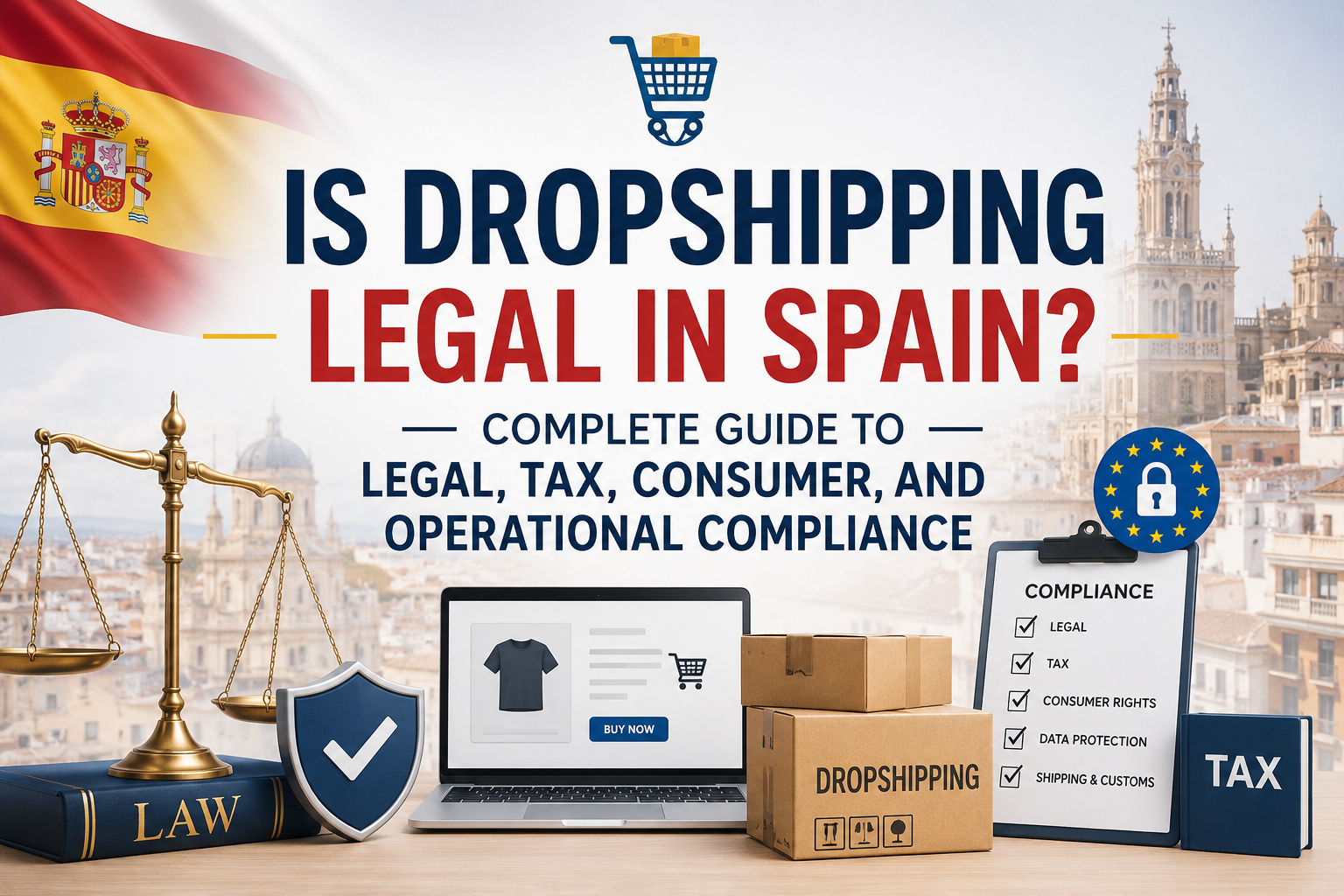
Is Dropshipping Legal in Spain? the Legal Framework for E-Commerce Entrepreneurs
Dropshipping has become a popular e-commerce business model across Europe, and Spain is no exception. However, many aspiring entrepreneurs often ask: is dropshipping legal in Spain? In Spain, the legality of dropshipping depends on multiple factors, including business registration, product sourcing, and adherence to consumer protection laws.
What Makes Dropshipping Legal in Spain?
At its core, dropshipping is simply a method of selling products online without holding inventory. From a legal standpoint, there is nothing inherently illegal about this practice in Spain. Entrepreneurs can operate as dropshippers as long as they comply with existing Spanish and European Union e-commerce regulations. Key legal considerations include registering as a self-employed individual (autónomo) or forming a company, collecting and remitting applicable taxes, and following consumer rights rules.
Business Registration Requirements
Even though dropshipping allows sellers to avoid physical inventory, Spanish law still requires formal business registration for commercial activities. Operating without proper registration is illegal and may result in administrative fines or other penalties. Most dropshippers choose to register as autónomos for simplicity, while larger operations may form an SL (Sociedad Limitada) to limit personal liability.
Product Legality and Compliance
Selling illegal or restricted items is strictly prohibited, and entrepreneurs must ensure their products comply with EU standards. This includes safety certifications for electronics, labeling requirements, and adherence to regulations such as the EU General Product Safety Directive. Failing to comply with product regulations can lead to legal disputes, confiscation of goods, or significant financial penalties.
Intellectual Property Considerations
Dropshippers in Spain must also be cautious about intellectual property laws. Selling counterfeit goods, trademarked items without authorization, or pirated products is illegal and can result in both civil and criminal liability. Entrepreneurs should carefully vet suppliers to confirm that products are genuine and legally distributable within the EU market.
Consumer Protection and Transparency
Spanish law places significant emphasis on consumer rights, which indirectly affects dropshipping legality. Sellers must provide clear terms of service, refund policies, and comply with the EU’s 14-day withdrawal rule. Transparency regarding shipping times, product origin, and pricing is essential. Non-compliance with consumer protection laws may result in legal actions, reputational damage, and platform restrictions.
Dropshipping Taxes in Spain Explained: VAT, Income Tax, and EU Compliance Requirements
When starting a dropshipping business in Spain, taxation is one of the most critical legal areas to understand. While the business model itself is relatively simple, the tax obligations behind it are not. Spanish tax authorities, along with EU-wide regulations, require online sellers to properly declare income, charge VAT when applicable, and comply with cross-border tax rules. Failing to meet these obligations can result in penalties, audits, or forced business closure.
VAT (IVA) in Spain
In Spain, Value Added Tax is known as IVA (Impuesto sobre el Valor Añadido). For dropshipping businesses, VAT is applied depending on where the customer is located and where the goods are shipped from. If you are selling to Spanish customers, you are generally required to charge IVA once your business is properly registered.
For EU-based sales, the One-Stop Shop (OSS) system simplifies VAT reporting across multiple countries. Instead of registering separately in each EU member state, dropshippers can declare and pay VAT through a single quarterly filing. This system is particularly important for scaling across Europe.
Do You Need to Register as Autónomo?
In Spain, anyone earning regular income through business activities is typically required to register as an autónomo (self-employed worker). This includes dropshipping operations. Once registered, you must declare your income and pay both income tax (IRPF) and social security contributions.
Many beginners delay registration, but Spanish tax authorities can retroactively charge taxes and penalties if unregistered activity is detected. Therefore, formal registration is generally considered a necessary step for operating legally and sustainably.
Income Tax Obligations (IRPF)
Dropshipping profits in Spain are subject to personal income tax (IRPF) if operating as an autónomo. The tax rate is progressive, meaning it increases based on income level. This can range roughly from 19% to over 45% depending on total earnings.
Income is calculated based on net profit, meaning revenue minus deductible business expenses such as advertising costs, platform fees, software tools, and supplier costs. Proper bookkeeping is essential to avoid overpaying taxes or facing compliance issues.
EU OSS System and Cross-Border Sales
One of the most important developments for dropshipping in Europe is the OSS (One-Stop Shop) VAT system. This system was designed to simplify cross-border e-commerce taxation within the EU.
Instead of registering VAT in each country where you sell, you can report all EU sales through a single Spanish tax return. However, accurate tracking of destination-based VAT rates is still required, as different EU countries apply different rates.
Import VAT and Non-EU Suppliers
If your dropshipping suppliers are based outside the EU, additional tax considerations apply. Import VAT may be charged when goods enter the EU, depending on the shipment structure and Incoterms used by the supplier.
In many cases, the seller is considered the importer of record, meaning they are responsible for VAT and customs declarations. Understanding this structure is essential to avoid unexpected costs and delays.
How to Register a Dropshipping Business in Spain: Autónomo vs Company (SL) Explained
Starting a dropshipping business in Spain requires more than just setting up an online store and finding suppliers. One of the most important legal steps is choosing the correct business structure and completing the required registration. In Spain, entrepreneurs typically operate either as an autónomo (self-employed individual) or through a limited liability company known as an SL (Sociedad Limitada). Each option has different legal, tax, and operational implications that can significantly impact long-term profitability.
Why Business Registration Matters in Spain
Spanish law considers any consistent commercial activity as taxable business activity. This means that even if you are running a dropshipping store online without physical inventory, you are still legally required to register your activity. Operating without registration can result in fines, backdated tax payments, and potential legal disputes with tax authorities.
Proper registration also provides access to invoicing systems, tax deductions, and the ability to work with payment processors and suppliers more professionally.
Option 1: Registering as Autónomo (Self-Employed)
The most common entry point for dropshippers in Spain is registering as an autónomo. This structure is relatively simple and is designed for individuals running small businesses.
As an autónomo, you are personally responsible for your business income, taxes, and obligations. You will need to register with the Spanish tax agency (Agencia Tributaria) and the social security system. Once registered, you must issue invoices, declare income, and pay monthly social security contributions regardless of your earnings.
The main advantage of this structure is simplicity and lower setup costs. However, the downside is unlimited personal liability, meaning your personal assets could be affected if the business incurs debt or legal issues.
Option 2: Setting Up a Sociedad Limitada (SL)
For more serious or scalable dropshipping businesses, forming an SL is often preferred. An SL is a separate legal entity, meaning the company itself is responsible for debts and liabilities, not the individual owner.
To establish an SL, you typically need a minimum share capital requirement and must go through a more complex registration process, including notarization and commercial registry approval.
The key advantage of an SL is liability protection and a more professional business structure, which can be beneficial when working with larger suppliers, advertising networks, or scaling internationally. However, it also involves higher administrative costs and more complex accounting requirements.
Key Differences Between Autónomo and SL
While both structures are legal for dropshipping in Spain, they serve different business stages. Autónomo is generally better suited for beginners testing the market or generating lower revenue. An SL is more appropriate for entrepreneurs who expect higher turnover, want to reinvest profits, or aim to build a long-term brand.
Tax treatment also differs. Autónomos are taxed under personal income tax (IRPF), while SL companies are subject to corporate tax (Impuesto sobre Sociedades), which typically has a fixed rate.
Common Mistakes When Registering a Dropshipping Business
Many beginners delay registration, assuming small online income will go unnoticed. However, Spanish tax authorities increasingly monitor digital businesses, especially those processing payments through platforms like Stripe or PayPal.
Another common mistake is choosing the wrong structure too early. While an SL may seem attractive, it can create unnecessary administrative burden if the business is still in the testing phase.
Dropshipping to Spain: Import, Customs, and EU Compliance Rules Explained
Dropshipping in Spain often involves sourcing products from non-European suppliers, especially from countries like China. While the business model simplifies inventory management, it introduces legal and logistical responsibilities regarding imports, customs, and EU compliance.
Import and Customs Obligations
When goods enter Spain from outside the European Union, they are subject to import controls and may incur customs duties and import VAT. The party responsible for these payments is typically the importer of record. In dropshipping, this can be either the supplier or the Spanish business owner, depending on the agreed Incoterms.
Failing to correctly handle import declarations can result in delayed shipments, confiscation of goods, and fines. Dropshipping entrepreneurs must understand the basic customs requirements and ensure their suppliers provide the necessary documentation, such as commercial invoices and product descriptions.
Value Added Tax (VAT) on Imported Goods
Import VAT is applicable when products enter Spain from a non-EU country. For dropshipping, this means that even if the customer pays upfront, the seller may be responsible for paying VAT to Spanish authorities or ensuring the logistics provider collects it on delivery.
Using the EU One-Stop Shop (OSS) system only applies for sales between EU countries, so non-EU imports must still comply with local customs VAT rules. Clear understanding of these processes helps avoid unexpected tax liabilities that can erode profit margins.
Product Compliance and Safety Standards
Spain, as part of the EU, has strict regulations regarding product safety, labeling, and compliance. Electronics, toys, cosmetics, and other regulated goods must meet EU standards such as CE marking, chemical safety regulations, and proper labeling in Spanish.
Non-compliant products can be blocked at customs, confiscated, or recalled, potentially causing financial and reputational damage. Entrepreneurs must verify that suppliers provide compliant products and certificates to ensure adherence to EU laws.
Restricted and Prohibited Items
Certain products are prohibited or restricted for import into Spain, including counterfeit goods, weapons, certain chemicals, and unsafe consumer products. Dropshipping sellers must carefully vet suppliers and product catalogs to avoid inadvertently importing illegal items. Selling restricted products can lead to criminal liability, severe fines, and permanent platform bans.
Shipping Documentation and Logistics
Accurate documentation is critical for smooth customs clearance. Commercial invoices must include product descriptions, quantities, and values. Mislabeling shipments or under-declaring values is illegal and can trigger inspections or penalties.
Dropshipping businesses should coordinate with suppliers and logistics providers to ensure proper customs paperwork. Choosing reliable fulfillment partners who understand EU import procedures can prevent delays and customer dissatisfaction.
Dropshipping and Consumer Protection in Spain: Returns, Refunds, and Legal Responsibilities
Operating a dropshipping business in Spain comes with significant responsibilities regarding consumer protection. Spanish law, aligned with European Union directives, places strict obligations on sellers to ensure transparency, fair treatment, and clear return policies.
The 14-Day Withdrawal Right
Under EU regulations, Spanish consumers have the right to withdraw from a purchase within 14 days without providing a reason. This rule applies to all online sales, including dropshipping. Sellers must clearly communicate this right on their website, provide easy-to-use return procedures, and process refunds promptly.
Failure to respect this law can result in legal action and reputational damage. Even though dropshippers do not hold inventory, they are still responsible for coordinating returns with suppliers or logistics partners.
Refund Obligations
Spanish law requires that refunds be processed without undue delay, typically within 14 days of receiving returned goods. Dropshippers must ensure that the supply chain allows for timely return management. Using suppliers with flexible return policies or local European warehouses can simplify compliance and reduce shipping delays.
Refund policies must also be transparent. Hiding or complicating the process is considered unfair commercial practice and may attract regulatory scrutiny from consumer protection authorities.
Liability for Product Quality
Sellers are legally liable for the quality and safety of the products they sell. Even if items are sourced from third-party suppliers, dropshippers cannot disclaim responsibility. This means that defective or unsafe products can result in claims, fines, or even civil liability. Verifying supplier reliability, product certifications, and compliance with EU safety standards is therefore critical.
Transparency and Terms of Service
Spanish consumer protection laws emphasize transparency. Dropshippers must clearly disclose shipping times, product origin, total costs, and any additional charges. This includes VAT, shipping fees, or customs duties if applicable. Clear terms of service and privacy policies not only fulfill legal requirements but also enhance customer confidence, which is crucial for long-term business sustainability.
Data Protection Considerations (GDPR)
While dropshipping is primarily a commercial activity, it also involves handling personal data. Spain enforces the EU’s General Data Protection Regulation (GDPR), which mandates secure storage, explicit consent for marketing communications, and proper handling of customer information. Violating GDPR can result in significant fines, so dropshippers must integrate compliant data management practices.
Dropshipping in Spain: Common Mistakes and Risks to Avoid for Legal Compliance
While dropshipping offers low upfront costs and operational flexibility, it also carries legal and operational risks—especially in Spain. Many beginners underestimate the complexity of regulations, tax obligations, and consumer protection rules, which can lead to fines, account suspensions, or even business closure.
Operating Without Proper Registration
One of the most frequent errors is starting a dropshipping business without registering as an autónomo or forming a company. Spanish law considers unregistered commercial activity illegal, and authorities can impose fines or require retroactive tax payments. Even small-scale operations or hobby-like sales must comply with registration requirements to remain legally protected.
Ignoring Tax Obligations
Many dropshippers neglect VAT (IVA) collection, income tax reporting, or import VAT for goods sourced outside the EU. Failing to comply with Spanish and EU tax regulations can lead to severe penalties. Proper bookkeeping, registration for OSS (One-Stop Shop) when applicable, and consulting a tax professional are crucial steps to avoid financial and legal consequences.
Selling Non-Compliant or Restricted Products
Selling products that fail EU safety standards, lack CE certification, or are otherwise restricted can result in customs seizures, fines, and liability claims. Additionally, distributing counterfeit items or violating intellectual property rights carries civil and criminal consequences. Entrepreneurs should carefully vet suppliers and ensure that all products meet legal standards before listing them for sale.
Mismanaging Consumer Rights
Dropshipping businesses often underestimate consumer protection laws, such as the EU-mandated 14-day withdrawal period. Delayed or unclear refund procedures, misleading advertising, or lack of transparency can trigger legal complaints and damage reputation. Clear terms of service, prompt refunds, and reliable supplier partnerships are necessary to meet consumer protection obligations.
Payment Processor and Platform Risks
Improper practices, such as violating PayPal or Stripe terms, selling restricted items, or receiving excessive customer complaints, can lead to account suspension. Similarly, marketplaces like Amazon or eBay may restrict or remove stores that fail to comply with local regulations. Dropshippers must maintain transparency, product quality, and proper documentation to avoid these operational risks.
Overlooking Logistics and Customs Complexity
Dropshipping from non-EU suppliers introduces risks related to shipping delays, customs duties, and import VAT. Incorrect or incomplete documentation can cause goods to be held or rejected by Spanish customs. Choosing reliable suppliers, using EU-based fulfillment centers, and understanding Incoterms reduces operational risks and ensures timely delivery.




No Comments