


How to Start a Sneaker Dropshipping Business: The Complete Blueprint to Build a Profitable Brand, Find Winning Suppliers, Scale With Social Media, and Avoid Costly Legal Mistakes

Many people enter sneaker dropshipping expecting fast profits from viral products. However, long-term success usually comes from building a recognizable niche brand rather than constantly chasing trends.
The stores that survive beyond the first year are typically those that improve logistics, develop stronger supplier relationships, invest in branding, and create original marketing content consistently. Sneaker dropshipping is not simply about listing shoes online. It is about creating a store that feels connected to sneaker culture and consumer identity.
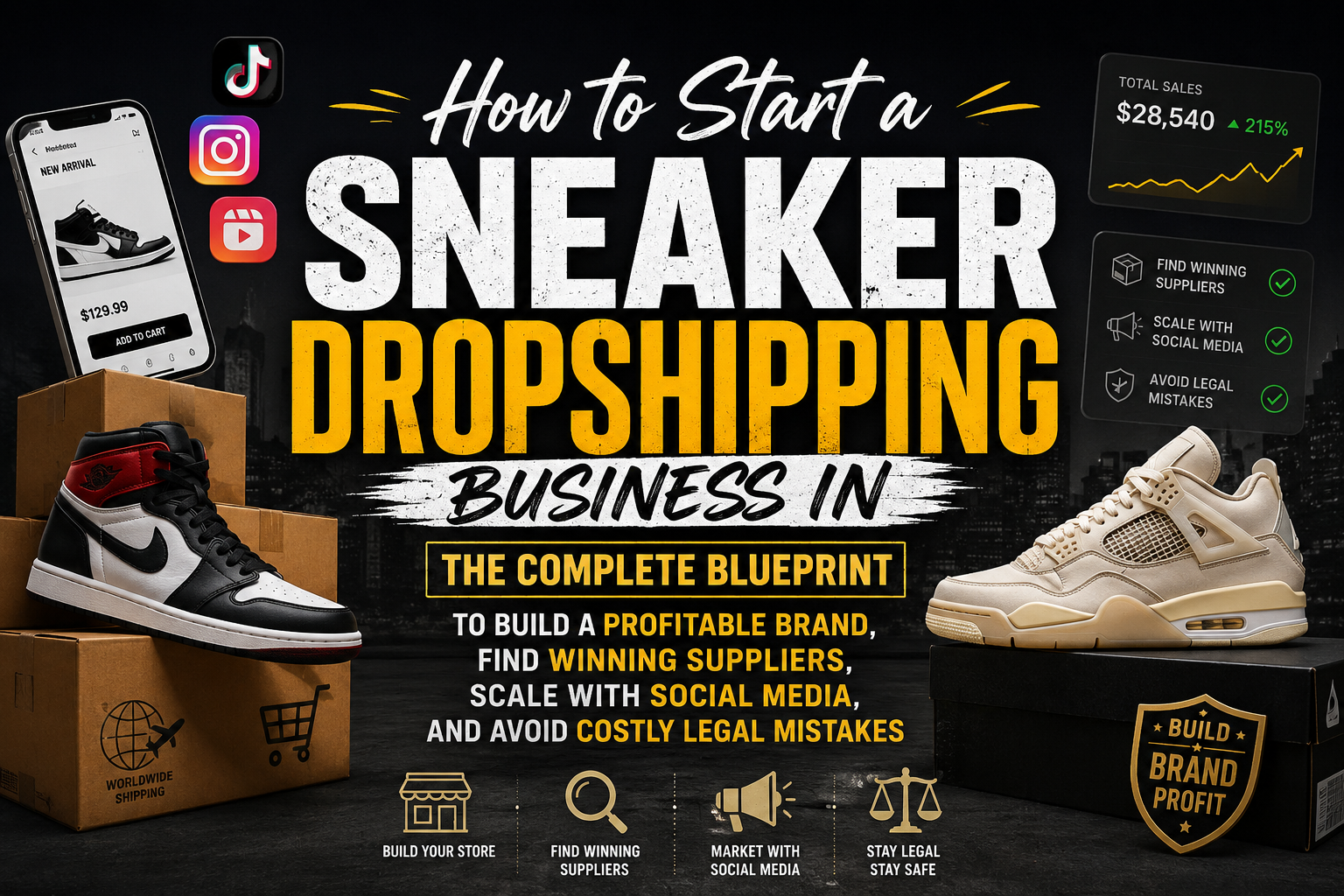
A Realistic Beginner Strategy for Building a Scalable Online Store
The sneaker industry has remained one of the strongest segments in ecommerce because shoes are closely connected to fashion, identity, and lifestyle culture. Unlike generic impulse-buy products, sneakers already have a massive built-in audience. However, many beginners misunderstand sneaker dropshipping and assume it is an easy shortcut to fast profits. In reality, starting a sneaker dropshipping business without holding inventory requires careful supplier selection, realistic pricing strategies, and strong brand positioning.
Why Sneaker Dropshipping Attracts New Ecommerce Entrepreneurs
One of the biggest reasons people enter sneaker dropshipping is the low startup cost compared to opening a traditional shoe store. In a conventional retail model, sellers must purchase inventory upfront, rent warehouse space, and manage unsold stock. Sneaker dropshipping removes much of that financial pressure because products are shipped directly from suppliers after customers place orders.
This model allows new entrepreneurs to test different sneaker styles without investing thousands of dollars into inventory. Running shoes, streetwear sneakers, basketball shoes, minimalist fashion sneakers, and gym footwear can all be tested with relatively low risk.
Another advantage is that sneaker content performs naturally well on visual platforms. Instagram Reels, TikTok, and Pinterest already have massive sneaker communities. This makes sneakers easier to market than many generic dropshipping products because the audience already exists.
the Real Challenges Behind Sneaker Dropshipping
Although sneaker dropshipping appears attractive, it is also more competitive than many other ecommerce niches. The biggest problem is product saturation. Thousands of stores often sell identical sneaker products from the same suppliers, creating aggressive price competition.
Shipping speed is another major challenge. Many beginners rely entirely on low-cost overseas suppliers with delivery times exceeding two weeks. Modern consumers, especially sneaker buyers, expect fast fulfillment and professional packaging. Slow shipping damages trust and increases refund requests.
Another important issue involves product authenticity and intellectual property. Many sneaker-related suppliers sell replica-inspired products that resemble major brands like Nike or Adidas. Selling counterfeit products can lead to payment processor restrictions, store suspension, or legal complaints. A sustainable sneaker business should avoid trademark violations and focus on legally safe product categories.
Choosing the Right Sneaker Products for a New Store
One of the most common mistakes beginners make is trying to sell every type of sneaker at once. Broad stores often fail because they lack identity. Instead, successful sneaker dropshipping stores usually focus on a specific market segment.
For example, some stores focus entirely on minimalist fashion sneakers designed for casual outfits. Others target gym audiences with training shoes and fitness-related branding. Some focus on streetwear culture and urban aesthetics.
A focused niche improves advertising efficiency because the marketing message becomes clearer. It also makes content creation easier since the store can build a recognizable visual identity across TikTok, Instagram, and product pages.
Pricing strategy also matters. Extremely cheap sneakers often create quality concerns, while mid-range pricing usually performs better for long-term customer trust. Many successful sneaker stores position themselves as affordable lifestyle brands rather than discount marketplaces.
Building a Store That Looks Trustworthy
Sneaker buyers are highly visual consumers. A poorly designed store immediately reduces credibility. Many successful sneaker ecommerce brands use clean layouts, lifestyle photography, mobile-first design, and modern typography to create a premium impression.
Product pages should not simply copy supplier descriptions. Original descriptions, size guides, realistic shipping timelines, and detailed product images help improve conversion rates. Customer reviews and user-generated content also play a major role in establishing trust.
Branding becomes even more important when multiple competitors sell similar products. Small details such as custom packaging, branded inserts, or consistent social media aesthetics can significantly improve perceived value.
How to Find Reliable Sneaker Dropshipping Suppliers
Finding reliable suppliers is one of the most important parts of building a successful sneaker dropshipping business. Many beginners focus heavily on website design or advertising while ignoring the supply chain behind the business. In reality, supplier quality often determines whether a sneaker store survives beyond its first few months.
In the sneaker industry, customers care deeply about product quality, shipping speed, packaging, and consistency. A single poor supplier can quickly damage customer trust, increase refund requests, and create payment disputes. Because of this, choosing suppliers should be treated as a long-term business decision rather than simply searching for the lowest price.
Why Supplier Selection Matters More in the Sneaker Industry
Sneakers are different from many low-cost impulse-buy products commonly sold through traditional dropshipping stores. Buyers usually pay closer attention to sizing accuracy, material quality, comfort, and overall presentation. Poor stitching, inaccurate sizing, or cheap packaging can lead to negative reviews much faster than in other ecommerce niches.
Another challenge is that sneaker buyers are often familiar with fashion trends and brand aesthetics. If products look inconsistent with the store’s marketing images, customer disappointment becomes unavoidable. This is why supplier reliability directly affects brand reputation.
Shipping expectations have also changed significantly in recent years. Customers increasingly expect delivery times closer to local ecommerce standards. Suppliers with slow processing times or unstable logistics can make scaling impossible, especially when advertising costs continue rising across platforms like TikTok and Meta.
the Different Types of Sneaker Suppliers
Not all sneaker suppliers operate under the same model. Some suppliers focus purely on low-cost mass production, while others specialize in private label manufacturing or branded packaging support.
Marketplace-based suppliers are often the easiest option for beginners because they require minimal setup. However, many of these suppliers prioritize volume rather than quality control. Product images may not accurately represent the real product, and stock availability can change quickly.
Private suppliers usually offer more stable communication and better operational flexibility. Some can provide custom packaging, logo inserts, or improved quality control processes. Although these suppliers may charge slightly higher prices, they often help stores create a more professional customer experience.
Local or regional fulfillment warehouses are becoming increasingly important in the sneaker niche. Suppliers with inventory stored closer to customers can dramatically improve delivery speed. Faster shipping often increases customer satisfaction more than lowering product prices.
The Hidden Risks of Choosing Cheap Sneaker Suppliers
One of the most common mistakes new entrepreneurs make is selecting suppliers entirely based on price. Extremely cheap sneakers often create long-term operational problems that are more expensive than the initial savings.
Low-cost suppliers may use inconsistent materials, poor sizing standards, or unreliable shipping methods. Refund requests, chargebacks, and negative reviews can quickly erase advertising profits. In many cases, stores fail not because marketing is weak, but because customer trust collapses after fulfillment problems.
Another major issue involves intellectual property risks. Some sneaker suppliers sell products that closely imitate famous brands such as Nike, Adidas, or New Balance. Even if the supplier claims the products are “inspired” designs, trademark complaints can still occur. Payment processors and ecommerce platforms are becoming increasingly strict about counterfeit-related activity.
A safer long-term strategy is focusing on original fashion sneakers, unbranded footwear, or private-label products that avoid trademark conflicts entirely.
How to Test a Sneaker Supplier Properly
Before fully committing to a supplier, store owners should personally test the buying experience. Ordering sample products remains one of the most important steps in supplier evaluation.
Testing should include shipping speed, packaging quality, product comfort, material consistency, and sizing accuracy. Many suppliers appear professional online but fail basic quality expectations in real-world orders.
Communication quality is equally important. Reliable suppliers respond consistently, provide tracking updates, and handle inventory questions clearly. Poor communication during the testing stage usually becomes worse after scaling.
Some experienced ecommerce sellers also test suppliers by placing multiple orders over several weeks to evaluate consistency. A supplier that performs well once may still struggle during higher order volumes.
How to Build a Profitable Sneaker Brand Instead of a Generic Dropshipping Store
Many sneaker dropshipping stores fail because they operate like temporary product catalogs instead of real brands. They upload random trending shoes, copy supplier images, run short-term ads, and compete almost entirely on price. While this approach may generate occasional sales, it rarely creates long-term profitability.
In 2026, the sneaker ecommerce market is far more competitive than it was several years ago. Consumers are exposed to thousands of similar products every day across TikTok, Instagram, and online marketplaces. Because of this, building a recognizable sneaker brand has become significantly more important than simply finding trending products.
Why Generic Sneaker Stores Struggle to Survive
One of the biggest problems with traditional dropshipping stores is the lack of identity. Many stores attempt to sell every possible sneaker style at once, including running shoes, basketball sneakers, luxury-inspired footwear, gym shoes, and streetwear products. As a result, the store feels inconsistent and forgettable.
Modern consumers are increasingly attracted to brands with a clear aesthetic and message. They want stores that feel connected to a specific lifestyle, fashion culture, or community. Generic stores usually fail to create emotional engagement because they look almost identical to thousands of competitors using the same supplier images and layouts.
Price competition also becomes much more aggressive when branding is weak. If customers cannot distinguish one store from another, they naturally choose the lowest price. This creates shrinking profit margins and makes paid advertising difficult to sustain.
The Importance of Choosing a Clear Brand Identity
Successful sneaker brands usually focus on a specific audience rather than trying to target everyone. Some brands position themselves around minimalist fashion, while others focus on urban streetwear culture, fitness performance, or luxury-inspired aesthetics.
A focused identity improves nearly every part of the business. Advertising becomes more efficient because the messaging is clearer. Social media content becomes easier to create because the visual direction stays consistent. Customers also remember the brand more easily when the store communicates a recognizable style.
For example, a sneaker brand targeting minimalist fashion buyers may use clean product photography, neutral color palettes, and simple website design. In contrast, a streetwear-focused sneaker brand may use bold visuals, oversized typography, and creator collaborations to match urban fashion culture.
The goal is not simply to sell shoes. The goal is to create a store that represents a lifestyle customers want to associate with.
Why Branding Matters More Than Product Selection
Many beginners spend too much time searching for “winning products” while ignoring branding entirely. However, in the sneaker industry, presentation often influences buying decisions more than the product itself.
Two stores can sell similar sneakers at similar prices, yet the stronger brand usually converts better. This happens because customers perceive branded stores as more trustworthy and professional. Branding increases perceived value even when the underlying product is comparable.
Packaging also plays a surprisingly important role. Custom shoe boxes, thank-you cards, branded wrapping paper, or premium inserts can improve customer experience significantly. These small details help create a feeling that the customer purchased from a real brand instead of a temporary dropshipping website.
User-generated content further strengthens branding. Real customer photos, TikTok reviews, and Instagram styling videos help create authenticity that supplier product images cannot achieve.
Building a Sneaker Brand Through Content Instead of Discounts
Many weak ecommerce stores rely heavily on discounts to generate sales. Strong sneaker brands, however, often grow through content and community building instead of constant price reductions.
Sneaker culture naturally performs well on social media because it connects with fashion, sports, music, and lifestyle trends. This creates opportunities for consistent organic marketing through outfit videos, sneaker styling content, behind-the-scenes branding, and influencer collaborations.
Short-form video platforms are especially important. TikTok and Instagram Reels allow sneaker brands to build visibility without depending entirely on paid advertising. Over time, consistent content creation can lower customer acquisition costs while improving brand recognition.
Email marketing also becomes more effective when the business operates as a recognizable brand rather than a generic store. Customers are more willing to return when they feel connected to the brand identity.
How to Market a Sneaker Dropshipping Store Using TikTok and Instagram Reels
Marketing has become the biggest challenge for most sneaker dropshipping businesses. In earlier stages of ecommerce, simply launching Facebook ads with product images was often enough to generate profitable sales. In 2026, that approach is far less effective. Advertising costs are higher, audiences are more skeptical, and consumers are constantly exposed to similar products across multiple platforms.
For sneaker stores, visual content now plays a larger role than traditional advertising alone. TikTok and Instagram Reels have become two of the most important traffic sources because sneaker culture naturally performs well in short-form video formats. Shoes are highly visual products connected to fashion, identity, sports, and lifestyle trends, making them ideal for content-driven marketing.
Why Sneaker Content Performs So Well on Short-Form Video Platforms
Sneakers are easier to market visually than many other ecommerce products because consumers already associate them with personal style and social identity. A sneaker is not only functional footwear; it also represents aesthetics, fashion preferences, and cultural trends.
This creates strong engagement opportunities on platforms driven by entertainment and visual discovery. A simple outfit transition video, walking clip, gym sequence, or streetwear styling video can attract attention more effectively than traditional product advertisements.
TikTok’s algorithm especially favors engaging visual content over polished corporate branding. This allows smaller sneaker brands to compete with larger companies if the content feels authentic and relatable. Instagram Reels operates similarly, although aesthetic consistency tends to matter more on Instagram compared to TikTok.
Many successful sneaker ecommerce stores now function almost like media brands. Instead of relying entirely on direct-response ads, they continuously publish content that blends fashion inspiration, product showcasing, and lifestyle storytelling.
The Biggest Marketing Mistake Sneaker Stores Make
One of the most common mistakes is creating content that looks overly promotional. Many beginner stores simply repost supplier videos or create repetitive product advertisements with aggressive sales messaging. Modern audiences quickly ignore this type of content because it feels generic and low quality.
Successful sneaker marketing usually focuses more on lifestyle presentation than direct selling. Instead of saying “Buy these sneakers now,” effective content shows how the sneakers fit into a desirable lifestyle or fashion aesthetic.
For example, a short TikTok video showing a full outfit transformation often performs better than a direct product close-up. Videos filmed in real-world environments also tend to outperform basic white-background product clips because they feel more authentic.
Consumers increasingly respond to content that appears organic rather than highly commercialized. This is one reason user-generated content has become so important in sneaker ecommerce.
How User-Generated Content Builds Trust Faster
User-generated content, commonly called UGC, has become one of the strongest marketing tools for sneaker brands. Customers trust real people wearing products more than traditional advertisements created by the store itself.
A simple smartphone video from a creator styling sneakers in daily life can outperform expensive commercial campaigns. UGC reduces the psychological distance between the product and the buyer because the content feels realistic instead of heavily staged.
Many sneaker stores now collaborate with micro-influencers rather than celebrities. Smaller creators often produce more authentic content and usually have stronger audience trust within specific fashion communities.
This strategy also lowers marketing costs. Instead of spending large budgets on high-production advertising, brands can scale through consistent creator partnerships and organic content distribution.
Why Consistency Matters More Than Viral Success
Many new ecommerce entrepreneurs expect a single viral TikTok video to transform their sneaker store overnight. Although viral moments can generate temporary traffic spikes, sustainable growth usually comes from consistent content production over time.
Platforms like TikTok reward accounts that publish regularly and maintain audience engagement. Brands that upload consistently improve their chances of reaching new viewers without relying entirely on paid advertising.
Content diversity is also important. Sneaker stores can create styling videos, unboxing clips, sneaker care tutorials, gym outfit combinations, behind-the-scenes packaging content, or trend commentary. This variety keeps the audience engaged while strengthening brand identity.
Instagram Reels additionally helps reinforce visual consistency. A strong Instagram presence increases brand credibility and gives potential customers more confidence before purchasing.
Why Premium Footwear Niches Create Better Margins and Stronger Long-Term Growth
Many new ecommerce entrepreneurs enter sneaker dropshipping by selling low-cost products in highly saturated markets. While this strategy may appear easier at first, it often creates serious long-term problems. Cheap sneakers usually generate lower profit margins, attract aggressive price competition, and require very high order volume to become sustainable.
As advertising costs continue increasing across TikTok, Instagram, and Meta platforms, many sellers are shifting toward high-ticket sneaker business models instead. Rather than focusing on low-priced impulse purchases, high-ticket sneaker stores aim to sell premium footwear with stronger branding, higher perceived value, and better customer profitability.
In 2026, this approach is becoming increasingly attractive because ecommerce competition is no longer only about getting traffic. Profitability now depends heavily on average order value, customer trust, and brand positioning.
Why Low-Cost Sneaker Stores Struggle With Profitability
One of the biggest challenges in traditional sneaker dropshipping is that many stores compete within the same low-price categories. When multiple sellers offer similar products from identical suppliers, pricing becomes the primary competitive factor.
This creates a difficult situation for paid advertising. Customer acquisition costs continue rising, but profit margins remain extremely small. In many cases, stores may generate sales while still losing money after advertising expenses, refunds, and transaction fees are included.
Low-cost products also tend to attract lower customer loyalty. Buyers searching only for the cheapest option rarely develop strong attachment to the store itself. As a result, repeat purchase rates often remain weak.
Another issue is perception. Extremely cheap sneakers can create doubts about product quality, durability, and comfort. Even if the product itself is acceptable, low pricing sometimes reduces consumer confidence before the purchase is made.
the High-Ticket Sneaker Model
A high-ticket sneaker business focuses on products with higher perceived value rather than mass-market discount pricing. This does not necessarily mean selling luxury designer footwear. Instead, it usually means positioning products as premium lifestyle items through branding, presentation, and niche targeting.
For example, some stores specialize in minimalist fashion sneakers aimed at professionals who value clean aesthetics. Others target gym enthusiasts with performance-oriented footwear and premium branding. Some focus on streetwear culture and limited-style collections designed to appear more exclusive.
The goal is to increase average order value while building a stronger brand image. Higher pricing creates more room for advertising costs, customer service, and operational improvements without immediately destroying profitability.
Why Branding Becomes More Important in Premium Sneaker Niches
High-ticket ecommerce relies heavily on perception. Customers paying premium prices expect more than just functional products. They expect trust, quality, consistency, and a professional buying experience.
Because of this, branding becomes one of the most important elements in a high-ticket sneaker business. Generic product pages copied from suppliers usually fail to convert premium buyers. Successful stores invest heavily in product photography, clean website design, professional packaging, and consistent visual identity.
The emotional side of marketing also becomes stronger in premium categories. Customers are often buying status, identity, or aesthetic lifestyle positioning rather than simply purchasing shoes.
This is why many successful sneaker brands focus extensively on storytelling. Instead of emphasizing discounts, they emphasize design philosophy, fashion culture, athletic performance, or community identity.
The Relationship Between Higher Prices and Advertising Efficiency
Many beginners assume lower prices automatically lead to more sales. However, lower pricing can actually make advertising more difficult because profit margins become too narrow.
A high-ticket sneaker model often improves advertising efficiency because each customer generates more revenue. This creates greater flexibility when scaling campaigns across TikTok, Instagram Reels, Pinterest, or Meta Ads.
For example, a store selling sneakers for $120 with healthy margins can often survive higher customer acquisition costs more easily than a store selling similar products for $35. Higher margins also allow businesses to reinvest into content creation, influencer partnerships, and faster fulfillment systems.
Premium positioning additionally helps reduce direct price competition. Customers shopping in higher-end categories usually care more about branding and perceived quality than finding the absolute lowest price available online.
How to Avoid Legal Problems When Starting a Sneaker Dropshipping Business
Many people enter the sneaker dropshipping industry without fully understanding the legal risks involved. At first glance, selling sneakers online may appear relatively simple compared to other ecommerce niches. However, the sneaker market is heavily connected to trademarks, intellectual property, brand protection, and platform compliance policies.
In recent years, ecommerce platforms, payment processors, and major footwear brands have become significantly more aggressive about counterfeit enforcement. Because of this, legal mistakes that were previously ignored can now lead to frozen payment accounts, store shutdowns, advertising bans, or supplier disputes.
For entrepreneurs planning to build a long-term sneaker ecommerce business, understanding these risks early is far more important than simply focusing on short-term sales opportunities.
Why the Sneaker Industry Faces Higher Legal Risk
Sneakers are one of the most brand-sensitive categories in global ecommerce. Large companies such as Nike, Adidas, New Balance, and Jordan invest heavily in trademark protection because brand identity plays a central role in sneaker culture.
This creates a difficult environment for inexperienced dropshippers. Many suppliers advertise products using terms like “inspired by,” “similar to,” or “1:1 quality,” which often implies designs connected to famous brands. Although some sellers assume slight logo changes make products legally safe, trademark enforcement does not always depend only on exact logo duplication.
Product design similarity, branding language, marketing images, and keyword usage can all create legal exposure. Platforms increasingly use automated systems to identify suspicious listings, especially in highly monitored categories like footwear and fashion.
As a result, sneaker stores operating in legally questionable areas often struggle to build stable long-term businesses.
The Difference Between Inspired Fashion and Counterfeit Products
One of the most misunderstood areas in sneaker ecommerce is the distinction between fashion inspiration and counterfeit replication. Many products exist in a legal gray area where they imitate popular sneaker aesthetics without directly copying logos.
However, the closer a product resembles a protected brand identity, the greater the business risk becomes. Even if suppliers claim products are “safe,” the ecommerce seller usually carries the responsibility if legal complaints occur.
This becomes especially dangerous when stores intentionally market products using major brand names to attract search traffic. Using trademarked keywords in advertisements, product titles, or domain names can increase visibility temporarily, but it also increases the likelihood of takedown requests.
A more sustainable approach is focusing on original sneaker styles, private-label products, or independent fashion aesthetics that avoid direct association with protected global brands.
Why Payment Processors and Platforms Are Becoming Stricter
Many beginner entrepreneurs focus only on whether a supplier can deliver products. However, platform compliance has become equally important.
Payment providers such as Stripe, PayPal, and Shopify Payments increasingly monitor stores for intellectual property complaints, excessive disputes, and suspicious fulfillment activity. Once an account is flagged, funds may be temporarily frozen or permanently restricted.
Advertising platforms are also tightening enforcement policies. Meta, TikTok, and Google have become more sensitive toward misleading product claims, counterfeit-related advertising, and trademark misuse.
This means legal problems can affect the entire operational system of a sneaker business, not just the products themselves. Even a store generating strong sales can collapse quickly if payment infrastructure becomes unstable.
Building a Legally Safer Sneaker Business Model
The safest long-term strategy is building a sneaker business around originality and branding instead of imitation products. Private-label sneakers, fashion-focused footwear, minimalist designs, and niche athletic styles generally create fewer legal complications than replica-inspired markets.
Brand positioning also matters. Stores that develop their own visual identity, original photography, and unique product descriptions appear more professional and trustworthy than generic reseller sites using copied supplier materials.
Supplier verification becomes another important step. Many suppliers prioritize fast sales over compliance transparency, meaning sellers must independently evaluate potential risks. Ordering product samples and reviewing supplier marketing materials carefully can help identify warning signs early.
It is also wise for ecommerce entrepreneurs to understand basic trademark and intellectual property principles before scaling aggressively. Legal awareness is becoming part of modern ecommerce operations rather than a separate issue only large companies need to consider.


No Comments