


Is Dropshipping in Mexico Profitable: The 2026 Profit Blueprint for Niches, COD, Ads, and Scale

Choosing the right niche in Mexico is not about finding what is trending globally—it is about identifying where local demand, emotional value, and margin potential intersect. Dropshippers who focus on practical lifestyle improvements, emotionally driven purchases, and underpenetrated categories will consistently outperform those chasing short-term trends.
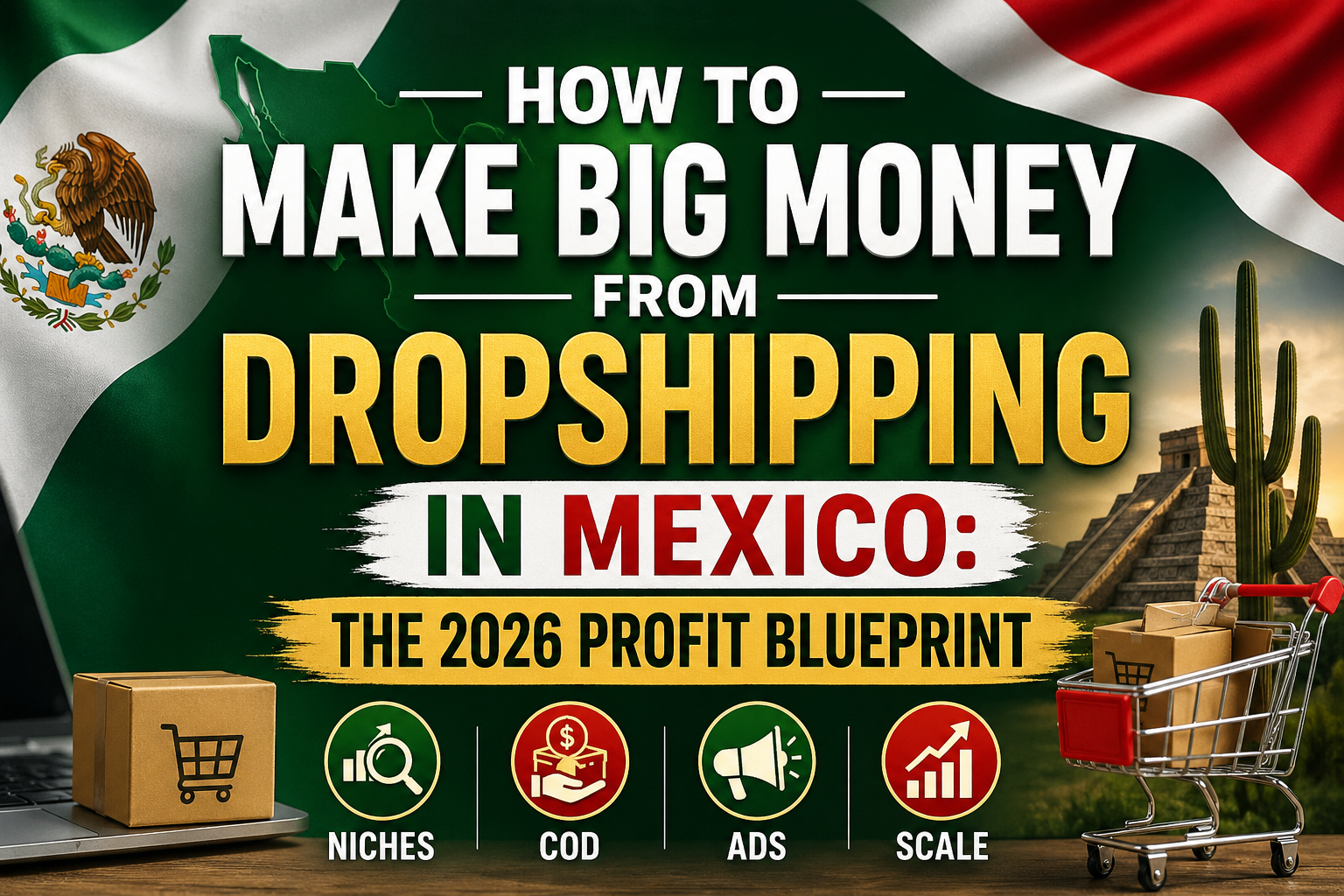
High-Profit Niches in Mexico: What Actually Sells in 2026
Mexico has quietly become one of the fastest-growing e-commerce markets in Latin America, but unlike saturated markets such as the United States, its consumer behavior is still evolving. This creates a structural advantage for dropshippers who understand local demand patterns. With a population exceeding 120 million and a median age under 30, Mexico is a mobile-first, price-sensitive, and trend-driven market. However, profitability does not come from selling “cheap products”—it comes from identifying niches where perceived value is significantly higher than cost.
The key insight is that Mexican consumers are not simply looking for low prices. They are looking for accessible upgrades to their lifestyle. This is why mid-ticket products in the $20–$80 range often outperform both low-ticket impulse items and high-ticket luxury goods. The margin potential lies in emotional positioning combined with functional utility.
Identifying High-Margin Niches with Local Demand Signals
One of the most reliable ways to identify profitable niches in Mexico is to analyze where demand is growing faster than local supply. Categories such as home improvement, personal care, and automotive accessories consistently show strong performance because they align with daily needs while still allowing for branding and differentiation.
Home organization products, for example, perform well because urban living spaces in cities like Mexico City and Guadalajara are becoming smaller, increasing demand for space-saving solutions. Similarly, beauty and personal care products—especially those positioned as “premium but affordable”—benefit from strong social media influence and repeat purchase behavior.
Another overlooked but highly profitable niche is pet products. Mexico has one of the highest rates of pet ownership in Latin America, and spending on pets continues to rise. Products that combine emotional appeal (pet care, comfort, safety) with practical benefits tend to achieve higher conversion rates and stronger customer retention.
Avoiding Saturated and Low-Profit Categories
Many beginners fail in the Mexican market because they import strategies directly from saturated regions. Generic electronics accessories, low-quality fashion items, and widely available AliExpress products often face heavy price competition and low trust levels. In Mexico, trust is a major conversion factor, and overly commoditized products struggle to build credibility.
Instead of chasing viral products with short lifecycles, a more sustainable approach is to focus on niches where branding, bundling, and storytelling can increase perceived value. This not only improves margins but also reduces dependency on constant product hunting.
Positioning for Profit, Not Just Sales Volume
The difference between making small profits and building a scalable business in Mexico lies in positioning. A product that costs $8 and sells for $25 may generate revenue, but a product that costs $15 and sells for $60—supported by strong branding and localized messaging—creates real profit leverage.
Localization plays a critical role here. Product descriptions, ad creatives, and landing pages should reflect Mexican culture, language nuances, and lifestyle aspirations. This increases trust and allows for higher pricing without sacrificing conversion rates.
Winning Product Strategy: How to Validate Demand Before You Scale in Mexico
In mature e-commerce markets, dropshippers can often rely on existing trend signals and proven winners. Mexico, however, operates differently. While demand is growing rapidly, it is less predictable and more sensitive to trust, pricing, and cultural relevance. This means that launching unvalidated products is not just inefficient—it is expensive.
The core mistake many sellers make is assuming that a product successful in the United States or Europe will automatically perform well in Mexico. In reality, purchasing power, consumer priorities, and payment preferences create a different decision-making process. As a result, product validation becomes the most critical step in building a profitable dropshipping business in this market.
Demand Signals: What Actually Indicates a Winning Product
Effective validation starts with identifying real demand signals rather than relying on intuition. In Mexico, social media platforms—especially TikTok and Facebook—play a significant role in shaping buying behavior. However, the presence of engagement alone is not enough. A product with high views but low purchase intent often leads to wasted ad spend.
A more reliable approach is to combine multiple indicators. Consistent engagement across different creatives, repeated appearance of similar products in ads, and localized content (Spanish-language promotions targeting Mexican audiences) are stronger signals of demand. Additionally, marketplaces such as Mercado Libre can provide insight into existing product performance, including pricing ranges and customer feedback trends.
Search behavior is another critical layer. If users are actively searching for a product in Spanish, it indicates intent rather than passive interest. This distinction is essential because intent-driven traffic converts at a significantly higher rate.
Testing Strategy: Controlled Experiments Over Random Launches
Once a potential product is identified, the next step is structured testing. Instead of launching aggressively, successful dropshippers in Mexico use controlled experiments to measure viability. This typically involves testing multiple creatives, price points, and messaging angles with small budgets.
The goal is not immediate profitability but data collection. Key metrics such as click-through rate, cost per click, and add-to-cart rate provide early signals of product-market fit. In Mexico, an additional layer of validation comes from checkout behavior. If users abandon the purchase at the payment stage, it often indicates trust issues or misalignment with local payment preferences.
Testing should also include localized variations. A product positioned as a “luxury convenience” may underperform, while the same product framed as a “practical daily solution” can resonate strongly with Mexican consumers. These nuances are only visible through systematic testing.
Pricing Validation: Finding the Profit Threshold
Validation is not only about demand—it is about profitability. A product may generate sales but still fail to produce meaningful margins. In Mexico, where price sensitivity is relatively high, the challenge is to find a balance between affordability and perceived value.
This is why price testing is essential. By experimenting with different price points, sellers can identify the threshold where conversion rate and profit margin intersect. In many cases, slightly higher pricing—supported by better branding and clearer value communication—leads to higher overall profit, even if conversion rates decrease marginally.
Scaling Only What Proves Itself
The discipline to scale only validated products is what separates profitable operations from unstable ones. Once a product demonstrates consistent performance across key metrics—stable conversion rates, acceptable acquisition costs, and positive customer feedback—it becomes a candidate for scaling.
At this stage, investment in better creatives, improved landing pages, and more efficient logistics becomes justified. Without prior validation, scaling simply amplifies inefficiencies.
Payment & COD Strategy: The Real Key to Converting Mexican Customers
One of the most underestimated factors in Mexican e-commerce is not product selection or advertising—it is payment infrastructure. Many dropshippers fail in Mexico not because their products are weak, but because their checkout process does not align with local consumer behavior. Unlike markets where credit card penetration is high, Mexico still relies heavily on alternative payment methods, with trust playing a central role in purchase decisions.
This is where payment strategy becomes a direct driver of revenue. A store with strong traffic but poor payment alignment will consistently underperform, while a properly localized checkout can significantly increase conversion rates without increasing ad spend.
The Role of Cash on Delivery (COD) in Conversion Rates
Cash on Delivery (COD) remains one of the most powerful tools for unlocking conversions in Mexico. A large segment of consumers either does not have access to credit cards or prefers not to use them online due to fraud concerns. COD effectively removes this barrier by allowing customers to pay only when they receive the product.
From a psychological standpoint, COD shifts the perceived risk from the buyer to the seller. This dramatically increases trust, especially for first-time customers. In many cases, stores that introduce COD see conversion rates increase by two to three times compared to card-only models.
However, COD is not a universal solution. It introduces operational challenges such as higher return rates and order cancellations. This means profitability depends on how well COD is managed rather than simply whether it is offered.
Balancing Risk and Profitability in COD Operations
The key to making COD profitable in Mexico lies in controlling risk variables. One of the most effective approaches is order confirmation. Verifying orders through SMS or phone calls reduces fake or low-intent purchases. This step alone can significantly lower return rates and improve delivery success.
Another important factor is product selection. COD works best with products that have clear, immediate value and do not require long-term commitment. Items that solve a visible problem or deliver instant satisfaction tend to have lower rejection rates upon delivery.
Pricing strategy also plays a role. Slightly higher margins are necessary to absorb the additional costs associated with COD logistics and returns. This reinforces the importance of positioning products as valuable rather than simply affordable.
Integrating Local Payment Methods Beyond COD
While COD is powerful, relying on it exclusively limits scalability. Mexico has a growing ecosystem of alternative payment solutions, including cash-based digital vouchers and bank transfer systems. These methods cater to consumers who prefer not to use cards but are comfortable with structured payment systems.
Integrating these options expands your addressable market and reduces dependence on COD. More importantly, prepaid methods eliminate the risk of failed deliveries, improving overall operational efficiency.
A hybrid model—combining COD with local prepaid options—often delivers the best results. It captures both trust-sensitive customers and those ready to pay upfront, creating a more balanced revenue stream.
Building Trust Through Checkout Experience
Payment strategy is not only about methods—it is also about presentation. Mexican consumers are highly sensitive to trust signals during checkout. Clear communication, transparent pricing, and localized language all contribute to higher completion rates.
Elements such as visible contact information, delivery timelines, and simple return policies reinforce credibility. Even small adjustments in how payment options are displayed can influence user confidence and decision-making.
Logistics & Fulfillment: How to Beat Slow Shipping and Scale Profitably in Mexico
In the Mexican e-commerce market, logistics is not just an operational detail—it is a decisive factor that directly impacts conversion rates, customer satisfaction, and long-term profitability. Many dropshippers underestimate this aspect and rely on standard cross-border shipping models, only to encounter delays, lost packages, and high refund rates.
Unlike highly developed logistics networks in markets such as the United States, Mexico’s delivery infrastructure is more fragmented. Last-mile delivery can be inconsistent, and customs clearance for international shipments often introduces unpredictable delays. As a result, slow shipping is not just an inconvenience—it erodes trust and reduces repeat purchases.
For dropshippers aiming to build a scalable business, solving logistics inefficiencies is essential rather than optional.
The Hidden Cost of Cross-Border Shipping
Shipping directly from China to Mexico may appear cost-effective on the surface, but the hidden costs quickly accumulate. Delivery times often range from two to four weeks, which significantly lowers customer satisfaction. More importantly, long shipping times increase the likelihood of order cancellations and disputes.
From a financial perspective, this creates a compounding problem. Higher refund rates, increased customer support workload, and reduced lifetime value all contribute to shrinking margins. Even if the product itself has a strong markup, inefficient logistics can eliminate profitability.
This is why relying solely on low-cost international shipping is rarely a viable long-term strategy in the Mexican market.
Local Warehousing as a Competitive Advantage
One of the most effective ways to overcome logistics challenges in Mexico is to introduce local or near-local warehousing. By positioning inventory closer to the end customer, delivery times can be reduced from weeks to a few days. This shift has a direct impact on conversion rates, as faster shipping increases buyer confidence at the point of purchase.
Local fulfillment also improves operational stability. With inventory already inside the country, issues related to customs clearance are minimized. This leads to more predictable delivery timelines and fewer disruptions.
While local warehousing requires upfront planning and potentially higher initial costs, the long-term benefits often outweigh the investment. Faster delivery not only improves customer experience but also enables more aggressive scaling in advertising campaigns.
Optimizing Last-Mile Delivery Performance
Even with local inventory, last-mile delivery remains a critical component. In Mexico, address accuracy, communication with customers, and delivery coordination all influence success rates. Failed delivery attempts can significantly increase costs, particularly for Cash on Delivery (COD) orders.
To mitigate these risks, successful dropshippers focus on improving delivery accuracy and customer communication. Confirming orders before shipment, providing clear tracking information, and maintaining responsive customer support all contribute to higher delivery completion rates.
Additionally, choosing reliable logistics partners with strong regional coverage is essential. Not all carriers perform equally across different مناطق, and selecting the right partners can reduce delays and lost packages.
Aligning Logistics with Product Strategy
Logistics efficiency is closely tied to product selection. Products that are lightweight, durable, and easy to ship tend to perform better in the Mexican market. Fragile or bulky items increase the risk of damage and raise shipping costs, which can negatively impact margins.
Moreover, products with clear, immediate value are more tolerant of moderate shipping times, while impulse purchases often require faster delivery to maintain buyer interest. Understanding this relationship allows dropshippers to align logistics capabilities with product strategy.
Scaling with a Fulfillment System, Not Just Suppliers
At scale, logistics must evolve from a supplier-based approach to a system-based approach. This includes inventory forecasting, automated order routing, and integration with fulfillment centers. The goal is to create a predictable and efficient supply chain that can handle increasing order volumes without compromising delivery quality.
Automation plays a key role here. By synchronizing inventory and orders in real time, dropshippers can reduce errors, prevent stockouts, and maintain consistent performance during scaling phases.
Facebook & TikTok Ads That Work in Mexico: How Localization Drives Profit, Not Just Traffic
One of the most common mistakes dropshippers make when entering the Mexican market is reusing ad creatives from the United States or Europe without modification. While this approach may generate initial traffic, it rarely leads to sustainable profitability. The reason is simple: Mexican consumers respond differently to messaging, visuals, and emotional triggers.
Advertising in Mexico is not just about visibility—it is about relevance. Cultural context, language nuances, and socioeconomic factors all influence how users perceive an ad. A creative that performs well in an English-speaking market may appear generic or untrustworthy when directly translated into Spanish. As a result, localization is not an optional optimization; it is a fundamental requirement for conversion.
Platform Dynamics: TikTok vs Facebook in the Mexican Market
Both TikTok and Facebook play critical roles in Mexico’s digital advertising ecosystem, but they serve different functions in the customer journey. TikTok excels at generating awareness and capturing attention through short-form, highly engaging content. It is particularly effective for introducing new products and creating viral momentum.
Facebook, on the other hand, remains a strong platform for conversion-focused campaigns. Its targeting capabilities and familiarity among older demographics make it suitable for retargeting and scaling proven products. In practice, profitable dropshipping operations often use TikTok for top-of-funnel traffic and Facebook to convert and stabilize revenue.
Understanding this distinction allows advertisers to allocate budgets more efficiently and avoid over-reliance on a single platform.
Creative Strategy: What Actually Converts in Mexico
High-performing ad creatives in Mexico share several consistent characteristics. First, they prioritize clarity over sophistication. Consumers respond better to straightforward demonstrations of product value rather than abstract branding messages. Showing how a product solves a specific problem is more effective than emphasizing features alone.
Second, authenticity plays a significant role. User-generated content (UGC), testimonials, and informal video styles tend to outperform highly polished advertisements. This is partly because they reduce perceived risk and make the product feel more accessible.
Language is another critical factor. Ads should not only be translated into Spanish but also adapted to local expressions and tone. Subtle differences in phrasing can significantly impact engagement and trust. For example, messaging that emphasizes practicality and everyday usefulness often resonates more strongly than aspirational or luxury-focused positioning.
Pricing and Offer Framing in Ad Messaging
In Mexico, how a price is presented can be as important as the price itself. Consumers are highly responsive to perceived deals, installment options, and value-based offers. Ads that clearly communicate savings, bonuses, or limited-time promotions tend to achieve higher click-through and conversion rates.
For stores using Cash on Delivery (COD), highlighting “pay upon delivery” directly in the ad can reduce hesitation and improve performance. This aligns the ad message with the customer’s preferred purchasing behavior, creating a smoother path to conversion.
Testing and Iteration: The Only Reliable Optimization Method
Successful advertising in Mexico is driven by continuous testing rather than one-time creative development. This involves experimenting with different hooks, video formats, and messaging angles to identify what resonates with the target audience.
Data should guide decision-making at every stage. Metrics such as click-through rate, cost per acquisition, and return on ad spend provide insight into which creatives are scalable. Importantly, testing should include localized variations rather than minor adjustments to global templates.
Over time, this iterative approach leads to a portfolio of high-performing creatives that can be scaled across campaigns.
Scaling Ads Without Breaking Profitability
Scaling in the Mexican market requires balancing volume with efficiency. Increasing ad spend without maintaining creative quality or targeting precision often leads to diminishing returns. Instead, scaling should be gradual and supported by proven creatives and stable conversion metrics.
Retargeting strategies also play a key role. By re-engaging users who have already shown interest, advertisers can improve overall efficiency and maximize the value of existing traffic. This is particularly important in a market where trust-building may require multiple touchpoints.
Scaling Strategy: From $1K to $50K/Month in the Mexican Dropshipping Market
Reaching initial sales in Mexico is relatively achievable, but scaling from a few hundred dollars to tens of thousands per month is where most dropshipping businesses break down. The primary reason is not a lack of demand—it is the absence of systems. Many sellers rely on short-term tactics such as constantly launching new products or increasing ad spend without addressing operational constraints.
In the Mexican market, scaling requires stability. Factors such as payment methods, logistics reliability, and customer trust amplify inefficiencies when volume increases. What works at $1,000 per month often collapses at $10,000 if the underlying structure is not optimized. Therefore, scaling is less about doing more and more about building systems that can handle growth.
Stage 1: Stabilizing Product-Market Fit
Before scaling, a product must demonstrate consistent performance. This includes stable conversion rates, manageable acquisition costs, and low return rates—especially if Cash on Delivery (COD) is involved. At this stage, the objective is predictability rather than rapid expansion.
In Mexico, stability also depends on localized alignment. Ads, landing pages, and payment options must resonate with local consumers. If performance fluctuates significantly, scaling will only magnify these inconsistencies. A disciplined approach ensures that only proven products move forward.
Stage 2: Building a Repeatable Acquisition System
Once a product is validated, the next step is to create a repeatable customer acquisition system. This typically involves structuring advertising campaigns in a way that can be gradually expanded without losing efficiency. Instead of relying on a single winning creative, successful sellers develop multiple variations that target different audience segments.
Diversification across platforms also becomes important. Combining TikTok for traffic generation with Facebook for retargeting creates a more balanced funnel. This reduces dependency on any single traffic source and improves long-term stability.
At this stage, data tracking becomes critical. Understanding which campaigns generate profitable customers allows for more precise budget allocation and controlled scaling.
Stage 3: Operational Infrastructure and Fulfillment Optimization
As order volume increases, operational efficiency becomes the limiting factor. Slow processing times, inventory mismatches, and delivery delays can quickly erode margins. In Mexico, where logistics challenges are more pronounced, this stage is particularly important.
Scaling businesses invest in fulfillment systems rather than relying solely on individual suppliers. This includes inventory planning, automated order processing, and integration with reliable logistics partners. The goal is to ensure that increased sales do not lead to increased errors.
Customer support also becomes a key component. Faster response times and clear communication reduce cancellations and improve overall satisfaction, which is essential for maintaining profitability at scale.
Stage 4: Margin Expansion Through Branding and Upsells
True scalability is achieved not just by increasing revenue, but by improving margins. This is where branding and average order value (AOV) optimization come into play. Instead of selling single products, successful stores introduce bundles, complementary items, and upsell offers.
Branding further enhances this effect by increasing perceived value. A well-positioned product can command higher prices, reducing reliance on aggressive advertising spend. In the Mexican market, where trust is a major factor, branding also improves customer confidence and repeat purchase rates.
Email and SMS marketing can also be introduced at this stage to capture additional revenue from existing customers, further improving profitability.
Stage 5: Automation and Systemization
At higher revenue levels, manual processes become a bottleneck. Automation is necessary to maintain efficiency and prevent operational overload. This includes automated inventory updates, order routing, and performance tracking.
Systemization allows the business to operate consistently without constant manual intervention. It also creates the foundation for team expansion, enabling the owner to delegate tasks and focus on strategic growth.
In Mexico, where multiple variables such as COD management and logistics coordination must be handled simultaneously, automation is not just a convenience—it is a requirement for sustained scaling.




No Comments