


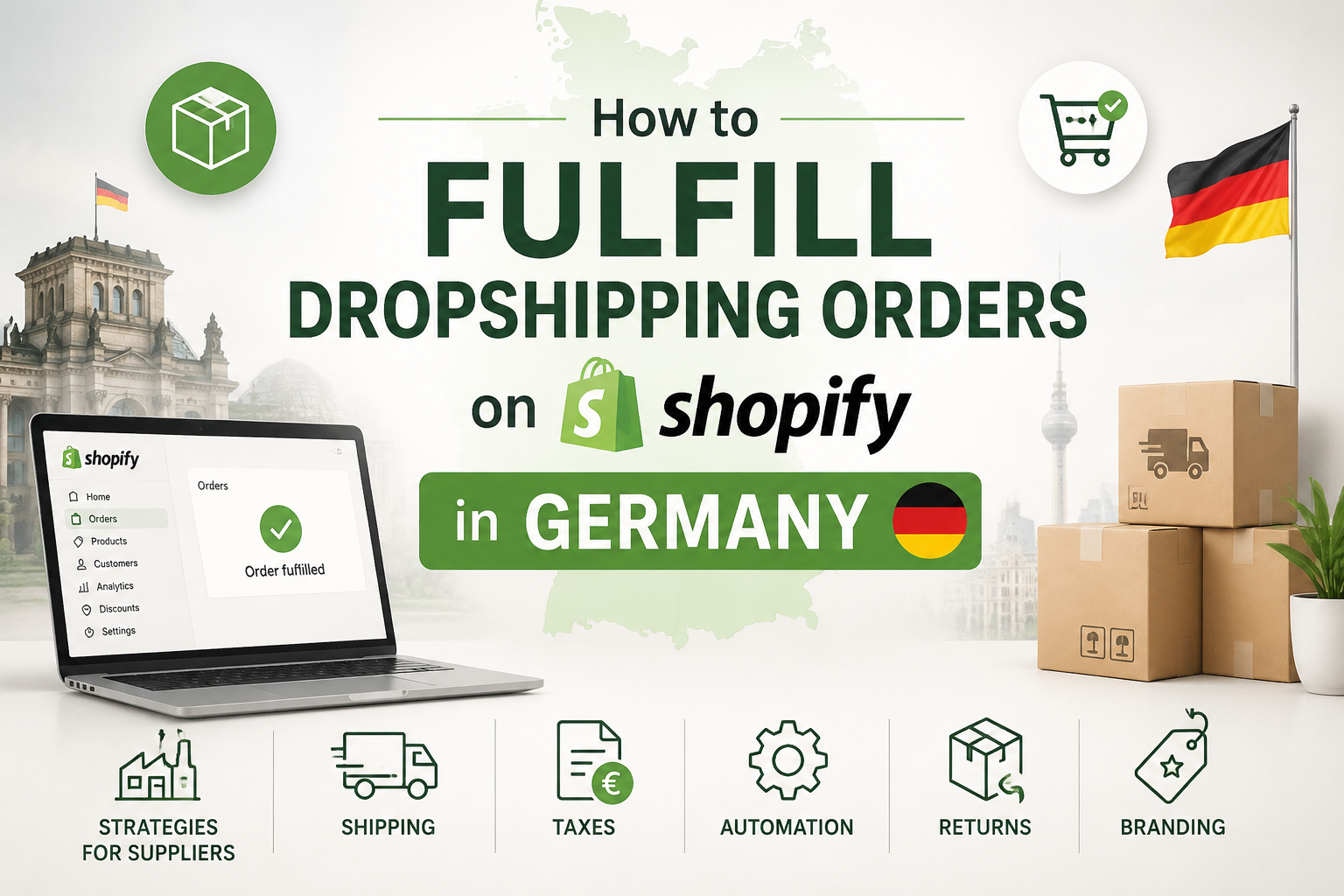
How to Fulfill Dropshipping Orders on Shopify in Germany: Strategies for Suppliers, Shipping, Taxes, Automation, Returns, and Branding

Choosing the right suppliers for your Shopify dropshipping store in Germany requires careful consideration of speed, reliability, integration, and contingency planning. By prioritizing suppliers who can meet German customers’ expectations, you lay the foundation for a smoother fulfillment process, higher satisfaction rates, and sustainable growth.
Choosing Reliable Suppliers for the German Market
When it comes to dropshipping in Germany via Shopify, selecting the right suppliers is a critical step that can make or break your business. German customers have high expectations regarding product quality, delivery speed, and service reliability. Therefore, sourcing suppliers who can consistently meet these expectations is essential for long-term success.
Local vs. International Suppliers
One of the first considerations is whether to work with local German or European suppliers or rely on international vendors. Local suppliers offer faster shipping times, typically 2–5 business days within Germany and neighboring EU countries. Faster delivery not only improves customer satisfaction but also reduces the likelihood of negative reviews. On the other hand, international suppliers, especially from Asia, may offer lower product costs, but extended shipping times, customs delays, and potential language barriers can affect the customer experience. Carefully weigh the trade-off between cost savings and service quality.
Assessing Supplier Reliability
Before partnering with any supplier, conduct thorough research. Check their track record, customer reviews, and fulfillment capabilities. Reliable suppliers should provide accurate stock information, support order tracking, and respond promptly to inquiries. Platforms like Alibaba, SaleHoo, or local B2B directories can help identify credible suppliers. Consider starting with a small test order to evaluate their delivery consistency and product quality before scaling up.
Integrating with Shopify
A strong supplier relationship is only effective if your Shopify store is fully integrated with their systems. Many suppliers offer APIs or apps that sync inventory, update tracking information, and automate order placement. Automation reduces manual errors, ensures timely fulfillment, and allows you to focus on marketing and customer engagement rather than operational tasks.
Contingency Planning
Even the best suppliers may occasionally face delays or stock shortages. Establish a contingency plan by identifying backup suppliers or having safety stock for best-selling products. Transparency with customers about shipping times and potential delays is also essential to maintain trust and reduce negative feedback.
Effective Shipping Strategies to Fulfill Dropshipping Orders on Shopify in Germany
For Shopify dropshipping in Germany, fast and reliable shipping is a decisive factor in customer satisfaction and repeat business. German consumers have high expectations for delivery times, and delays can result in negative reviews, increased refund requests, and reduced trust in your brand. Developing an effective shipping strategy is therefore essential for any dropshipping business targeting this market.
Leveraging Local and European Warehouses
One of the most effective ways to improve shipping speed is by utilizing local or European warehouses. By storing inventory closer to your customers, you can significantly reduce delivery times compared to international shipments. Many dropshipping suppliers now offer fulfillment centers within Germany or neighboring EU countries. Partnering with these suppliers not only shortens transit times but also reduces customs complications and potential VAT issues.
Choosing the Right Logistics Partners
Selecting reliable logistics providers is another key component. In Germany, carriers like DHL, Hermes, DPD, and GLS are widely recognized for their efficiency and tracking capabilities. Choosing partners that offer automated tracking updates integrated with your Shopify store enhances transparency and allows customers to follow their orders in real time. This integration improves the post-purchase experience and reduces inquiries related to shipment status.
Automating Fulfillment Processes
Automation plays a crucial role in shipping optimization. By integrating Shopify with supplier APIs or third-party fulfillment apps, orders can be processed and dispatched automatically. This reduces human errors, ensures faster handling, and frees up time for other business operations. Automated inventory updates also prevent overselling and maintain consistent stock information, which is vital for maintaining customer trust.
Balancing Cost and Speed
While speed is important, it must be balanced against shipping costs. Express shipping options can satisfy impatient customers but may eat into your profit margins. Consider offering multiple shipping options at checkout—standard delivery for cost-conscious buyers and expedited options for those willing to pay more. Clear communication about estimated delivery times can manage customer expectations effectively.
Tax and Customs Requirements in Germany
When fulfilling dropshipping orders on Shopify for the German market, taxation, customs, and regulatory compliance are critical considerations. Germany, as part of the European Union, enforces strict VAT (Value Added Tax) rules, product regulations, and customs procedures. Ignoring these requirements can lead to fines, delayed shipments, and damage to your brand reputation. Therefore, understanding and implementing compliance measures is essential for sustainable operations.
VAT Registration and Collection
All businesses selling to German consumers are generally required to register for German VAT if sales exceed certain thresholds. Shopify allows you to configure tax settings to automatically calculate VAT based on the customer’s location. Accurate VAT collection ensures that your pricing aligns with legal obligations, prevents penalties, and builds customer trust. Keep detailed records for each transaction to facilitate reporting and filing.
Navigating Customs and Import Duties
For dropshipping products from non-EU suppliers, customs declarations and import duties are inevitable. Partnering with suppliers who provide proper documentation and classify products accurately is crucial. Incorrect documentation can result in delayed shipments or even confiscation of goods. Automated systems that generate customs forms for Shopify orders can simplify this process, reducing errors and avoiding compliance issues.
Ensuring Product Compliance
Germany enforces specific regulations for product safety, labeling, and environmental standards. Depending on the category, products may require CE marking, RoHS compliance, or eco-friendly packaging certifications. Ensuring that your suppliers comply with these standards before shipping to German customers protects your business from legal risks and customer dissatisfaction.
Streamlining Compliance with Technology
Integrating compliance checks into your Shopify workflow can enhance operational efficiency. Apps that verify VAT registration, automate customs paperwork, and track regulatory requirements reduce manual work and minimize human errors. Additionally, communicating delivery times and potential customs delays transparently to customers builds trust and prevents negative reviews.
Automating Order Fulfillment to Efficiently Manage Dropshipping on Shopify
For Shopify dropshipping in Germany, automation is a critical tool to streamline order fulfillment, reduce errors, and maintain customer satisfaction. As orders scale, manually processing each one becomes inefficient and prone to mistakes. Leveraging automation tools and integrations allows businesses to handle larger volumes while maintaining a consistent, high-quality experience for German customers.
Integrating Shopify with Suppliers
Automation begins with connecting your Shopify store to your suppliers. Many suppliers offer APIs, plugins, or apps that synchronize inventory levels, confirm orders, and provide tracking information. By automatically sending orders to suppliers, you eliminate delays associated with manual input, reduce the chance of overselling, and ensure that customers receive accurate shipping updates.
Automating Inventory Management
Accurate inventory tracking is essential in dropshipping to prevent stockouts and customer disappointment. Shopify apps can monitor supplier stock levels in real time, automatically updating product availability on your store. This ensures that only in-stock items are visible to customers, minimizing the risk of canceled orders and improving overall operational efficiency.
Streamlining Shipping and Tracking
Automated fulfillment tools can also handle shipping label generation, carrier selection, and tracking updates. German customers value timely and transparent delivery information. By automating these processes, you can immediately provide tracking numbers, send notifications, and manage exceptions such as delays or lost packages without manual intervention.
Reducing Human Errors and Operational Costs
Automation reduces human errors in data entry, shipment preparation, and inventory updates. This not only enhances accuracy but also lowers operational costs by freeing staff from repetitive tasks. Businesses can then focus on marketing, customer service, and growth initiatives while maintaining a reliable order fulfillment process.
Preparing for Scalability
Implementing automation early positions your Shopify store for scalability. As your German customer base grows, automated workflows can handle increasing order volumes without compromising delivery quality or customer experience. The combination of supplier integration, inventory management, and shipping automation creates a seamless end-to-end fulfillment system.
For Shopify dropshipping in Germany, automation is a critical tool to streamline order fulfillment, reduce errors, and maintain customer satisfaction. As orders scale, manually processing each one becomes inefficient and prone to mistakes. Leveraging automation tools and integrations allows businesses to handle larger volumes while maintaining a consistent, high-quality experience for German customers.
Managing Returns and Customer Expectations in Germany
Handling returns and providing excellent customer service is a critical component of dropshipping on Shopify for the German market. Germany has strict consumer protection laws, including a mandatory 14-day return period for most online purchases. Ensuring that your store complies with these regulations while maintaining a smooth and professional experience is essential for building trust and brand loyalty.
Establishing Clear Return Policies
The first step is to create transparent and easily accessible return policies. Clearly outline the conditions for returns, the time frame, and any associated costs, such as shipping fees. German customers expect this information upfront. Providing detailed instructions on how to initiate a return reduces confusion and prevents disputes.
Integrating Return Management Systems
Shopify supports apps and integrations that automate returns, track returned items, and notify customers about the status of their refunds or exchanges. By connecting these tools to your supplier or fulfillment partner, the entire process—from return initiation to restocking—becomes seamless. Automation reduces manual errors and ensures timely communication with the customer.
Coordinating with Suppliers
Effective return handling requires coordination with your suppliers. Ensure that they accept returned goods and have clear procedures for processing refunds or replacements. This partnership prevents complications and financial losses while ensuring that the customer receives a consistent experience, even if the return involves a cross-border shipment.
Proactive Customer Service
High-quality customer service can mitigate negative experiences even when returns occur. Respond promptly to inquiries, provide updates on shipments and returns, and offer solutions for issues such as delayed deliveries or damaged products. German consumers value professionalism, transparency, and responsiveness, all of which can improve repeat purchase rates and positive reviews.
Reducing Returns Through Quality Control
While managing returns efficiently is important, it’s equally crucial to minimize them. Work closely with suppliers to ensure product quality, accurate descriptions, and reliable shipping. Providing detailed product information, high-quality images, and clear sizing or specification charts can reduce the likelihood of returns and enhance customer satisfaction.
Enhancing Customer Experience Through Packaging and Branding
In the German dropshipping market, packaging and branding are more than just aesthetics—they directly influence customer perception and loyalty. German consumers pay close attention to presentation, eco-friendliness, and brand consistency. A well-considered approach to packaging and branding can enhance the perceived value of your products and strengthen customer trust in your Shopify store.
Local Preferences
German customers tend to prefer minimalist, functional, and environmentally friendly packaging. Excessive packaging or non-recyclable materials can negatively impact brand perception. Additionally, attention to detail, such as neatly folded product inserts, branded stickers, or personalized notes, can create a memorable unboxing experience. Understanding these preferences and aligning your packaging accordingly can improve satisfaction and encourage repeat purchases.
Integrating Branding into Fulfillment
Effective branding extends beyond the product itself. Including branded packaging, thank-you cards, or custom inserts allows your dropshipping business to communicate professionalism and authenticity. Shopify apps or third-party fulfillment centers can assist in integrating branding elements into the fulfillment process, ensuring that every shipment consistently reflects your brand identity.
Balancing Cost and Presentation
While high-quality, branded packaging enhances customer experience, it also increases costs. Striking a balance between cost-effectiveness and perceived value is crucial. Using standardized eco-friendly packaging with subtle branding can offer a professional appearance without significantly impacting margins. Bulk ordering packaging materials from suppliers can also reduce unit costs while maintaining quality.
Sustainability and Compliance
Germany has strict environmental standards for packaging and waste management. Using recyclable or biodegradable materials not only appeals to environmentally conscious consumers but also ensures compliance with local regulations. Highlighting sustainable practices in your Shopify store can further enhance your brand reputation and attract customers who value eco-conscious businesses.
Optimizing for Shipping Efficiency
Finally, packaging choices should also consider shipping logistics. Properly sized and protected packaging minimizes the risk of damage during transit, reduces shipping costs, and supports faster fulfillment. Coordinating with suppliers and fulfillment partners to standardize packaging dimensions and materials can streamline the shipping process while maintaining a positive unboxing experience.
By focusing on local preferences, integrating branding into fulfillment, balancing cost and presentation, prioritizing sustainability, and optimizing packaging for shipping, Shopify dropshipping businesses in Germany can create a superior customer experience. Thoughtful packaging and consistent branding strengthen brand identity, build trust, and encourage long-term customer loyalty.



No Comments